World News 7-6: US plans to distribute frozen assets of Iran; Pakistan negotiates in place of US.
US Considers Using Frozen Iranian Assets for Gulf States to Repair Damage; Pakistan Minister Goes to Tehran to Negotiate on Behalf of US; North Korea Reaffirms Nuclear Status Ahead of Xi’s Visit
New US and Iranian Attacks Challenge Ceasefire Agreement
On June 6, Iran accused the US of a “lack of goodwill to reduce tensions” and a blatant violation of the ceasefire, following the latest round of airstrikes in the Middle East.
The US military said it carried out airstrikes on Iran’s coastal surveillance radar stations on the evening of June 6, and shot down four Iranian drones launched towards the Strait of Hormuz. Iran then declared it had retaliated against US airbases and military facilities.
The US Central Command (CENTCOM) also announced it had intercepted a missile and drone attack by Iran targeting Kuwait and Bahrain.
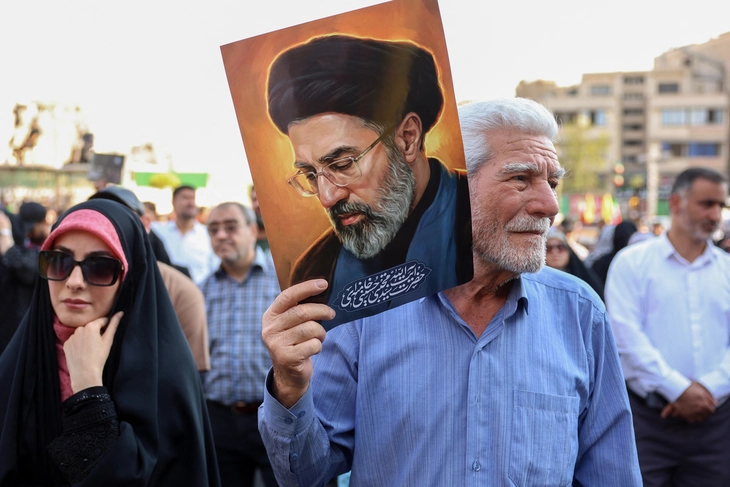
The airstrikes occurred as the two countries were preparing for a new round of negotiations. According to CNN, Pakistan’s Interior Minister Mohsin Naqvi arrived in Tehran on the evening of June 6 to represent the US in the new round of talks. Naqvi also carried a letter from Pakistan’s leadership addressed to Iran’s Supreme Leader Mojtaba Khamenei.
US Considers Seizing Frozen Iranian Assets
The US is considering redirecting a portion of Iran’s assets to assist Kuwait and Bahrain in repairing damage caused by recent Iranian attacks.
Reuters, citing sources, revealed that US Treasury Secretary Scott Bessent has ordered an assessment of the damage and the feasibility of using Iranian assets to cover repair costs.
This move follows a statement by an advisor to Iran’s Supreme Leader that releasing $24 billion in assets frozen by the US was a condition for a peace deal.
The threat to redirect Iran’s assets could create new impacts on the fragile ceasefire between Washington and Tehran.
Intense Israel-Hezbollah Clashes
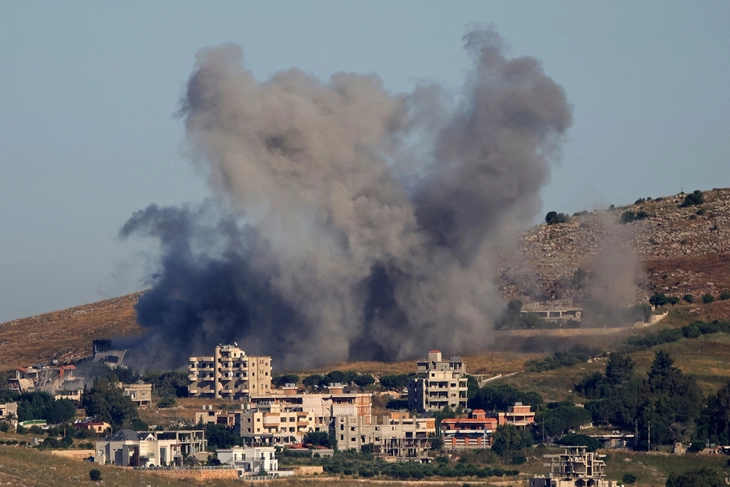
The Israeli military said on June 6 that it had attacked about 150 Hezbollah targets in southern Lebanon over the past two days. “Over the weekend, the IDF struck weapons storage facilities, command centers, rocket launchers, and other terrorist infrastructure sites of Hezbollah,” the force stated.
Lebanon reported at least 2 dead and 22 wounded in the attacks.
Meanwhile, Hezb
Strait of Hormuz
The Strait of Hormuz is a narrow, strategically vital waterway connecting the Persian Gulf to the Gulf of Oman and the Arabian Sea. Historically, it has been a key chokepoint for global oil shipments, with its importance rising dramatically in the 20th century due to the region’s vast petroleum reserves. Control over the strait has been a source of geopolitical tension, particularly between Iran and other nations, shaping maritime security and international energy markets.
Kuwait
Kuwait is a small, oil-rich country located in the Arabian Gulf, with a history as a major trading port before the discovery of oil in the 1930s transformed its economy. Its cultural identity is deeply rooted in Bedouin traditions, maritime heritage, and Islamic values, reflected in sites like the Grand Mosque and the historic Souq Al-Mubarakiya. Modern Kuwait is known for its high standard of living and progressive society, though its history includes periods of conflict, most notably the Iraqi invasion and occupation in 1990-1991.
Bahrain
Bahrain is an island nation in the Persian Gulf with a rich history as a major center of trade and the ancient Dilmun civilization, dating back over 4,000 years. It is home to the Bahrain Fort (Qal’at al-Bahrain), a UNESCO World Heritage site that was once the capital of the Dilmun empire. Today, Bahrain blends its deep cultural heritage with modern development, known for its pearl diving legacy and vibrant capital, Manama.
Tehran
Tehran, the capital of Iran, is a sprawling metropolis that became the country’s capital in 1796 under the Qajar dynasty, replacing Isfahan. Its history stretches back to ancient times, but it grew significantly in the 20th century, blending modern development with historic sites like the Golestan Palace and the Azadi Tower. Today, it serves as Iran’s political, economic, and cultural hub, reflecting a mix of traditional Persian heritage and contemporary urban life.
Lebanon
Lebanon is a country in the Middle East with a rich history dating back thousands of years, home to ancient Phoenician civilizations and later a crossroads of Roman, Byzantine, and Ottoman empires. Its capital, Beirut, was once known as the “Paris of the Middle East” for its vibrant culture and architecture, though the country endured a devastating civil war from 1975 to 1990. Today, Lebanon is known for its diverse cultural heritage, including UNESCO World Heritage sites like the ruins of Baalbek and Byblos, as well as its resilient and multi-sectarian society.
Israel
Israel, located in the Middle East, is a country with deep historical and religious significance as the birthplace of Judaism and Christianity, and a sacred site for Islam. Its modern state was established in 1948, following centuries of diaspora and the Zionist movement, but the region’s history dates back thousands of years to ancient kingdoms like Israel and Judah. Today, it is a diverse nation known for its cultural heritage, archaeological sites, and ongoing geopolitical complexities.
Middle East
The Middle East is a historically and culturally rich region spanning Western Asia and parts of North Africa, often considered the cradle of civilization. It is home to ancient empires like Mesopotamia, Persia, and Egypt, as well as the birthplace of major religions including Judaism, Christianity, and Islam. Today, the region is known for its diverse cultures, significant archaeological sites, and geopolitical importance.
US Central Command (CENTCOM)
The United States Central Command (CENTCOM) is one of eleven unified combatant commands of the U.S. Department of Defense, established in 1983 to oversee military operations in the Middle East, Central Asia, and parts of South Asia. Its area of responsibility includes key nations such as Afghanistan, Iraq, Iran, and Pakistan, and it has played a central role in major conflicts like the Gulf War, the War in Afghanistan, and the Iraq War. Headquartered at MacDill Air Force Base in Florida, CENTCOM focuses on promoting regional stability, countering terrorism, and ensuring the free flow of energy resources.