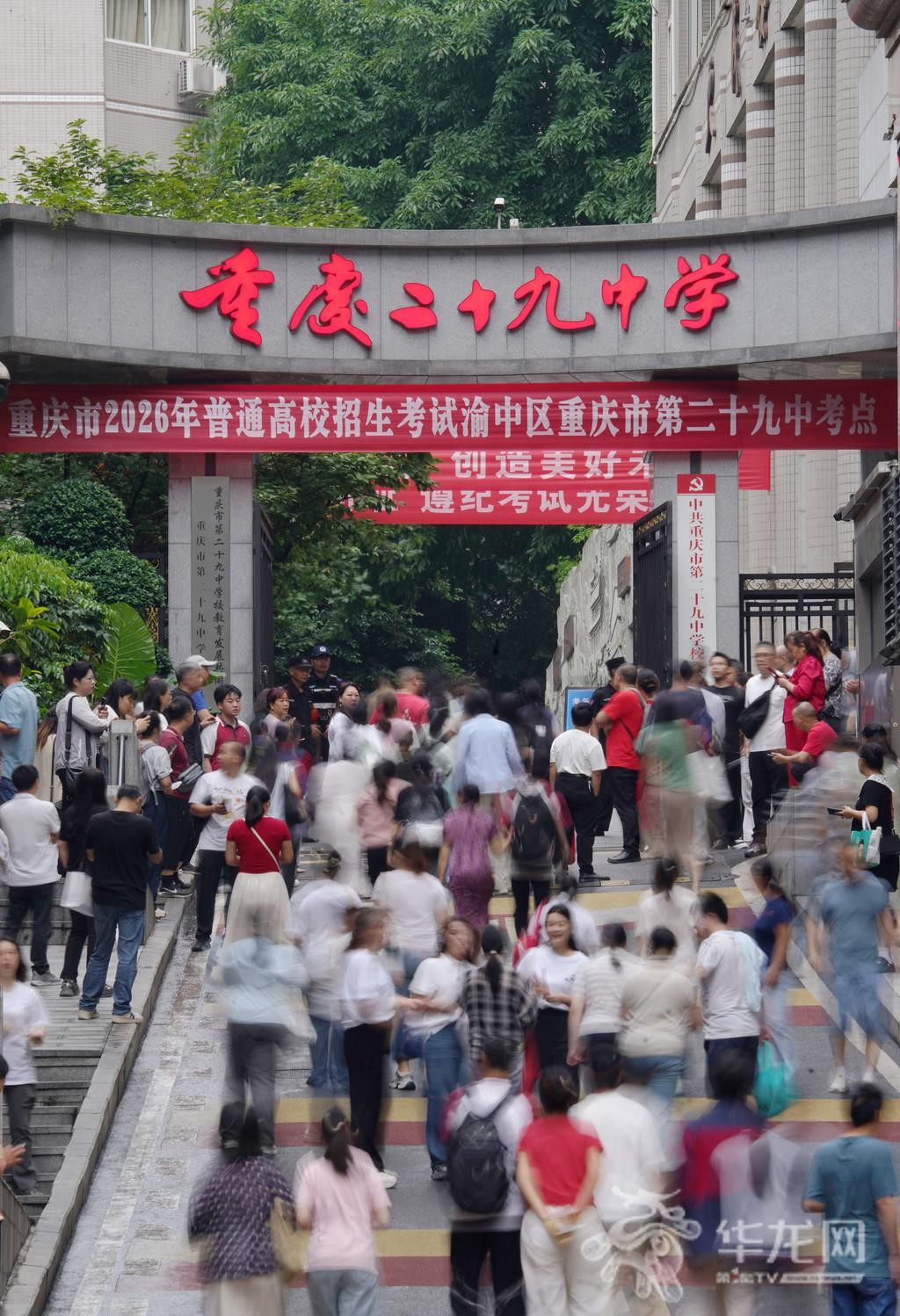
The Chongqing Municipal Education Examination Institute announced today that the 2026 National College Entrance Examination (Gaokao) in Chongqing will be held from June 7 to 9.
The total number of registrations for the 2026 Chongqing Gaokao is 348,000. Excluding candidates already admitted through higher vocational classification enrollment, recommended students, and those not taking the unified exam such as sports single-recruitment candidates, 209,000 candidates across the city will participate in the unified Gaokao. The city has set up 39 examination districts, 112 test centers, and 7,075 examination rooms.
The city’s education system and examination recruitment front firmly implement the decisions and deployments of the Central Committee of the Communist Party and the State Council, as well as the work requirements of the municipal party committee, municipal government, and the Ministry of Education. Collaborating with nearly 30 departments and units, including publicity, cyberspace affairs, confidentiality, public security, economic information, health, market supervision, ecology and environment, communications, and electric power, efforts focus on “five strengthenings” to ensure the Gaokao proceeds smoothly.
In strengthening organizational leadership, the municipal party committee and government attach great importance to the Gaokao, studying and deploying related work, and requiring full efforts to guarantee a “safe Gaokao.” Relevant municipal departments, including the Municipal Education Commission, enhance command and dispatch through various means, implementing requirements down to district and county levels. Party committees and governments at district and county levels strictly fulfill local responsibilities, ensuring detailed preparation and support through meetings and on-site supervision. The education examination front compresses responsibilities layer by layer and meticulously organizes implementation. Before the exam, the city formed multiple inspection teams to thoroughly check all examination districts and test centers, covering exam organization, security confidentiality, and exam support.
In strengthening test confidentiality, public security and armed police enhance security at key locations such as test question development, test paper printing, and test question storage rooms. Public security participates throughout the test paper transportation process, detailing safety requirements for transport vehicles. The entire test paper circulation is under video surveillance, and test paper storage rooms are under intelligent real-time inspection to ensure absolute security of test questions and papers.
In strengthening safety guarantees, special campaigns are intensively conducted to purify the online exam environment, crack down on the sale of cheating equipment, and clean up the surroundings of test centers, comprehensively managing the exam environment. Daily weather and flood warning information is released to ensure proper response to extreme weather and other emergencies. Power transmission facilities and equipment are carefully inspected to ensure electricity supply. Traffic safety during exam transportation and centralized accommodation and dining safety for candidates are reinforced. During the exam period, relevant departments set up a 24-hour emergency duty team to handle exam-related emergencies.
In strengthening exam administration, over 20,000 exam staff are selected and receive comprehensive pre-service training. Before the exam, test center facilities and equipment are fully inspected; during the exam, exam regulations are strictly implemented; and after the exam, test papers are properly collected to ensure flawless exam organization. Each test center strictly implements the “dual security check” model of “intelligent security gates plus manual security checks” and the “triple invigilation” mechanism of “on-site invigilation plus mobile invigilation plus video invigilation,” covering all test rooms throughout the entire period with intelligent real-time monitoring to maintain strict exam discipline. The city sends 112 invigilation supervisors to all districts and counties for on-site supervision, and arranges 20 video inspectors at the municipal command center to oversee exam organization and discipline throughout the process.
In strengthening comprehensive services, the “Gaokao Escort Action” is implemented, enhancing integrated services such as transportation, accommodation, health and epidemic prevention, and noise control to create a comfortable and harmonious exam environment. Reasonable accommodations are provided for candidates with disabilities and other special needs. Exam enrollment policies are explained in multiple formats, exam precautions and warm reminders are promptly issued, and 24-hour consultation and complaint channels are opened to timely respond to social and candidate concerns.