Why did Macron meet with former Senegalese President Macky Sall?
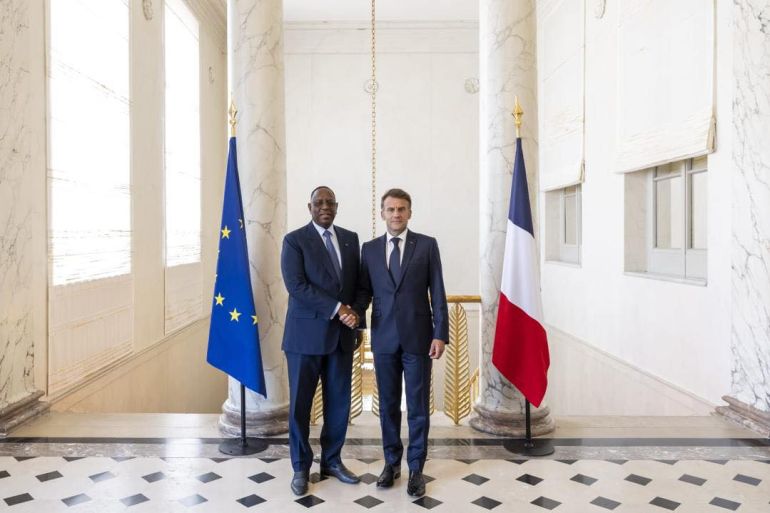
This week, the French President welcomed former Senegalese President Macky Sall in Paris for a meeting that is part of a diplomatic campaign by the latter to support his candidacy for the position of Secretary-General of the United Nations, succeeding the current Secretary-General whose term ends at the end of this year. The former president is intensifying his diplomatic contacts with major capitals and a number of leaders and strategic partners to strengthen his position on the international stage.
Following the reception, Macky Sall expressed his satisfaction with the level of the talks. In a statement, he said: “I warmly thank President Emmanuel Macron for his gracious welcome and for our productive discussions at the Élysée. We share a vision of a ambitious and renewed United Nations to enhance its effectiveness, representativeness, and ability to respond to the aspirations of peoples and states.”
The former Senegalese president emphasized the “convergence of views” between himself and Macron regarding the future of the UN organization, and that his advocacy focuses on the need for a “deep reform” of the United Nations to reflect the “current geopolitical reality” and make it more capable of responding to international crises.
No statement was issued from the Élysée Palace containing an official French position supporting the candidacy; what was published was limited to Macky Sall’s own statement.
Candidacy Context
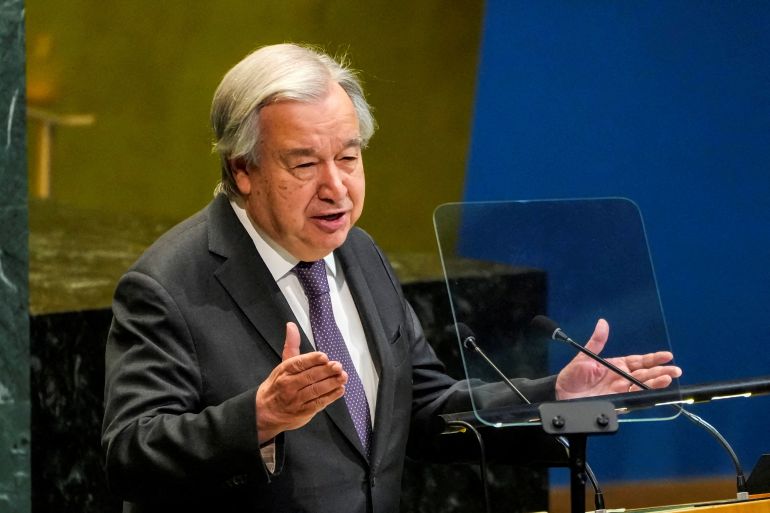
Macky Sall led Senegal between 2012 and 2024, before being succeeded by current President Bassirou Diomaye Faye. In April, Sall delivered a speech before the UN General Assembly to present his priorities and vision for the organization, as part of the process for selecting the next Secretary-General.
Burundi had officially informed the UN on March 2 of Sall’s nomination, thereby fulfilling the requirement for nominations to be submitted through a member state. The notification was made in the name of the Burundian president as the then-chairperson of the African Union, according to Arab media reports.
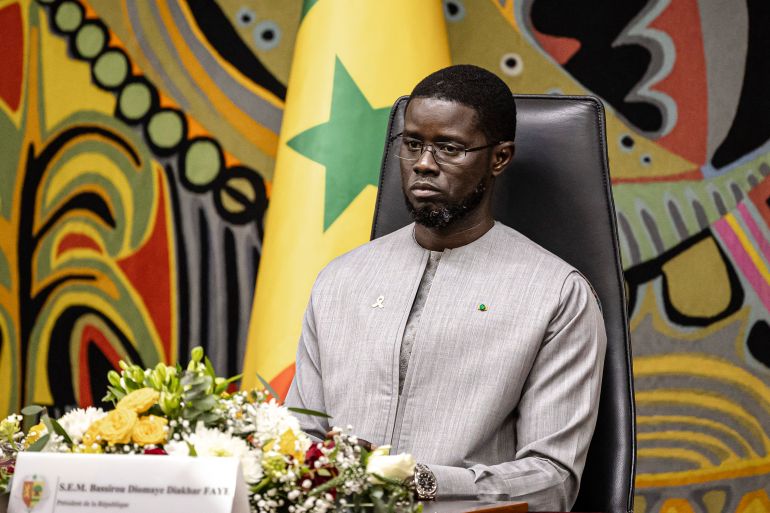
Former Senegalese President Sall did not receive support from his successor Faye
The Paradox of Senegalese Neutrality
In contrast to the diplomatic activity led by the former president, the government in Dakar maintains a position of neutrality regarding the candidacy. President Bassirou Diomaye Faye, according to Senegalese media, stated that he was not directly informed of his predecessor’s candidacy but learned about it from other African leaders before learning that Burundi had officially submitted the nomination.
Faye indicated that the matter was not subject to any discussion within Senegal, expressing regret over the absence of any consultative continental process for a candidacy of this magnitude, and affirming that Senegal “cannot be considered a party” to the initiative. He concluded by defining his country’s position, according to the same sources: “Regarding this candidacy, Senegal adopts a position of neutrality.”
Thus, the meeting highlights a striking political paradox: a former Senegalese president is pursuing a high-level international race based on his own initiatives and contacts with major capitals such as Paris, while the state he once governed distances itself from providing any official support for his efforts.
Париж
Paris, the capital of France, is renowned for its iconic landmarks such as the Eiffel Tower, Louvre Museum, and Notre-Dame Cathedral. Founded over 2,000 years ago as a Celtic settlement, it grew into a major medieval city and later became a global center for art, fashion, and culture, especially during the Enlightenment and the French Revolution. Today, it remains a top tourist destination, celebrated for its romantic ambiance and rich historical heritage.
Елисейский дворец
The Élysée Palace (Елисейский дворец) is the official residence of the President of France, located in Paris. Built in 1722 for the Count of Évreux, it has served as a royal residence, the home of Napoleon’s sister, and the seat of the French presidency since 1873. Today, it is a symbol of French political power and hosts key government meetings and foreign dignitaries.
Организация Объединенных Наций
The United Nations (UN) is an international organization founded in 1945 after World War II to promote peace, security, and cooperation among nations. Its headquarters are located in New York City, and it was established through the signing of the UN Charter by 51 original member countries. Today, the UN works on global issues such as human rights, climate change, and humanitarian aid, with 193 member states.
штаб-квартира ООН в Нью-Йорке
The United Nations Headquarters in New York City, located along the East River in Manhattan, serves as the primary administrative center for the UN. Completed in 1952, the iconic complex was designed by an international team of architects, including Le Corbusier and Oscar Niemeyer, symbolizing global cooperation after World War II. It hosts the General Assembly and Security Council chambers, representing a diplomatic hub where member states address international issues.
Сенегал
Senegal is a West African country known for its rich cultural heritage and historical significance, particularly as a major hub of the transatlantic slave trade. The island of Gorée, near the capital Dakar, stands as a poignant symbol of this history, with its “House of Slaves” museum commemorating the millions who were forcibly deported. Today, Senegal is celebrated for its vibrant music, the iconic Lac Rose (Pink Lake), and its legacy of peaceful independence under the poet-president Léopold Sédar Senghor.
Дакар
Dakar is the capital and largest city of Senegal, located on the Cap-Vert Peninsula on the Atlantic coast. Originally a small fishing village, it grew into a major colonial port under French rule in the 19th century and became the capital of French West Africa. Today, it is a vibrant cultural and economic hub, known for landmarks like the African Renaissance Monument and the historic Gorée Island.
Бурунди
Burundi is a landlocked country in East Africa known for its mountainous terrain and Lake Tanganyika. Historically, it was a kingdom for centuries before being colonized by Germany and later Belgium, gaining independence in 1962. The country has a rich cultural heritage, including traditional drumming and dance, but has also faced periods of ethnic conflict and political instability.
Африканский союз
The African Union (AU) is a continental union consisting of 55 member states located on the continent of Africa. It was officially established on July 9, 2002, in Durban, South Africa, replacing its predecessor, the Organisation of African Unity (OAU), which was founded in 1963. The AU aims to promote unity, peace, and economic development across Africa, with its headquarters in Addis Ababa, Ethiopia.