A press conference was held in Shanghai on June 5th. The Shanghai Municipal Bureau of Ecology and Environment released the “2025 Shanghai Ecological Environment Status Bulletin” on that day. The bulletin shows that in 2025, Shanghai’s air quality excellence rate reached 88.5%; the average annual concentration of PM2.5 dropped to 26 micrograms per cubic meter; the proportion of surface water sections rated Class III or above reached 99.3%, and the Huangpu River and the Yangtze River (Shanghai section) were selected as national excellent cases of beautiful and happy rivers and lakes.
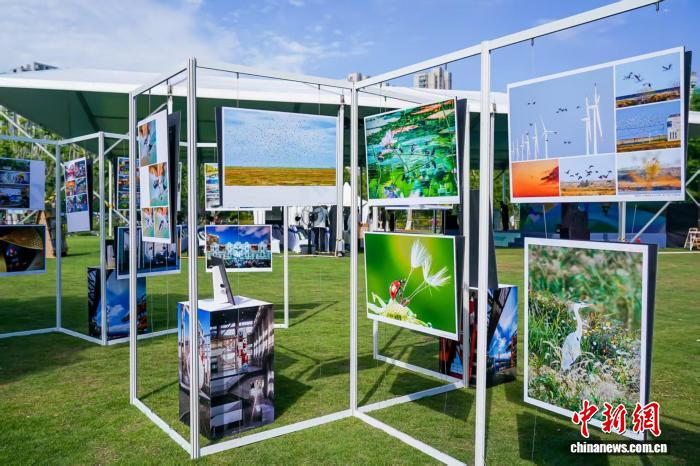
On June 5th, the main event for World Environment Day 2026 in Shanghai, themed “Comprehensive Green Transformation, Building a Beautiful China Together,” was held in Hongkou District, Shanghai. The Director of the Shanghai Municipal Bureau of Ecology and Environment stated that during the 15th Five-Year Plan period, Shanghai will coordinate efforts to reduce carbon, cut pollution, expand green spaces, and promote growth.
For the first time, the Executive Committee of the Yangtze River Delta Eco-Green Integrated Development Demonstration Zone jointly released the “White Paper on Joint Ecological and Environmental Protection and Governance of the Demonstration Zone” together with the ecological environment departments of Shanghai, Jiangsu, and Zhejiang. Innovative measures such as the “three unifications” of environmental standards, monitoring, and law enforcement, joint protection and governance of cross-border rivers and lakes, and integrated reform of environmental impact assessment systems provide replicable and scalable experience for cross-regional institutional coordination nationwide.
The white paper comprehensively reviews the progress and achievements made in the field of joint ecological and environmental protection and governance in the demonstration zone since 2019—cleaner water, bluer skies, and richer biodiversity. It is reported that the proportion of surface water sections meeting or exceeding Class III standards in the demonstration zone reached 97.8%, an increase of 23 percentage points from 2019. In 2025, the air quality excellence rate in the demonstration zone was 80.8%, up 2.4 percentage points from 2019.
The demonstration zone is actively exploring pilot projects for calculating the gross ecosystem product value across provinces. Carbon peak pilot projects are steadily advancing, with continuous optimization of the energy structure, comprehensive promotion of green buildings, and accelerated industrial transformation and upgrading. From 2019 to 2025, the average annual growth rate of the gross regional product in the two districts and one county exceeded 6%. Green industries and technological innovation platforms are rapidly gathering. The demonstration zone has boldly explored and cumulatively introduced 161 pioneering institutional innovations, 11 of which have been replicated and promoted nationwide.