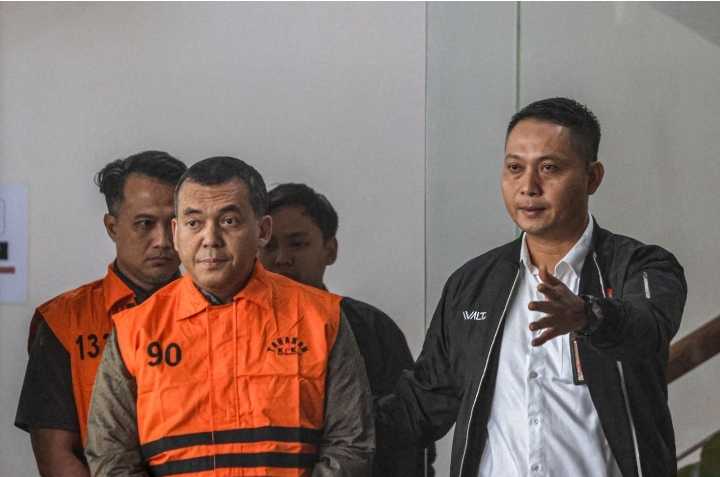
RADARBANDUNG.ID, JAKARTA – The Corruption Eradication Commission (KPK) named Deputy Minister of Immigration and Corrections Silmy Karim and seven officials from the Directorate General of Immigration as suspects in an alleged extortion case involving immigration document processing yesterday (4/6). They were designated as suspects after a case review on Wednesday (3/6) evening.
Spokesperson Budi Prasetyo said that previously, KPK secured 18 individuals in a handcatching operation at the West Jakarta Immigration office on Wednesday. From the investigation, eight people, including Silmy, were named as suspects. “The other 10 individuals are currently witnesses and have been released,” he said yesterday.
According to Budi, KPK suspects Silmy received money flows while serving as Director General of Immigration for the 2023-2024 period. After being named suspects, the eight individuals were immediately detained at the KPK Red and White Building detention center for 20 days to complete case files.
Silmy and the seven suspects are charged under Article 12e of Law 31/1999 as amended by Law 20/2001 on the Eradication of Criminal Acts of Corruption in conjunction with Article 20 letter c of the Criminal Code.
Cross-Regional Operation
According to Budi, the handcatching operation was not only centered in Jakarta. KPK investigators also conducted cross-regional operations in Bandung (West Java) and Bali. From these actions, the anti-corruption commission seized foreign currency evidence, namely US Dollars (USD) and Singapore Dollars (SGD). However, KPK has not yet detailed the amount.
“We will update you later; the value is in the hundreds of billions,” he said.
To secure other evidence, KPK has sealed several rooms. Investigators also searched Silmy’s house on Wednesday.
From gathered information, the case is related to residence permits for foreign nationals involved in an online gambling case in the Hayam Wuruk area, Jakarta, which was secured by police several weeks ago. Responding to this, Budi has not yet provided detailed explanations.
“For the details, we will explain how this case is structured, the chain of command, and the flow of money to the suspects. Currently, we are still focusing on the eight individuals who have been named suspects,” he explained.
West Jakarta Immigration office
The West Jakarta Immigration Office is a government facility responsible for processing visas, residency permits, and other immigration-related services for the local population. Located in the bustling capital of Indonesia, it operates within the broader framework of Indonesia’s Directorate General of Immigration, which manages the country’s borders and foreign nationals. While specific historical details about this particular office are limited, it serves as a key administrative hub in one of Jakarta’s oldest districts, reflecting the city’s growth as a major urban and economic center.
KPK Red and White Building detention center
The KPK Red and White Building in Jakarta, Indonesia, serves as the headquarters and detention center of the Corruption Eradication Commission (KPK). It gained significant attention for holding high-profile corruption suspects, with its detention facilities symbolizing the country’s ongoing fight against graft. The building’s name reflects the red and white colors of the Indonesian flag, emphasizing its role in upholding national integrity.
Jakarta
Jakarta, the capital and largest city of Indonesia, has a long history as a major trading port, dating back to the 4th century under the Hindu kingdom of Sunda. It was later renamed Batavia by the Dutch East India Company in the 17th century, becoming the colonial center of the Dutch East Indies. After Indonesian independence, the city was renamed Jakarta in 1949 and has since grown into a bustling, densely populated metropolis known for its blend of modern skyscrapers and historic landmarks.
Bandung
Bandung, the capital of West Java, Indonesia, is a city known for its colonial architecture and cool mountain climate. Historically, it was a center of the Dutch East Indies’ plantation economy and gained global fame in 1955 for hosting the Bandung Conference, which united Asian and African nations in the Non-Aligned Movement. Today, it is a vibrant cultural and creative hub, famous for its art deco buildings, culinary scene, and as a popular weekend getaway from Jakarta.
Bali
Bali, often called the “Island of the Gods,” is a province of Indonesia renowned for its lush landscapes, terraced rice paddies, and vibrant Hindu culture. Its history dates back to at least the 1st century CE, with influence from Indian traders, and it became a stronghold of Hindu culture after the fall of the Majapahit Empire in the 16th century. Today, Bali is a major global tourist destination, famous for its traditional arts, dance, and iconic temples like Uluwatu and Tanah Lot.
Hayam Wuruk area
The Hayam Wuruk area, named after the legendary 14th-century king of the Majapahit Empire, is a historic region in Indonesia that reflects the grandeur of the archipelago’s Hindu-Buddhist past. King Hayam Wuruk, under the guidance of his prime minister Gajah Mada, led Majapahit to its golden age, unifying much of modern-day Indonesia. Today, the area is often associated with cultural heritage sites and serves as a reminder of the empire’s enduring influence on Indonesian identity.