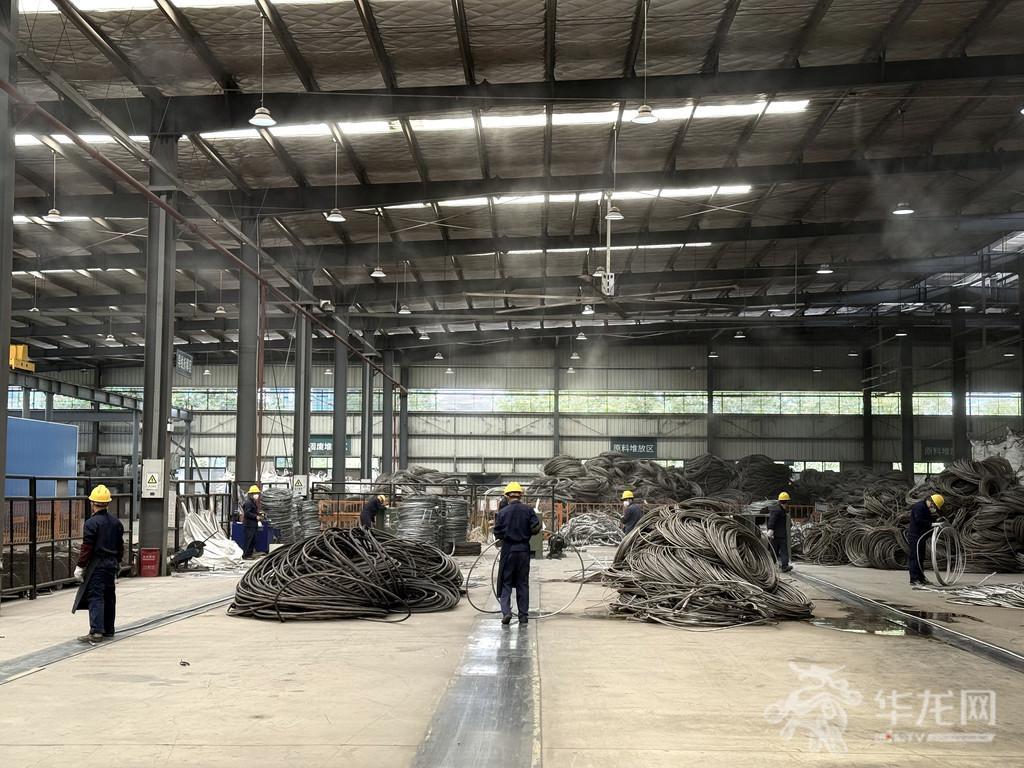
On the occasion of the 2026 World Environment Day, at the Chongqing Electric Power Renewable Resource Recycling Center, batches of scrapped cables and transformers are being finely disassembled through automated production lines, transforming into high-purity copper, aluminum, and other renewable industrial raw materials. Since 2022, relying on this center, State Grid Chongqing Electric Power has cumulatively produced 26,700 tons of renewable resources, achieving a carbon emission reduction of approximately 1.12 million tons, demonstrating significant green efficiency gains.
In the past, scrapped equipment such as transformers, switch cabinets, and power cables were often disposed of roughly through simple sales, making it difficult to achieve refined utilization of large amounts of recyclable resources. After the establishment of the Chongqing Electric Power Renewable Resource Recycling Center, a fully closed-loop management chain of “collection, transportation, storage, dismantling, sorting, and utilization” was built. The center conducts lean dismantling of scrapped equipment, transforming waste materials into raw materials and low-value resources into high-value-added raw materials.
“Taking recycled aluminum as an example, for every ton we dismantle, it saves 95% of production energy compared to primary aluminum smelting and reduces 13.35 tons of carbon emissions,” introduced Wang Kaicai, the on-site manager of the Chongqing Electric Power Renewable Resource Recycling Center. The dismantled recycled aluminum material has high purity and few impurities, and can be directly used as raw material by downstream factories.
Furthermore, leveraging its own industrial chain resource advantages, State Grid Chongqing Electric Power plays a leading role as the supply chain leader. It has jointly signed a “Zero-Waste Electric Power” party-building co-construction agreement with the Chongqing Municipal Ecological Environment Bureau and major power generation enterprises, establishing a new pattern of circular economy development with government-enterprise collaboration and full industry coordination.
At the same time, State Grid Chongqing Electric Power has partnered with TÜV Rheinland certification body, Chongqing Nanfen Xincheng Aluminum Alloy Co., Ltd., and Chongqing University of Science and Technology to build a full-chain industrial model of “recycling and disposal — deep regeneration — carbon footprint verification — market implementation.” This promotes the transformation of power grid scrapped material recycling from “resource regeneration” to “low-carbon value addition,” providing a benchmark practice for the green transformation of the power industry and the achievement of the “dual carbon” goals.
In recent years, under the guidance of the “dual carbon” goals and the accelerated construction of a new power system, the Chongqing Electric Power Renewable Resource Recycling Center, in collaboration with third-party certification bodies, completed full-process carbon footprint traceability verification. It successfully obtained two international authoritative certifications: ISO 14067 Product Carbon Footprint and ISO 14021 Environmental Labels and Declarations, becoming the first green dismantling center within the State Grid system to achieve dual certification.
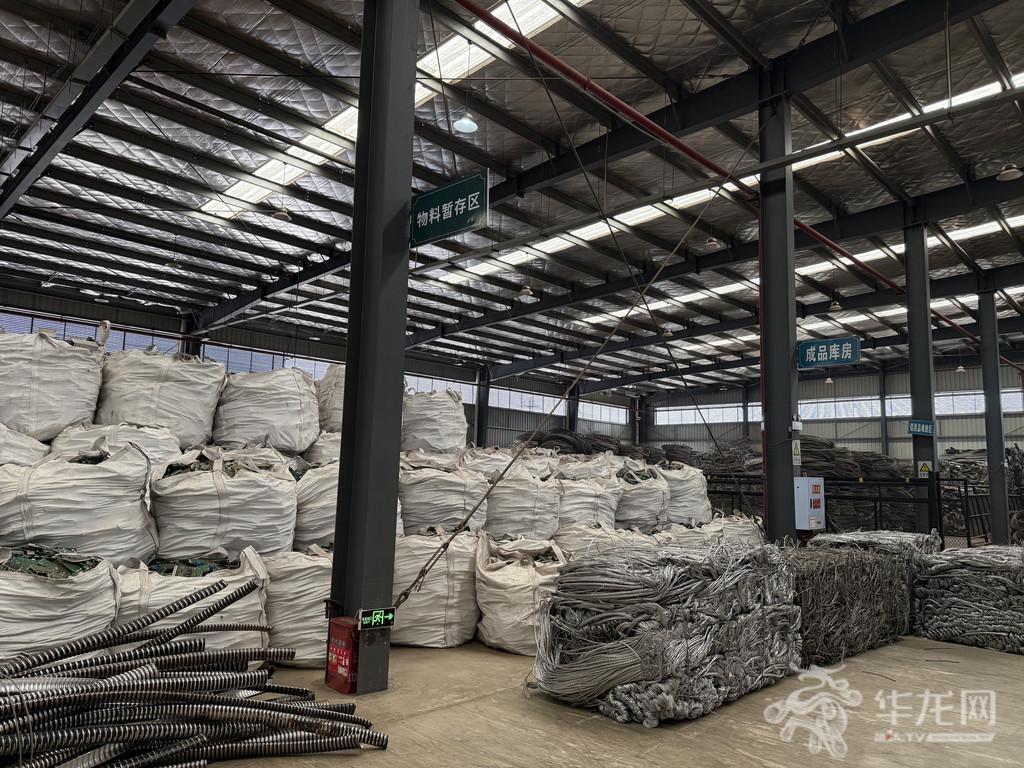
“This certification is a globally recognized carbon verification credential. After the center’s renewable resources obtained this certification, downstream enterprises purchasing our renewable raw materials can reduce carbon tariffs when exporting to the EU, enhancing market competitiveness,” explained Zhang Zheng, director of the Chongqing Electric Power Renewable Resource Recycling Center.
Chongqing Nanfen Xincheng Aluminum Alloy Co., Ltd., which has long specialized in manufacturing high-end aluminum alloy raw materials for automobiles and motorcycles, is one of the beneficiary enterprises. A relevant person in charge of the company stated that, relying on the carbon footprint certification, the enterprise