Over 2.2 million flags have been given out in the 7th anniversary celebration of the “Proud National Flag” program.
On the afternoon of June 5, a ceremony was held to celebrate the 7th anniversary of the “Pride of the National Flag” program and the 101st anniversary of Vietnam Revolutionary Press Day (June 21, 1925 – June 21, 2026).
Handing over and signing agreements to deliver 2.2 million flags, setting 5 Vietnamese records
Attendees included Ms. Dang Thi Ngoc Thinh – former member of the Party Central Committee, former Vice President; Senior Lieutenant General Le Tan Toi – member of the Party Central Committee, member of the National Assembly Standing Committee, Chairman of the National Assembly’s Committee for National Defense, Security, and Foreign Affairs;
Mr. Le Quoc Minh – member of the Party Central Committee, Deputy Head of the Central Commission for Propaganda and Mass Mobilization, Chairman of the Vietnam Journalists Association; Mr. Dang Minh Thong – Deputy Secretary of the Ho Chi Minh City Party Committee…
According to the program, “Pride of the National Flag” began with flags given to fishermen heading out to sea in 2019. Over more than seven years, 575 events have been organized, with over 2.2 million flags handed over and signed for donation, the construction of 1,246 national flag routes in 32 of 34 provinces and cities, and the establishment of 5 Vietnamese records.
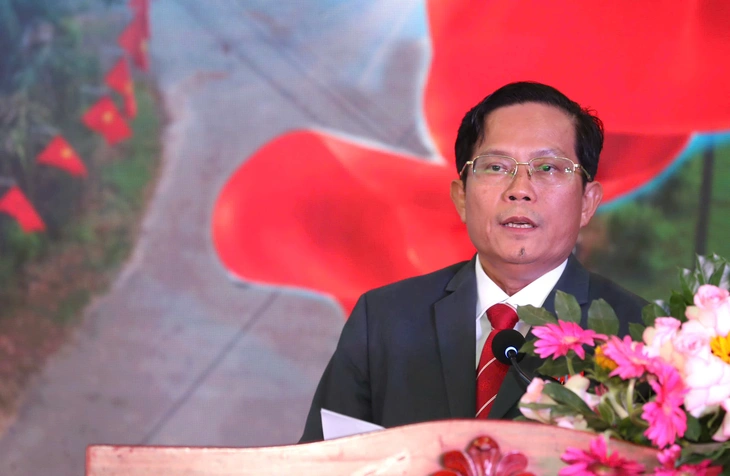
Speaking at the event, Mr. Le Quoc Minh noted that over the past 5-7 years, the newspaper has been one of the proactive media agencies building a multi-platform communication ecosystem.
Member of the Party Central Committee, Deputy Head of the Central Commission for Propaganda and Mass Mobilization, Chairman of the Vietnam Journalists Association Le Quoc Minh speaks at the event
Alongside its news and propaganda duties, the organization has also left significant social value through various programs and social welfare activities.
According to Mr. Minh, these programs demonstrate a very encouraging direction for modern journalism: not only reflecting life but also contributing to creating value for life, not just performing communication tasks but also connecting communities, spreading a sense of social responsibility, and inspiring positive values among the people.
“What gives a media organization lasting vitality is not just its name or organizational model, but more importantly, the values it leaves for society, the country, and its people,” Mr. Minh emphasized.
Connecting millions of Vietnamese hearts through love for the homeland and country
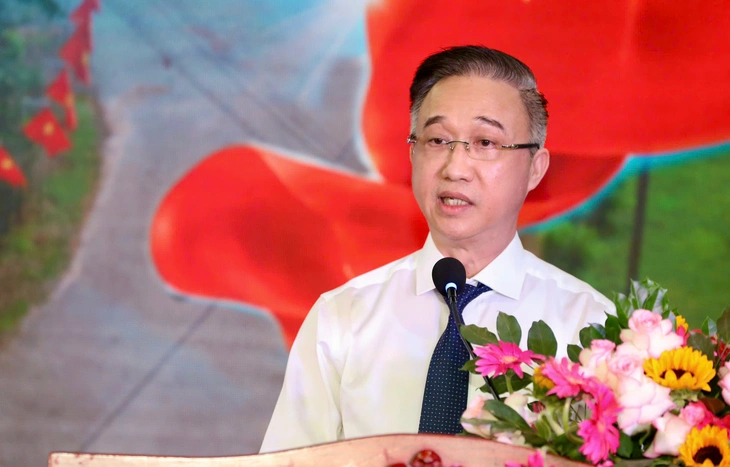
Deputy Secretary of the Ho Chi Minh City Party Committee Dang Minh Thong also stated that from flags handed directly to fishermen at sea, officers and soldiers at borders and islands, to roads adorned with the red of the national flag, and solemn flag-raising ceremonies in remote areas, the program has helped connect millions of Vietnamese hearts through love for the homeland and country.
Deputy Secretary of the Ho Chi Minh City Party Committee Dang Minh Thong speaks at the
Pride of the National Flag
The “Pride of the National Flag” refers to a deep cultural and patriotic reverence for a nation’s flag, often celebrated through monuments, museums, or ceremonies that honor its history and symbolism. For example, in many countries, such sites highlight the flag’s role in struggles for independence or national unity, serving as a reminder of sacrifices made for sovereignty. These locations aim to inspire civic pride and educate visitors about the flag’s evolution and meaning within the national identity.
Vietnam Revolutionary Press Day
Vietnam Revolutionary Press Day, observed annually on June 21, commemorates the founding of the country’s revolutionary journalism on that date in 1925, when the first issue of the newspaper *Thanh Niên* (Youth) was published by Hồ Chí Minh. This day honors the vital role of the press in Vietnam’s struggle for independence and national development, recognizing journalists for their contributions to revolutionary ideals and social progress. It is a time to reflect on the history and ethical responsibilities of the media in serving the public and the nation.
National Assembly
The National Assembly is the legislative body of a country, often housed in a significant historical building. For example, the National Assembly of France is located in the Palais Bourbon, originally built in the 18th century for a royal princess, and it became the home of the lower house of parliament after the French Revolution. Similarly, the National Assembly of South Korea is situated in the Y-shaped National Assembly Building in Seoul, completed in 1975, symbolizing the nation’s democratic governance.
Central Commission for Propaganda and Mass Mobilization
The Central Commission for Propaganda and Mass Mobilization is a key ideological body within the Communist Party of Vietnam, responsible for guiding public communication and political education. Established to shape public opinion and support party policies, it has played a central role in disseminating state narratives since the early days of the Democratic Republic of Vietnam. Its history reflects the party’s ongoing emphasis on controlling information and mobilizing the population in alignment with socialist goals.
Vietnam Journalists Association
The Vietnam Journalists Association, founded in 1950, is the professional and social organization representing journalists and media workers across Vietnam. It has played a key role in guiding press ethics, supporting press freedom within the country’s legal framework, and fostering the development of journalism through training and awards. The association also oversees the annual National Press Awards and manages the Vietnam Press Museum, which preserves the history of Vietnamese media.
Ho Chi Minh City Party Committee
The Ho Chi Minh City Party Committee is the leading political body of the Communist Party of Vietnam in the city, overseeing local governance and policy implementation. Its headquarters is located in a historic building that once served as the French colonial-era Governor’s Palace, reflecting the city’s complex past. The committee plays a central role in guiding the economic and social development of Vietnam’s largest urban center.
national flag routes
“National Flag Routes” refer to scenic highways in China that prominently feature displays of the national flag, often along border regions or key historical roads. These routes are designed to promote patriotism and showcase the country’s diverse landscapes, with some tracing paths used during significant events like the Long March. They serve as both tourist attractions and symbols of national unity, blending natural beauty with cultural pride.
Vietnamese records
“Vietnamese records” refer to the extensive historical documentation maintained by various Vietnamese dynasties, including annals, genealogies, and official chronicles. These records, such as the *Đại Việt sử ký toàn thư* (Complete Annals of Đại Việt), provide a crucial account of Vietnam’s political, cultural, and social history from ancient times through the Nguyễn dynasty. They are invaluable for understanding Vietnam’s heritage, including its struggles for independence and interactions with China and other regional powers.