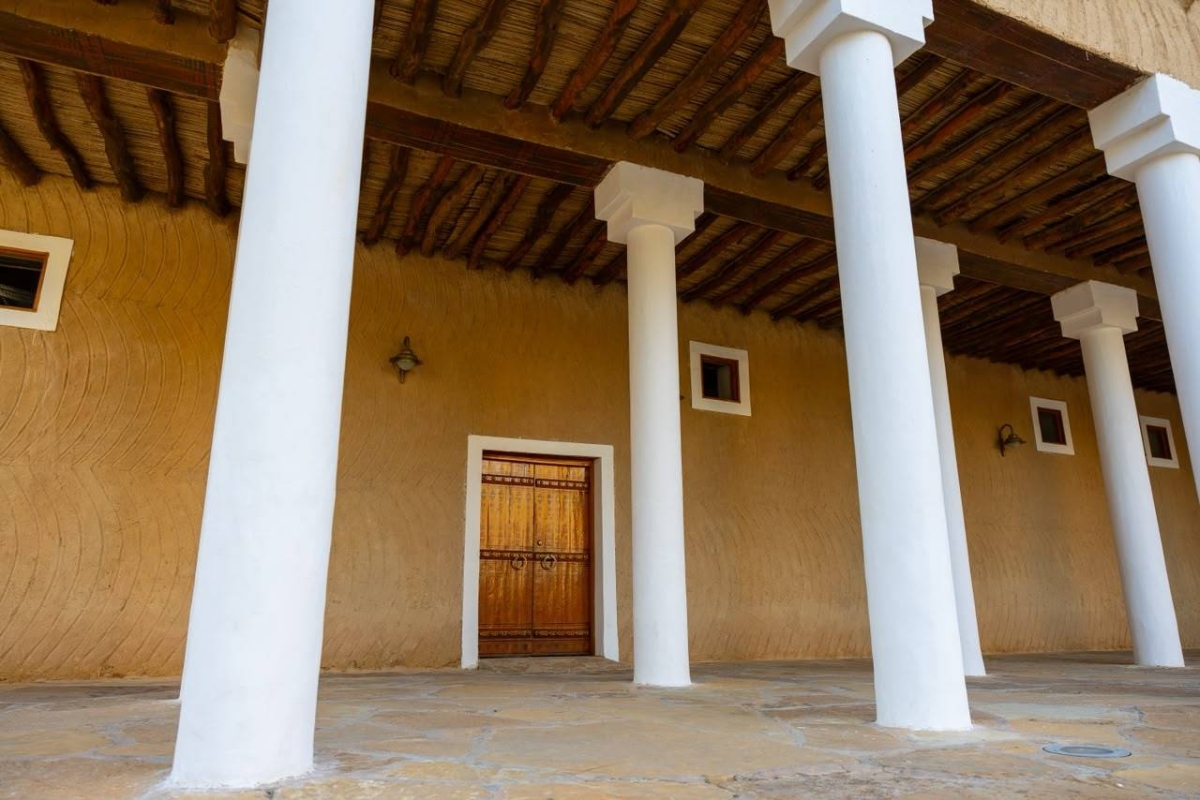
In old Najdi houses, doors were not just entrances to homes, but details that tell the identity of the place and the taste of its people, and carvings bearing the mark of the craftsman who spent long periods shaping wood and turning it into an artistic piece that lasts for decades.
Today, the Royal Institute of Traditional Arts is reviving this art by opening registration for a new cohort of the “Carpentry and Najdi Doors” apprenticeship program, one of the specialized programs for transferring the craft knowledge associated with making Najdi doors and qualifying a new generation of practitioners capable of mastering and preserving it.
The program is held at the institute’s headquarters in the city of Unaizah in the Qassim region, where trainees experience a practical journey lasting 18 months in craft workshops. During this time, they learn traditional carpentry, the arts of Najdi engraving and decoration, and methods of implementing doors using modern tools and techniques, under the supervision of experienced craftsmen and specialists.
The program is not limited to teaching craft skills alone, but offers a direct apprenticeship experience that reconnects trainees with one of the most prominent arts associated with Najdi architecture, giving them the opportunity to transform this traditional heritage into a contemporary professional and creative practice.
The program is part of the institute’s efforts to preserve and sustain Saudi traditional arts through educational programs based on learning by doing and transferring live experiences from craftsmen to new generations, thereby enhancing the presence of national crafts in the cultural and architectural scene.
The program begins on August 23, 2026, and study is free for Saudi citizens. Those interested can register and view the program details through the institute’s website.
Najdi houses
Najdi houses are traditional mud-brick homes found in the Najd region of central Saudi Arabia, known for their distinctive triangular ventilation openings and decorative geometric patterns. Dating back centuries, these structures were designed to withstand the harsh desert climate, with thick walls for insulation and narrow windows to keep interiors cool. They reflect the region’s architectural heritage and are a symbol of Bedouin and settled community life before modern urbanization.
Royal Institute of Traditional Arts
The Royal Institute of Traditional Arts is a prestigious institution dedicated to preserving and promoting Saudi Arabia’s rich cultural heritage through traditional arts and crafts. Established under the patronage of the Saudi government, it serves as a center for education, training, and innovation in fields such as calligraphy, pottery, and weaving. The institute plays a key role in safeguarding these art forms for future generations while fostering contemporary artistic expression rooted in tradition.
Unaizah
Unaizah is a historic city in the Al-Qassim Region of central Saudi Arabia, known as a major cultural and agricultural center. Its history dates back to pre-Islamic times, and it gained prominence in the 19th century as a hub for trade, poetry, and religious scholarship. Today, Unaizah is celebrated for its traditional architecture, date farms, and vibrant festivals, such as the annual Date Festival.
Qassim region
The Qassim region, located in central Saudi Arabia, is known for its rich agricultural heritage, particularly as a major producer of dates, with the city of Buraydah serving as its capital. Historically, the area was a vital crossroads for trade and pilgrimage routes, and it played a significant role in the unification of Saudi Arabia under King Abdulaziz in the early 20th century. Today, Qassim blends its deep-rooted traditions with modern development, offering cultural sites like the Buraydah Date Festival and historic mud-brick villages.