To meet the deadline in 2026, local authorities are launching an all-out campaign for the entire population.
Who will be examined?
Sharing about the preparation of the periodic health check-up plan for residents, it was stated that according to the roadmap stipulated in the Law on Disease Prevention, 2026 will be a key phase for implementing periodic health check-ups and free screening for the population.
The groups to be examined include people with meritorious services, policy beneficiaries, children, workers, armed forces personnel, and other resident groups. For students, health checks will be conducted through the school system. Workers will receive periodic health check-ups and occupational disease examinations as per the employer’s responsibility.
For the remaining resident groups, the organization of check-ups will depend on the budget balance and resource mobilization capacity of each locality. The immediate goal is to ensure that people receive periodic health check-ups at least once a year.
To prepare for this program, the Ministry of Health has issued many professional guidance documents to ensure uniform implementation nationwide. After the examination, healthcare facilities will classify health status according to current standards. If signs of suspected specialized diseases are detected, people will be counseled and referred to appropriate specialized facilities for further examination.
Localities accelerate implementation of plans
In Hanoi, the city has issued a plan to implement free periodic health check-ups for residents. According to the resolution of the City People’s Council, from 2026, people with permanent or temporary residence for 12 months or more in the area will receive free health check-ups at least once a year.
For people aged 18 and over, the program not only includes clinical examination but also performs necessary tests and screens for many common diseases such as hypertension, diabetes, chronic lung disease, some types of cancer, and mental health disorders.
In Ho Chi Minh City, the city is also implementing a health check-up program for the entire population on the largest scale in the country (15 million people). The Ho Chi Minh City People’s Committee has issued a plan for health check-ups at 168 wards, communes, and special zones in 2026.
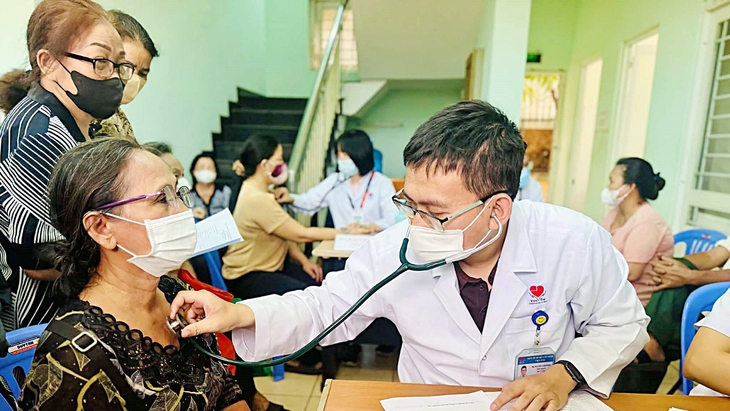
Accordingly, the content of periodic health check-ups follows the guidance of the Ministry of Health. Especially for people aged 18 and over, there will be a complete blood count test, chest X-ray; tests for diabetes, breast cancer, cervical cancer, etc.; for the elderly (chronic diseases, blood pressure, diabetes, etc.). The cost of periodic health check-ups does not exceed 350,000 VND per person per year.
Since May 25, nine initial areas of the city have accelerated the implementation of the universal health check-up program with the determination to basically complete it in the second quarter of 2026. Priority targets include children under 18 who have not had a health check-up in the 2025-2026 school year, informal workers, and the elderly. Notably, for the first time, many higher-level hospitals are being mobilized to directly support commune and special zone health stations in organizing health check-ups for residents.