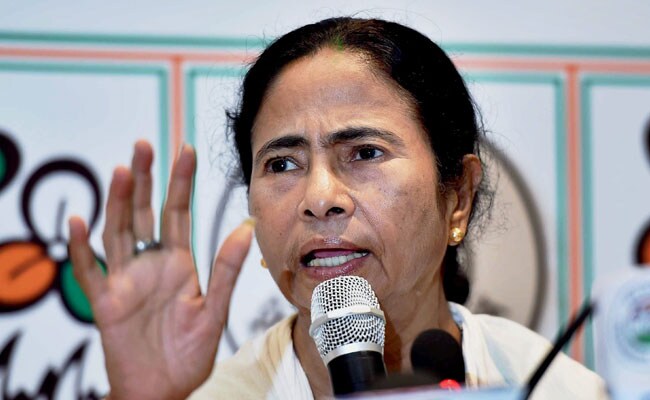
In the sweltering political heat of June 2026, just a month after the Bharatiya Janata Party (BJP) delivered a landslide victory in the West Bengal Assembly elections by securing around 208 seats to the Trinamool Congress’s (TMC) roughly 80, Mamata Banerjee’s party finds itself on the precipice of disintegration. What was unimaginable before the May results has unfolded with startling speed, as 58 Trinamool MLAs have thrown their weight behind expelled leader Ritabrata Banerjee as Leader of the Opposition, openly defying Mamata’s preference for veteran Sobhandeb Chattopadhyay.
The rebels, while professing loyalty to Mamata as a guiding figure, have effectively sidelined her nephew Abhishek Banerjee. In a desperate countermove, the official Trinamool faction dissolved all frontal organisations, leaving only Mamata as the foundational anchor. This is not mere post-defeat sulking, but structural rupture. The TMC, which rode to power in 2011 on the "Maa, Maati, Manush" slogan and held the state for 15 years, has seen its organisational muscle atrophy amid allegations of centralised, corporate-style management.
Advertisement – Scroll to continue
The crisis mirrors recent splits in the Shiv Sena and Nationalist Congress Party (NCP) in Maharashtra, where the question of control over party symbols became a legal tussle. With the BJP’s Suvendu Adhikari now installed as Bengal’s Chief Minister, the power vacuum has emboldened dissenters. Mamata Banerjee, the legendary street fighter who built the TMC from scratch, faces her sternest test yet, and this time, the threat is from within. Her 41% vote share in a relatively free election underscores that her personal appeal remains intact, but institutional decay threatens to erode even that. The coming weeks will decide whether the TMC survives as a coherent force or fragments into irrelevance, a fate that would redefine not just Bengal but opposition dynamics across the entire nation.
Will Mamata Remove Abhishek?
The epicentre of discontent lies with Abhishek Banerjee, the party’s national general secretary. Old guards and newer entrants alike attribute the TMC’s rout, from 215 seats in 2021 to around 80 now, to his style of functioning, which allegedly transformed a grassroots outfit into one steered by a professional election management firm like I-PAC. Post-poll, this resentment boiled over. The rebels’ swift announcement of Ritabrata Banerjee as LoP, within minutes of official moves, signalled rejection of Abhishek’s oversight.
Removing him could theoretically quell the rebellion, but the probability remains low. Abhishek’s ascent since 2014 has been intertwined with Mamata’s decisions, who granted him control over key organisational levers. Such a move risks alienating a faction she nurtured, potentially fracturing family and loyalist networks. However, retaining him perpetuates the revolt. The dissolution of frontal wings indicates a reset attempt, but without addressing the core grievance – perceived dynastic corporate control – the murmurs will persist. Historical parallels, like regional parties losing cohesion over second-generation leadership, suggest this dilemma could prove fatal if it goes unresolved. Mamata must weigh short-term unity against long-term organisational revival.
What About The Remaining Leaders
Right now, survival is a two-front war fought in the corridors of Kolkata and the halls of New Delhi. On paper, 20 loyalists remain in the state assembly, but they look less like a vanguard and more like political hostages. With 58 rebels rallying behind a new leader, the mutineers have comfortably crossed the legal threshold to escape the anti-defection axe. The party hierarchy is crying foul, alleging forgery of signatures and demanding investigations. But everyone knows courtrooms cannot fix a broken house. Without a massive, ego-free outreach from Mamata herself, the bleeding will not stop. The warning lights are already flashing, as several of her lawmakers have already been spotted rubbing shoulders at administrative meetings hosted by the new BJP government.
If the mood in Kolkata is grim, the atmosphere in New Delhi is downright skeletal. When Mamata staged a recent protest, the optics were devastating. Out of nearly 40 parliamentarians, only a tiny circle of