A river of clear blue water reflects the “upstream responsibility”: Chongqing builds its first passenger “green shipping corridor”.
On the golden waterway of the upper Yangtze River, a quiet and deep green revolution is profoundly reshaping the face of traditional shipping.
Recently, the project “Deepening the Green Transformation of Shipping to Create the First Passenger ‘Green Shipping Corridor’ on the Upper Yangtze River,” submitted by Chongqing’s Yuzhong District and the Chongqing Maritime Safety Administration, stood out from numerous cases and was successfully selected as one of the “2025 Best Practice Cases for Reform and Development in the Field of Ecological and Environmental Protection in Chongqing.”
This is not just an honor, but also an affirmation of Chongqing’s role in better fulfilling its “three roles,” shouldering the political responsibility of “building a strong ecological barrier on the upper Yangtze River,” and exploring a path for green and low-carbon development in inland waterway shipping. Honors are footnotes; action is the main text. Facing the Yangtze River, Chongqing’s answer is written in the wake of every green ship and in the clarity of this river’s blue waters.
Responding to the Situation: From Political Responsibility to Development Consciousness
Chongqing is located on the upper reaches of the Yangtze River, in the hinterland of the Three Gorges Reservoir area. It is a shipping center on the upper Yangtze and a junction point between the “Belt and Road” Initiative and the Yangtze River Economic Belt.
With abundant water transport resources and a prominent shipping status, it bears the important mission of leading the development of green shipping and serving national strategies, especially in taking the lead and setting an example in promoting green development of the Yangtze River Economic Belt.
However, for a long time, problems such as exhaust emissions, wastewater and garbage discharge into the river, and oil leakage from inland waterway ships primarily powered by traditional fuel have been a hidden concern hanging over the “river of clear blue water.”
How to resolve the contradiction between shipping development and ecological protection has become an issue that Chongqing must confront directly.
Building a green shipping corridor is the key move to solve this problem. This is not only a strategic requirement to implement the national “15th Five-Year Plan” outline’s goal of “building demonstration sections for zero-carbon transport corridors,” but also a conscious mission for Chongqing as the only comprehensive land, water, air, and rail transportation hub on the upper Yangtze River.
In this process, leveraging its core resource advantages in “Two Rivers Cruise” and “Three Gorges Cruise,” Yuzhong District has taken the initiative and broken new ground first. Relying on its location as an urban core and a quality peninsula, it has taken the lead in constructing a green shipping corridor, striving to explore replicable and scalable green shipping experience to provide strong support for the green shipping corridor on the upper Yangtze River.
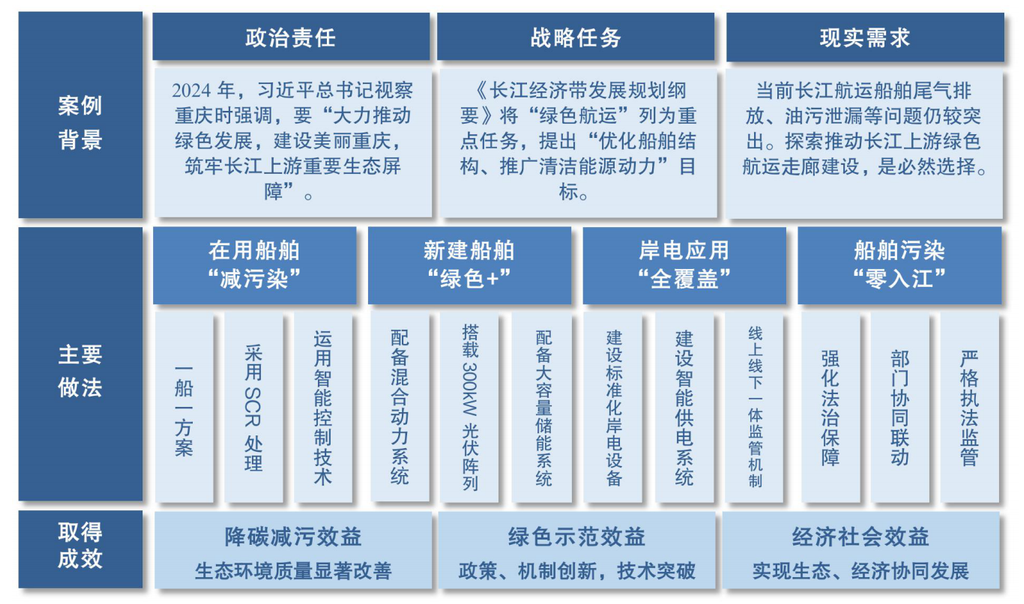
Chongqing’s practice is not a patchwork improvement but a systematic green revolution covering the entire “lifecycle” of ships. Through a four-dimensional approach of “reducing existing stock, optimizing new additions, achieving full coverage, and ensuring zero discharge into the river,” a replicable and scalable governance system has taken shape.
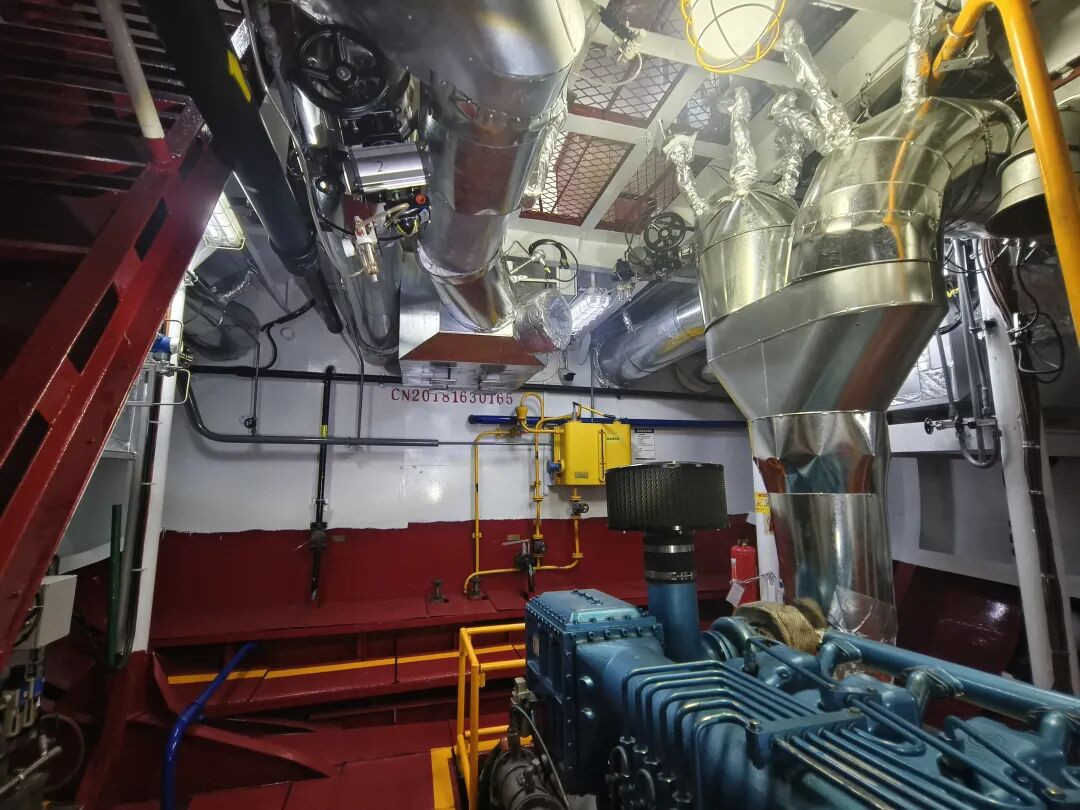
China’s first pilot project for inland waterway ship exhaust treatment—installation of exhaust treatment equipment on “Two Rivers Cruise” ships in Yuzhong District. (Image source: Yuzhong District Ecological Environment
Yangtze River
The Yangtze River is the longest river in Asia and the third-longest in the world, flowing over 6,300 kilometers through China. Its basin has been a cradle of Chinese civilization for thousands of years, supporting agriculture, trade, and cultural development since the Neolithic era. Historically, it served as a vital transportation route and a natural boundary, with major cities like Shanghai and Nanjing thriving along its banks.
Three Gorges Reservoir area
The Three Gorges Reservoir area, located along the Yangtze River in central China, was created by the construction of the Three Gorges Dam, the world’s largest hydroelectric project, which began operation in 2003. This massive reservoir submerged numerous towns, archaeological sites, and ancient cultural relics, drastically altering the region’s landscape and displacing over a million residents. Today, it serves as a major source of flood control, power generation, and navigation improvement, while also becoming a significant tourist destination known for its dramatic scenery and relocated historical attractions.
Belt and Road
The “Belt and Road” refers to China’s ambitious global infrastructure and economic development strategy, officially launched in 2013. It revives the ancient Silk Road trade routes, aiming to enhance connectivity and cooperation between China and over 140 countries across Asia, Europe, and Africa through investments in roads, ports, railways, and energy projects. The initiative is rooted in historical trade networks but has sparked both praise for fostering development and criticism over debt sustainability and geopolitical influence.
Yangtze River Economic Belt
The Yangtze River Economic Belt is a major regional development strategy in China, encompassing 11 provinces and municipalities along the Yangtze River. It was officially launched in 2014 to promote economic integration, ecological protection, and sustainable growth, building on the river’s historical role as a vital transportation and trade artery. This initiative aims to leverage the region’s industrial, agricultural, and technological strengths to drive China’s overall economic modernization.
Two Rivers Cruise
The Two Rivers Cruise is a popular tourist experience in Cambodia that takes visitors along the Mekong and Tonle Sap rivers, offering a unique perspective on local life and landscapes. Historically, these rivers have been vital to the region’s trade, agriculture, and the rise of the ancient Khmer Empire, with the Tonle Sap River’s unique reverse flow phenomenon shaping the area’s ecology and culture. Today, the cruise provides a relaxing way to see floating villages, wildlife, and the confluence where the two rivers meet.
Three Gorges Cruise
The Three Gorges Cruise is a popular river journey along the Yangtze River in China, passing through the dramatic Qutang, Wu, and Xiling gorges. This route has been a vital transportation and cultural corridor for thousands of years, and the cruise experience was transformed by the construction of the Three Gorges Dam, completed in 2012, which created a deeper, calmer waterway. Today, the cruise offers travelers a blend of stunning natural scenery, ancient temples, and modern engineering marvels.
Yuzhong District
Yuzhong District is the historic and commercial heart of Chongqing, China, located on a peninsula at the confluence of the Yangtze and Jialing Rivers. It is home to some of the city’s most iconic landmarks, including the ancient Ciqikou town and the modern Jiefangbei CBD, reflecting its evolution from a key river port during the Ming and Qing dynasties to a bustling urban center. As the political and cultural core of the city, Yuzhong preserves a blend of traditional architecture and rapid modernization, including wartime sites from its role as China’s provisional capital during World War II.
Chongqing
Chongqing is a major city in southwestern China, known for its mountainous terrain and strategic location at the confluence of the Yangtze and Jialing rivers. Historically, it served as the provisional capital of the Republic of China during the Second Sino-Japanese War (1937–1945) and has since grown into a key industrial and economic hub. Today, it is famous for its spicy hotpot cuisine, vibrant nightlife, and unique urban landscape of steep hills and futuristic architecture.