Over the next five years, Beijing will not only be a city with higher development quality and stronger innovation momentum but also a more open, livable, and warmer city.
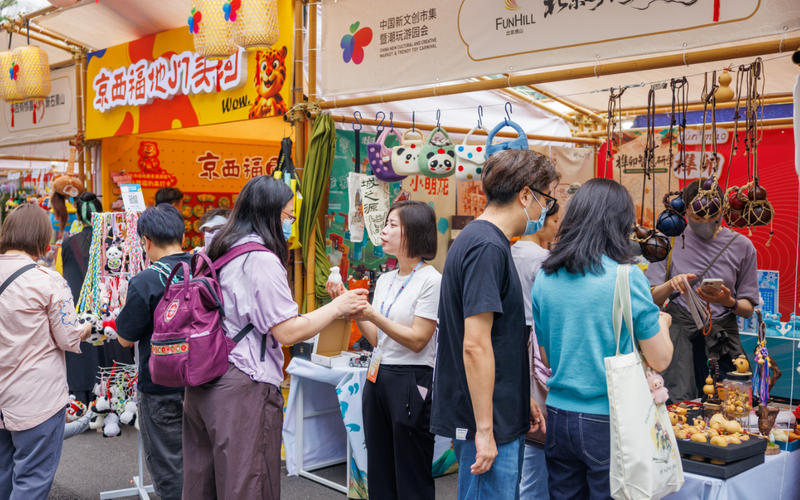
On May 24, the last day of the first China New Cultural and Creative Market and Trendy Play Garden Party, citizens visited booths from various Beijing districts at Chaoyang Park.
On May 29, a press conference titled “Starting the 15th Five-Year Plan” was held to comprehensively interpret Beijing’s 15th Five-Year Plan, outlining the blueprint and implementation path for the capital’s high-quality economic and social development during this period. The city aims to achieve a new level of high-quality economic development through five years of effort.
As the capital of a major country, Beijing always shoulders the important mission of serving national strategies and promoting high-quality development. Standing at the new starting point of the 15th Five-Year Plan, Beijing’s anchored goals not only concern the development direction of the capital over the next five years but also carry the mission and expectation of exploring paths for high-quality development in megacities and providing a model for improving people’s well-being.
Overall, as the first megacity to achieve reduced development during the 14th Five-Year Plan, Beijing will continue to move in this direction. During the 15th Five-Year Plan period, Beijing will focus more on improving quality and efficiency, promoting effective improvement in economic quality and reasonable growth in quantity through a balance of increases and decreases, and support and restraint.
According to the plan, Beijing has set an average annual GDP growth target of 4.5% to 5%, adding over one trillion yuan in economic increments over the next five years. This means that despite reduced development, Beijing will maintain strong development resilience and growth momentum, further marking the historical coordinates of the capital’s development.
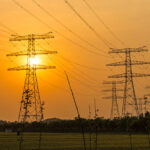
Beyond the numbers, the quality of development is even more anticipated. Beijing proposes to use technological innovation as the core engine for high-quality development. While consolidating the advantages of two trillion-yuan industrial clusters—new-generation information technology and medicine and health—it will focus on cultivating emerging industries such as artificial intelligence, green advanced energy, and low-carbon environmental protection, increasing the number of trillion-yuan industrial clusters in the city to five. It will also proactively lay out future tracks such as quantum technology, brain-computer interfaces, and sixth-generation mobile communications to cultivate new growth points.
These goals show that Beijing is not only focused on current development increments but also on accumulating new growth momentum for future competition, transforming the “key variable” of technological innovation into the “maximum increment” for capital development.
If technological innovation and industrial upgrading support Beijing’s “hard power,” then international exchange capabilities, cultural influence, and a livable environment shape the city’s “soft power.”
During the 15th Five-Year Plan, Beijing will continue to enhance its functions as an international exchange center, build an international consumer center city and world tourism destination, and create distinctive brands such as “City of Performing Arts,” “City of Museums,” and “Bookish Capital,” allowing ancient capital culture and modern civilization to complement each other.
Notably, the plan adds an indicator for the proportion of Beijing’s port entry and exit passengers to the national total, aiming to increase it from 3.08% to about 3.8%. This reflects the capital’s direction of further opening up and enhancing the vitality of international exchanges. A major country’s capital with historical heritage, innovation vitality, and international style is showing increasing attractiveness and influence.
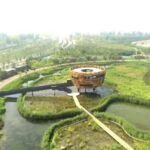
For the people living in this city, the 15th Five-Year Plan is also full of warmth. From building service systems for the elderly and children, to continuously optimizing public services in education, healthcare, and employment, to constructing a garden city and improving the living environment, Beijing’s development goals are not only to make the city stronger but also to make citizens’ lives better.
For example, the plan proposes that the average life expectancy of residents reach about 85 years, the number of elderly care beds reach about 25 per 1,000 elderly people, and add 100,000 new primary and secondary school places. These livelihood indicators are designed to convey the warmth of urban development to every family in a more intuitive way.
In addition, the plan emphasizes promoting coordinated regional development, relieving non-capital functions, implementing urban renewal actions, and enhancing the support capacity of lifeline systems such as water resources. This shows that Beijing’s planning is not for breakthroughs in a single
<div class="my-4 p-4 rounded-lg shadow-md bg-blue-50 border-l-4 border-blue-