
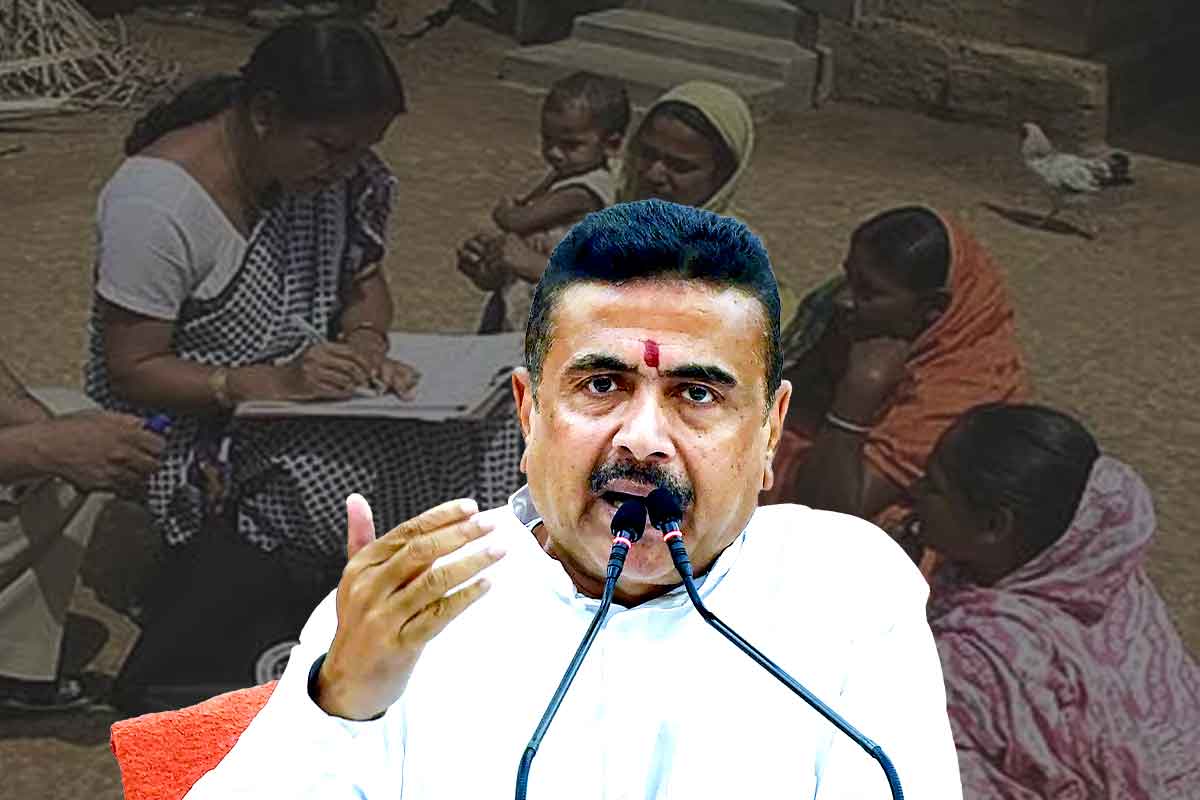
After a meeting regarding the census, the Chief Minister made a major announcement. He stated that the census will begin in the state from August 1. Until August 15, residents can submit their information digitally. The work will continue until February. The Chief Minister said that for the first time, the census will be conducted digitally. He clearly stated, “The census is a constitutional responsibility. The population composition has changed due to infiltrators. Remember, this has nothing to do with politics or religion.” He also targeted the previous government, saying, “We have fallen behind because of the previous government’s negligence.”
Read more:
Census
The Census is not a specific place or cultural site, but rather a systematic process of collecting demographic data about a population. Historically, censuses date back to ancient civilizations like Rome and China, where they were used for taxation and military conscription. Today, modern censuses are crucial for government planning, resource allocation, and understanding societal trends.
Rome
Rome, the capital of Italy, is one of the most historically significant cities in the world, famously known as the “Eternal City.” Founded traditionally in 753 BC, it was the heart of the Roman Empire, which dominated much of Europe, North Africa, and the Middle East for centuries. Today, Rome is renowned for its ancient landmarks like the Colosseum, Roman Forum, and Vatican City, blending millennia of history with vibrant modern culture.
China
China is one of the world’s oldest continuous civilizations, with a recorded history spanning over 3,500 years. It was home to ancient dynasties such as the Shang, Zhou, Qin, and Han, which laid the foundations for its rich cultural heritage, including Confucianism, the Great Wall, and the Silk Road. Today, China is a vast and diverse nation, blending its imperial past with modern innovation as a global economic and cultural powerhouse.
Rome
Rome, the capital of Italy, is one of the world’s most historically significant cities, famously known as the “Eternal City.” Founded traditionally in 753 BC, it was the center of the Roman Empire, which dominated much of Europe, North Africa, and the Middle East for centuries. Today, Rome is renowned for its ancient landmarks like the Colosseum and Roman Forum, as well as its role as the home of Vatican City and the Catholic Church.
Colosseum
The Colosseum, also known as the Flavian Amphitheatre, is an iconic ancient Roman amphitheater located in the center of Rome, Italy. Construction began under Emperor Vespasian in 72 AD and was completed in 80 AD under his successor Titus, primarily serving as a venue for gladiatorial contests, public spectacles, and dramas. Despite suffering
Rome
Rome is the capital city of Italy and one of the most historically significant cities in the world, famously known as the “Eternal City.” It was the center of the ancient Roman Empire, which dominated much of Europe, North Africa, and the Middle East for centuries, and later became the heart of the Catholic Church. Today, Rome is renowned for its iconic landmarks such as the Colosseum, the Roman Forum, and the Vatican City, blending ancient history with modern life.
China
China is one of the world’s oldest continuous civilizations, with a recorded history spanning over 3,500 years. It is home to iconic cultural sites such as the Great Wall, the Forbidden City, and the Terracotta Army, reflecting its rich imperial past and philosophical traditions like Confucianism and Taoism. Today, China blends its ancient heritage with rapid modernization, making it a unique and influential global power.
Colosseum
The Colosseum, also known as the Flavian Amphitheatre, is an ancient Roman amphitheater in Rome, Italy, built between 70-80 AD under Emperors Vespasian and Titus. It was used for gladiatorial contests, public spectacles, and dramas, hosting up to 50,000 spectators. Despite damage from earthquakes and stone robbers, it remains a iconic symbol of Imperial Rome and a major tourist attraction.
Roman Forum
The Roman Forum was the bustling political, religious, and commercial heart of ancient Rome, serving as a central plaza for public gatherings, elections, and triumphal processions for centuries. Its history dates back to the 7th century BCE, when it began as a marshy valley that was drained and developed into a marketplace, later evolving into the epicenter of Roman public life. Today, its ruins—including temples, basilicas, and the Arch of Titus—offer a poignant glimpse into the grandeur and daily life of the Roman Empire.
Vatican City
Vatican City is an independent city-state enclaved within Rome, Italy, and serves as the spiritual and administrative center of the Roman Catholic Church. Its history dates back to the early Christian era, but the current state was established in 1929 with the Lateran Treaty, resolving the “Roman Question” between the Holy See and Italy. The site is home to iconic landmarks like St. Peter’s Basilica and the Vatican Museums, which house priceless art and historical artifacts.
Great Wall
The Great Wall of China is a series of ancient fortifications built across northern China to protect against invasions and raids. Construction began as early as the 7th century BCE, with major additions made during the Ming Dynasty (1368–1644) to strengthen defenses. Spanning over 13,000 miles, it is a UNESCO World Heritage site and one of the most iconic symbols of Chinese history and culture.
Silk Road
The Silk Road was a vast network of trade routes connecting East Asia, the Middle East, and Europe, flourishing from around the 2nd century BCE to the 15th century CE. It facilitated the exchange of goods like silk, spices, and precious metals, as well as the diffusion of cultures, religions, and technologies between civilizations. While primarily known for commerce, the Silk Road also played a crucial role in spreading Buddhism, papermaking, and the bubonic plague, shaping global history.
Census
A census is an official, systematic count of a population, typically conducted by a government to collect demographic data. The practice dates back to ancient civilizations, such as the Roman Empire’s “census” for taxation and military service, famously referenced in the biblical story of Jesus’s birth. Today, censuses are vital for resource allocation, political representation, and understanding societal trends.
Related news
What was India’s capital before Delhi and why was it changed? Learn the full story.
Whenever we talk about the capital of India, Delhi...

Something is definitely off… Sanjay Raut raises questions over Ajit Pawar’s death; demands reinvestigation.
Sanjay Raut: Shiv Sena (UBT) MP Sanjay Raut has ex...
‘This is very unfortunate…’, on Netaji’s birth anniversary, ‘Didi’ raises discussion on unresolved mystery, makes this demand from the Centre.
Subhash Chandra Bose: Today is the 129th birth ann...

What is India’s oldest cricket stadium? This is where the game’s golden journey began.
Cricket has a long and glorious history in India. ...
“Nandigram: Trinamool is winning,” predicts a confident Abhishek.
From the Diamond Harbour rally, Abhishek challenge...