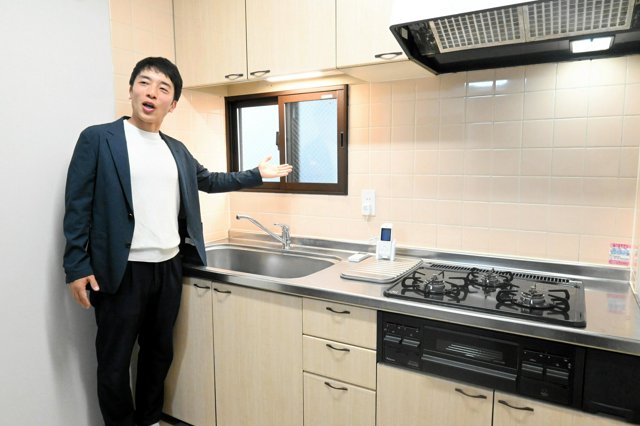
Tokyo seeks applicants for affordable rental housing, targeting families raising children.
On the 29th, a program began recruiting residents for “affordable housing” with reasonable rents. Rents are kept at about 70-80% of market levels. With soaring rents in central urban areas, the aim is to reduce the burden on families raising children.
The recruitment for residents has started for a total of 40 units, including renovated second-hand detached houses and newly built homes within the metropolitan area. Rents range from 95,000 yen to 198,000 yen, which is said to be 65-80% of market levels. All units are targeted at households raising children under 18, with some having conditions such as a household income of no more than 8 million yen.
First domestic initiative achieves low prices
The homes are owned and rented out by a public-private entity established by the metropolitan government with major real estate companies and financial institutions. A total of 10 billion yen each is invested by the metropolitan government and the private sector. Rents were kept low by reducing the returns for investors from the fund. According to the metropolitan government, this type of public-private fund is the first of its kind in the country, and a total of 350 units are planned for future supply.
Additionally, starting in June, the metropolitan government will reduce rents by 20% on homes it manages and begin recruiting residents for these as affordable housing. In this format, a total of 1,200 units are planned to be supplied over the next six years.
In the public corporation, there is already a system in the Tama region that offers a 20% rent discount for single-parent households and young households. This new affordable housing initiative will expand across the entire metropolitan area, targeting households raising children or newlyweds with household incomes under 12 million yen.
Furthermore, emphasis is placed on locations near parks and schools, providing homes of at least 45 square meters or with two or more rooms, suitable for raising children.
The metropolitan government’s move to supply affordable housing is driven by rising rents in central urban areas. According to a survey by a major housing information company, the average rent for apartments in the 23 wards in April was 254,995 yen for family-sized units (50-70 square meters), an increase of over 10,000 yen compared to the same month the previous year.
At a press conference on the 29th, the governor stated, “Since rising rents affect daily life itself, we want to steadily move forward so that people who want to live can do so, utilizing funds and vacant homes.”
Expert: “Need a mechanism to fundamentally lower rents”
On the other hand, under the current metropolitan plan, only about 1,500 households will benefit. A specially appointed professor specializing in housing policy pointed out, “Because the number of units supplied is small, there will be no major impact on the overall housing market.” He added, “We should create a mechanism to fundamentally lower rents, such as increasing the supply of public housing or establishing a rent subsidy system.”
The metropolitan government says it will also consider expanding affordable housing through various mechanisms in the future.
Tama region
The Tama region, located in western Tokyo, Japan, is a historically significant area known for its natural beauty, including mountains, rivers, and parks. It was historically part of Musashi Province and developed as a key agricultural and cultural hub, with sites like Tama Cemetery and the Tama River playing important roles in local history. Today, it blends suburban development with preserved green spaces, offering residents and visitors a balance of urban convenience and traditional scenery.
23 wards
The 23 wards refer to the special wards of Tokyo, Japan, which collectively form the core urban area of the city. Originally established in 1947, these wards replaced the former Tokyo City, each functioning as an independent municipality with its own mayor and assembly. Today, they serve as the administrative and cultural heart of the Tokyo Metropolis, known for their dense population, historic landmarks, and vibrant neighborhoods.
<div class="my-4 p-4 rounded-lg shadow
Tama region
The Tama region, located in western Tokyo, Japan, is known for its natural beauty, including mountains, rivers, and parks like Tama River and Mount Takao. Historically, it was part of Musashi Province and developed as a key agricultural area, later becoming a suburban residential zone after the expansion of Tokyo’s railway network in the early 20th century. Today, it balances urban development with preserved green spaces, offering a blend of cultural heritage and outdoor recreation.
23 wards
The “23 wards” refer to the special wards that make up the core of Tokyo, Japan. Each ward operates as an independent municipality, and the system was established in 1943 when Tokyo City was merged with Tokyo Prefecture to form the Tokyo Metropolis. This unique administrative structure reflects the city’s post-war reconstruction and rapid growth, with each ward maintaining its own distinct history and character while collectively forming Japan’s political, economic, and cultural heart.
Musashi Province
Musashi Province was a historic province of Japan, located in the region that now includes Tokyo, Saitama, and parts of Kanagawa. It was one of the most important provinces during the feudal era, serving as a key center of samurai culture and power, particularly under the Minamoto clan. The province is also famous for its connection to the legendary swordsman Miyamoto Musashi, who took his name from the region.
Tama Cemetery
Tama Cemetery, located in Fuchū, Tokyo, is one of Japan’s largest public cemeteries, established in 1923. It was created in response to the Great Kantō earthquake and the subsequent need for more burial space, and it later became the final resting place for many notable figures, including authors, politicians, and artists. The cemetery is also known for its serene, park-like atmosphere and its famous cherry blossom trees, which attract visitors during spring.
Tama River
The Tama River is a major river in Japan that flows through Yamanashi, Kanagawa, and Tokyo Prefectures, emptying into Tokyo Bay. Historically, it served as a vital water source for agriculture and a natural boundary for the Musashi and Sagami provinces, and it has been immortalized in art, such as in Hiroshige’s ukiyo-e prints. Today, the river is a popular recreational area for hiking, fishing, and cherry blossom viewing, while its dams and reservoirs play a key role in supplying water to the Tokyo metropolitan area.