On Tuesday (May 26), a 23-year-old man arrived at his hometown in Tambakan Village, East Java. He worked as a coal mine mechanic in Kalimantan.
Only a day after returning home in Gandusari District, a fatal accident occurred on Eid al-Adha (May 27). The man was trying to help several children playing with an air balloon carrying firecrackers.
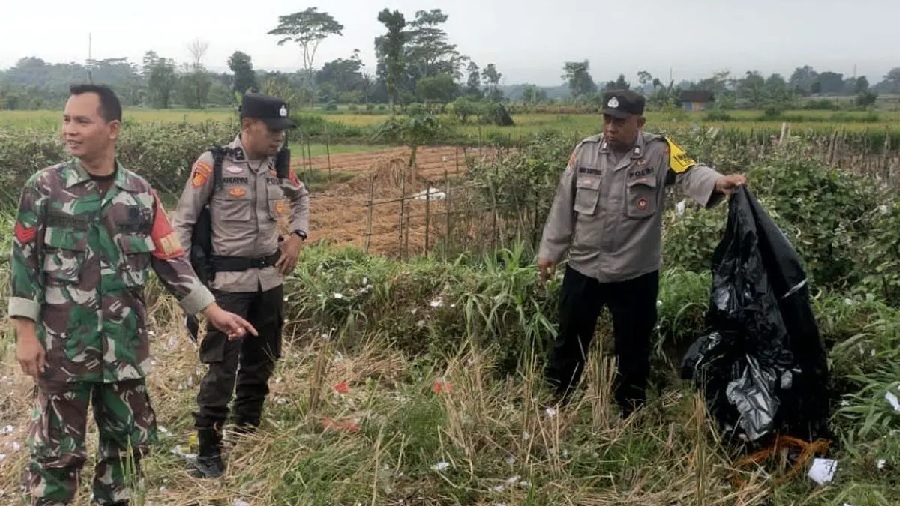
At the scene, a rice field area about 500 meters from the family home, scorched black grass was still visible. The diameter of the firecracker blast crater was about 1.5 meters.
The Blitar Police spokesperson stated that there were three male victims. Besides the man who died, two others, aged 11 and 12, were injured.
“The two injured victims are currently being treated at Ngudi Waluyo Wlingi Hospital in Blitar. The deceased victim was pronounced dead after receiving hospital care,” the spokesperson explained.
The tragic incident is estimated to have occurred around 6:30 AM local time. At that same time, local residents were heading to the Eid al-Adha prayer location.
“So, while other residents were going to the prayer site, the three victims and about six other young people went to the rice fields to launch the air balloon,” he explained.
While launching the balloon, a string of firecrackers was hung from it. Each group was separated, including the three victims. However, when the balloon belonging to the three victims was about to ascend, several firecrackers failed to explode.
It is suspected that the three immediately approached to check the condition of the firecrackers. But as they got closer, the firecrackers suddenly exploded.
“Police are currently conducting a thorough investigation by gathering witness statements. The two teenage victims are still receiving intensive care and sustained minor injuries to their arms, hands, and faces,” he said.
Just Returned
Wasis, the uncle of the deceased, recounted that before the incident, the victim was actually asleep, exhausted from the journey from Kalimantan. Suddenly at 6:00 AM, his grandfather woke him up and showed him some children who were going to play with an air balloon in the rice fields. The victim immediately left the house and headed to the fields.
“So, this victim intended to help a group of boys check the condition of the firecrackers by holding them. But the firecrackers suddenly exploded right in front of him, causing him to lose consciousness immediately,” he revealed.
Tambakan Village
Tambakan Village is a historic settlement in Indonesia, known for its traditional Javanese architecture and cultural heritage. Located in the Sleman Regency of Yogyakarta, the village has preserved centuries-old customs, including the production of traditional crafts like pottery and batik. Its history dates back to the Mataram Kingdom era, with the village serving as a hub for local artisans and community life.
East Java
East Java is a province in Indonesia known for its rich cultural heritage and historical significance, including being the heartland of the ancient Majapahit Empire, one of the largest empires in Southeast Asian history. The region features iconic sites like Mount Bromo, a famous active volcano, and the temples of Trowulan, which preserve remnants of Majapahit’s grandeur. Today, East Java blends Javanese traditions, Islamic influences, and modern development, making it a vibrant destination for history and nature enthusiasts.
Kalimantan
<div class="
Tambakan Village
Tambakan Village is a historic settlement in Bali, Indonesia, known for its traditional Balinese architecture and cultural preservation. The village has roots dating back centuries, serving as a hub for local customs and community life, and it remains a living example of Bali’s enduring heritage. Its name may derive from the Balinese word for “fence,” reflecting its historical role as a protected or enclosed area.
East Java
East Java is a province in Indonesia known for its rich cultural heritage and natural beauty, including the iconic Mount Bromo volcano and the ancient Hindu temple complex of Penataran. Historically, it was the heartland of the powerful Majapahit Empire, which ruled much of the Indonesian archipelago from the 13th to 16th centuries. Today, East Java blends this deep history with vibrant traditions, such as the Reog Ponorogo dance, and modern urban centers like Surabaya.
Kalimantan
Kalimantan is the Indonesian portion of the island of Borneo, known for its vast rainforests, unique biodiversity, and indigenous Dayak cultures. Historically, the region was home to powerful sultanates and later became a focal point for Dutch colonial exploitation of natural resources like rubber and coal. Today, it is significant for Indonesia’s planned new capital, Nusantara, which is being built in East Kalimantan to replace Jakarta.
Ngudi Waluyo Wlingi Hospital
Ngudi Waluyo Wlingi Hospital is a public hospital located in Wlingi, Blitar Regency, East Java, Indonesia. It was established to serve the healthcare needs of the local community, with its history rooted in the development of regional health services in the area. The hospital continues to provide medical care and support to residents, reflecting the ongoing commitment to public health in the region.
Blitar
Blitar is a city in East Java, Indonesia, best known as the burial place of Sukarno, Indonesia’s first president, whose grave is a major pilgrimage site. Historically, it was a key location during the Indonesian National Revolution and also contains remnants of the ancient Hindu-Buddhist kingdom of Majapahit, such as the Penataran Temple complex. Today, Blitar blends its historical significance with a quiet, laid-back atmosphere, attracting visitors interested in both modern Indonesian history and ancient heritage.
Gandusari District
Gandusari District is located in Trenggalek Regency, East Java, Indonesia. It is known for its natural beauty, including waterfalls and mountain scenery, and has a history tied to the region’s agricultural and traditional Javanese culture. The district’s name is thought to derive from local folklore, reflecting the area’s deep-rooted heritage and community life.
Mount Bromo
Mount Bromo is an active volcano located in East Java, Indonesia, and is a key part of the Bromo Tengger Semeru National Park. Its name derives from the Javanese pronunciation of Brahma, the Hindu god of creation, and it holds deep cultural significance for the local Tenggerese people, who hold the annual Yadnya Kasada ceremony to offer gifts into the crater. The volcano’s iconic, otherworldly landscape, including a vast caldera and smoking peak, makes it one of Indonesia’s most famous tourist destinations.
Trowulan temples
The Trowulan temples are a collection of ancient Hindu-Buddhist ruins located in East Java, Indonesia, believed to be the remnants of the capital of the Majapahit Empire (13th–16th centuries). Key structures include Candi Tikus, a royal bathing pool, and Candi Brahu, a brick temple possibly used for cremation ceremonies. These sites, along with other archaeological finds, offer valuable insight into the region’s rich pre-Islamic history and the grandeur of one of Southeast Asia’s last major Hindu-Buddhist empires.