Immediate regrowth: The ‘worst on Earth’ invasive plant
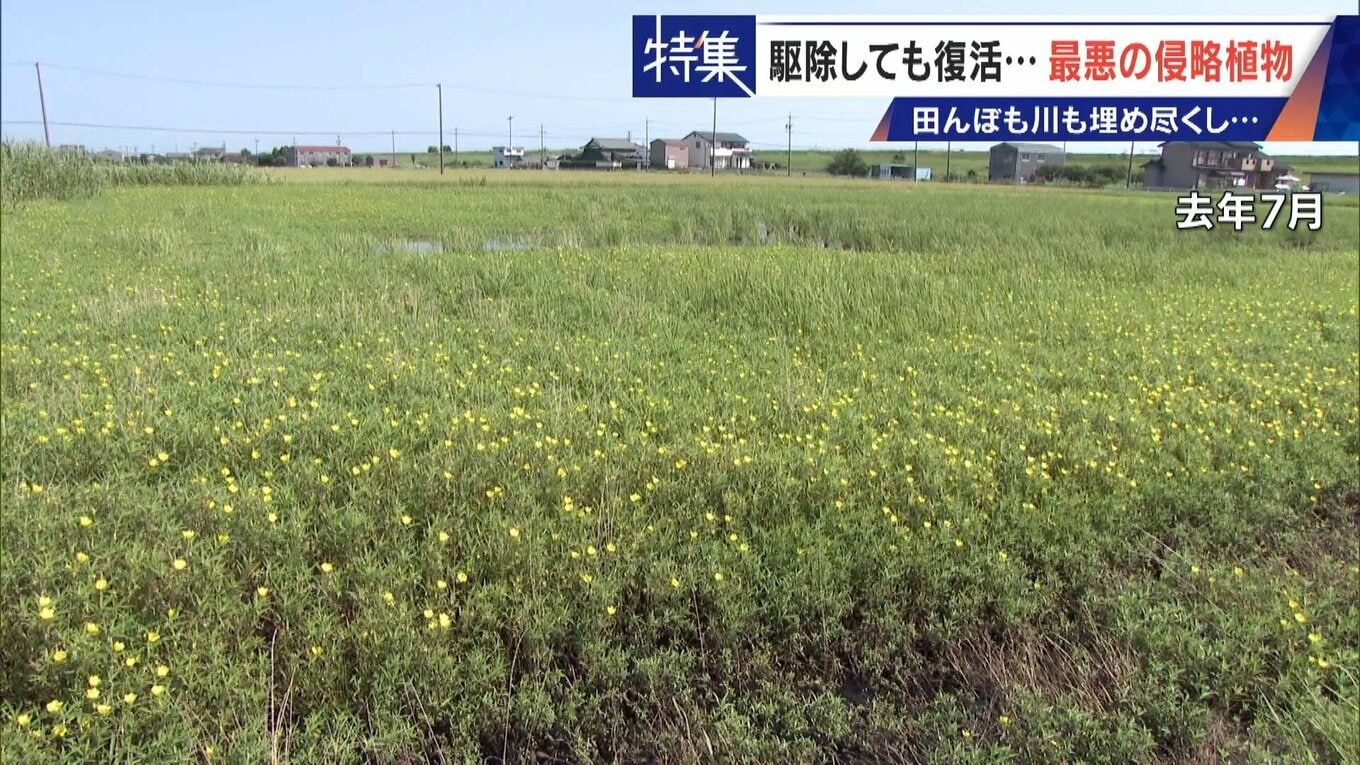
In an instant, rivers and rice paddies are covered with yellow-flowered invasive plants. Last year, we covered the removal efforts, but when we revisited the site, the situation we feared had occurred.
In Kuwana City, Mie Prefecture. The rice paddies have entered the planting season and are filled with water. Last summer, these paddies were in a completely different state.
The entire paddy was covered with vivid ‘yellow flowers.’ They were not planted, but spread in no time.
Kuwana City
Kuwana City, located in Mie Prefecture, Japan, is a historic port town that flourished as a key post station on the Tokaido road during the Edo period. It is also famous for its connections to the Tōkaidō Shinkansen bullet train and its role in the Battle of Sekigahara. Today, Kuwana is known for its well-preserved historic districts, such as the Juroku Rakan statues, and its scenic waterfront along Ise Bay.
Mie Prefecture
Mie Prefecture, located on the Kii Peninsula in central Japan, is historically significant as the home of the Ise Grand Shrine, one of Shinto’s holiest sites, which has been rebuilt every 20 years for over a millennium. The region was also a key power base for the ninja clans of Iga and Koka during the feudal era. Today, Mie is known for its natural beauty, including the coastal Ise-Shima National Park, and for producing high-quality pearls and Matsusaka beef.
Kuwana City
Kuwana City, located in Mie Prefecture, Japan, is a historic port town that flourished during the Edo period as a key post station on the Tōkaidō road, connecting Tokyo and Kyoto. It was also the site of Kuwana Castle, a fortress built in the early 17th century that served as the seat of the powerful Hisamatsu-Matsudaira clan. Today, the city is known for its rich cultural heritage, scenic waterfront, and landmarks such as the restored castle tower and the nearby Nabana no Sato flower park.
Mie Prefecture
Mie Prefecture, located on Japan’s Kii Peninsula, is historically significant as the home of Ise Grand Shrine, one of Shinto’s holiest sites, which is rebuilt every 20 years in a tradition dating back over 1,300 years. The area also houses the ruins of Azuchi Castle—though more famously associated with Oda Nobunaga—and was a key region for the ninja clans of Iga during the feudal era. Today, Mie is known for its natural beauty, including the scenic Ise-Shima National Park, and for producing high-quality cultured pearls.
Tokaido road
The Tokaido road was one of Japan’s most important historical routes, connecting the capital of Edo (modern-day Tokyo) with Kyoto during the Edo period (1603–1868). Stretching approximately 500 kilometers along the Pacific coast, it featured 53 post stations where travelers could rest and trade, playing a vital role in commerce and cultural exchange. Today, much of its path is followed by modern highways and railways, preserving its legacy as a symbol of Japan’s feudal travel and communication network.
Edo period
The Edo period (1603–1868) was a time of peace and stability in Japan under the rule of the Tokugawa shogunate, which moved the political capital to Edo (modern-day Tokyo). This era saw strict social hierarchies, economic growth, and the flourishing of arts such as kabuki theater, ukiyo-e woodblock prints, and haiku poetry. It ended with the Meiji Restoration, which restored imperial rule and opened Japan to the world.
Tōkaidō Shinkansen
The Tōkaidō Shinkansen is a high-speed rail line in Japan that connects Tokyo and Osaka, inaugurated in 1964 as the world’s first bullet train service. Its development revolutionized Japanese travel, drastically reducing journey times and symbolizing the country’s post-war economic resurgence. The line follows the historic Tōkaidō road, a major route during the Edo period, blending modern engineering with centuries of cultural heritage.
Battle of Sekigahara
The Battle of Sekigahara, fought on October 21, 1600, was a decisive conflict in Japanese history that ended the Sengoku period. It pitted the forces of Tokugawa Ieyasu against those of Ishida Mitsunari, representing the Toyotomi loyalists. Tokugawa’s victory led to the establishment of the Tokugawa shogunate, which ruled Japan for over 250 years.
Juroku Rakan statues
The Juroku Rakan are a set of sixteen stone statues representing the arhats, or enlightened disciples of the Buddha, often found in Japanese Buddhist temple grounds. These statues are typically arranged in a row or scattered along a hillside, each displaying a unique pose and expression that reflects their individual spiritual achievements. A famous example is located at the Sanjusangen-do temple in Kyoto, where the figures date back to the 13th century, serving as both objects of veneration and a serene attraction for visitors.
Ise Grand Shrine
The Ise Grand Shrine, located in Mie Prefecture, Japan, is the most sacred Shinto shrine in the country, dedicated to the sun goddess Amaterasu. Its history dates back over 2,000 years, and it is famous for the tradition of *shikinen sengū*, a ritual rebuilding of the shrine every 20 years that has been performed for centuries to symbolize renewal and purity. The shrine complex consists of two main sites, Naikū and Gekū, and remains a major pilgrimage destination, though its inner sanctuaries are largely off-limits to the public.