City council member in Motosu accused of election violation for giving gift boxes to voters, claims no intention of seeking anything in return.
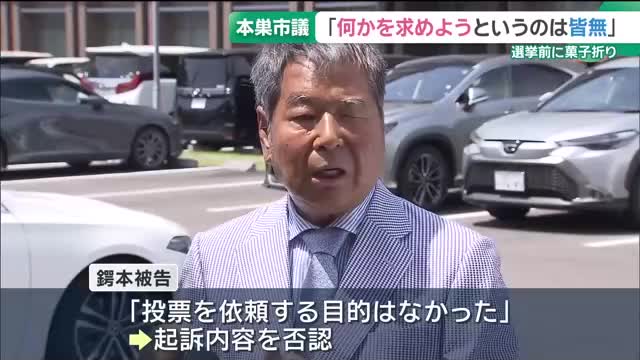
Just before the election, a city councilor in Motosu, Gifu Prefecture, was accused of distributing gift boxes to voters. In court, the councilor again denied the charges, stating, “There was absolutely no intention of seeking anything.”
According to the indictment, Noriyuki Tsubamoto (77), a Motosu city councilor, is charged with violating the Public Offices Election Act by distributing gift boxes as “election inconvenience compensation” to 28 voters through a supporter just before the city council election last September.
In his initial trial, Tsubamoto admitted to distributing the gift boxes but denied the charges, claiming, “There was no intention of soliciting votes.”
During the defendant’s questioning on the 27th, Tsubamoto reiterated his denial of the charges, saying, “I have never even seen the text of the law,” and “With a small gift worth 2,000 to 3,000 yen, there was absolutely no intention to seek or gain anything.”
The next court hearing will be held on June 8th.
Motosu
Motosu is a town in Yamanashi Prefecture, Japan, best known for its proximity to **Lake Motosu**, one of the scenic Fuji Five Lakes and a UNESCO World Heritage site. The lake is famous for offering one of the most iconic views of **Mount Fuji**, which is featured on the reverse side of the Japanese 1,000-yen note. Historically, the area has been a site of natural beauty and spiritual significance, with the lake’s clear waters and surrounding forests attracting visitors for centuries.
Gifu Prefecture
Gifu Prefecture, located in the Chubu region of Japan, is historically significant as a crossroads between eastern and western Japan, particularly during the Sengoku period. It was home to the powerful warlord Oda Nobunaga, who used Gifu Castle as a base for his campaign to unify the country. Today, the prefecture is renowned for its scenic beauty, including the traditional cormorant fishing on the Nagara River and the historic Shirakawa-go village with its UNESCO-listed gassho-zukuri farmhouses.