The scene in Nagoya city before noon shows thick clouds spreading. The temperature at this time is 5.8°C. A northerly wind is blowing relatively strongly at 6.6 meters per second.
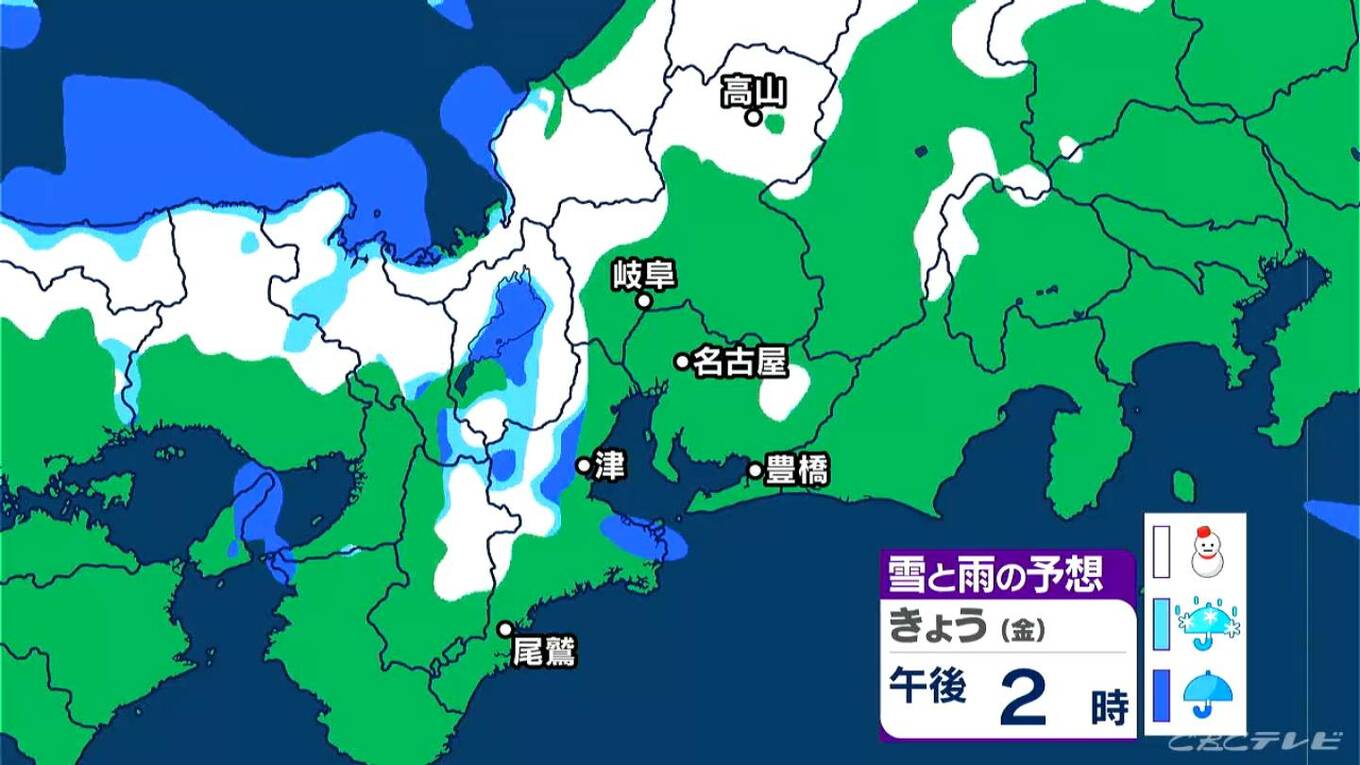
Here is the afternoon forecast. In Gifu Prefecture, snow will continue to fall in the afternoon, mainly in mountainous areas, with some places possibly experiencing thunder. In Aichi and Mie prefectures, while many areas will be clear, some places may see temporary snow or rain.
The expected high temperatures are 9°C in Nagoya, 7°C in Gifu, 8°C in Tsu, and only up to 2°C in Takayama.
Due to the strong wind, it will feel even colder, with severe midwinter cold expected.
[Rain and Snow Forecast]
Snow clouds are expected to flow into areas centered on Gifu Prefecture and into the mountainous regions of Mie Prefecture. In Mie Prefecture, some areas may have snow or rain until around evening.
The snow in Gifu Prefecture is likely to weaken late at night.
Gifu Prefecture
Gifu Prefecture, located in central Japan, is a region rich in history and traditional culture, historically part of the ancient Mino Province. It is renowned for the historic village of Shirakawa-gō, a UNESCO World Heritage site known for its traditional gasshō-zukuri farmhouses, and the city of Gifu, which was a powerful base for the warlord Oda Nobunaga in the 16th century. The prefecture is also famous for its natural beauty, including the Nagara River and its traditional cormorant fishing (*ukai*), a practice dating back over 1,300 years.
Nagoya
Nagoya is a major city in central Japan, historically the seat of the powerful Owari Tokugawa clan during the Edo period. It is best known for Nagoya Castle, built in 1612, and as a modern hub for automotive and manufacturing industries. The city’s cultural identity is also shaped by unique local cuisine, such as hitsumabushi (grilled eel), and traditional crafts like Noritake porcelain.
Aichi
Aichi is a prefecture in central Japan, best known as the home of the historic Nagoya Castle, built in 1612 by the Tokugawa shogunate. Today, it is a major industrial and technological hub, hosting the headquarters of companies like Toyota and being the site of the 2005 World Expo.
Mie
Mie is a prefecture in Japan’s Kansai region, historically known as the location of the Ise Grand Shrine (Ise Jingū), one of Shinto’s most sacred sites. The shrine, dedicated to the sun goddess Amaterasu, has been ritually rebuilt every 20 years for over a millennium, symbolizing renewal. The region also has a strong ninja heritage, centered around the city of Iga.
Tsu
Tsu is the capital city of Mie Prefecture in Japan, historically known as the castle town of the Tsu Domain during the Edo period. Today, it serves as a regional government and commercial center, with historical sites like the reconstructed Tsu Castle grounds and its proximity to the revered Ise Grand Shrine shaping its cultural identity.
Takayama
Takayama, often called “Little Kyoto,” is a historic city in Japan’s mountainous Gifu Prefecture known for its beautifully preserved Edo-period (1603-1868) old town. Its prosperity came from its role as a wealthy merchant town under the direct control of the Tokugawa shogunate, which is reflected in its traditional wooden architecture, narrow streets, and renowned morning markets. Today, it is also famous for its biannual Takayama Festival, considered one of Japan’s most beautiful, featuring elaborate floats and puppetry.