Centre requests transfer of transgender law petitions to court.
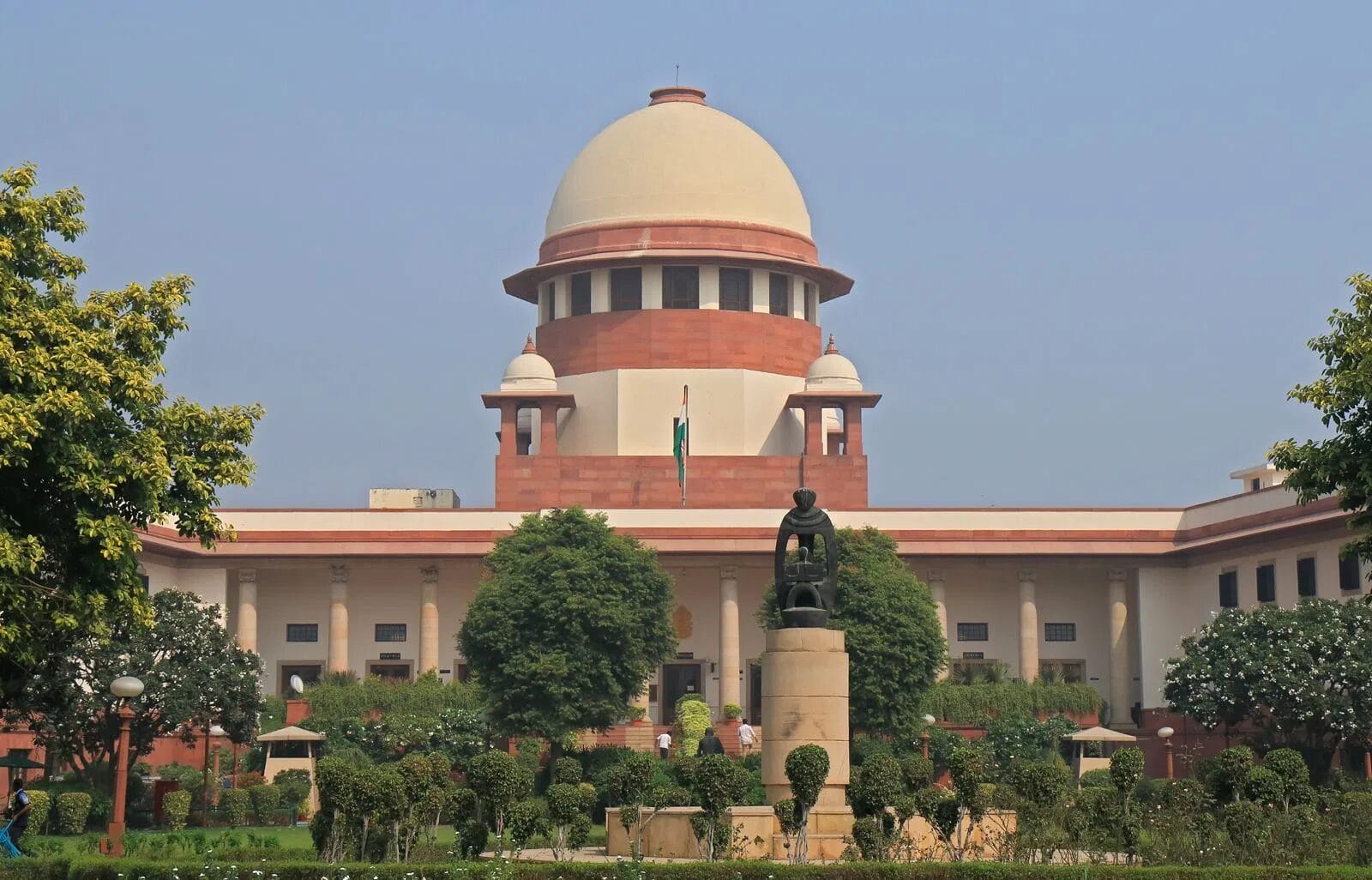
New Delhi, The central government on Wednesday filed a petition in the Supreme Court requesting the transfer of all pending petitions in various high courts challenging the Transgender Persons (Protection of Rights) (Amendment) Act, 2026, to the Supreme Court.
The Solicitor General mentioned the matter before a bench comprising Chief Justice Suryakant and Justice Joymalya Bagchi, requesting an urgent hearing of the transfer petitions on Friday. The Solicitor General stated, “We have filed transfer petitions to bring before this court the petitions challenging the Transgender Amendment Act.” He added, “If the petitions are listed on Friday and notice is issued, we can request the high courts to stay their proceedings.”
The Solicitor General argued that since multiple high courts are currently considering the matter, there is a serious risk of divergent opinions and conflicting judicial decisions regarding the validity of the federal law. However, the Chief Justice expressed reluctance, noting that the Supreme Court benefits from the fundamental legal reasoning of the high courts. The Chief Justice said, “Sometimes we may also benefit from the high court’s perspective.”
Dispute over mandatory medical procedures in the amended law
When the Solicitor General reiterated his arguments, the Chief Justice stated that he would “consider it.” The Transgender Persons (Protection of Rights) (Amendment) Act, 2026, has raised deep concerns among human rights activists and members of the LGBTQ+ community. The main issue of contention is the removal of the concept of self-identification of gender.
This right was recognized by the Supreme Court in its earlier landmark NALSA judgment. The amended law mandates medical or administrative procedures for gender identification. Petitioners argue that this provision violates the right to dignity, privacy, and bodily autonomy. Earlier this month, the Supreme Court issued notice to the central government.
Supreme Court
The Supreme Court of the United States is the highest federal court in the country, established by Article III of the Constitution in 1789. It holds the power of judicial review, allowing it to interpret laws and overturn those deemed unconstitutional. Located in Washington, D.C., its iconic building was completed in 1935, symbolizing the judiciary’s role as a co-equal branch of government.
Transgender Persons (Protection of Rights) (Amendment) Act, 2026
The Transgender Persons (Protection of Rights) (Amendment) Act, 2026 is a recent legislative update in India that builds upon the original 2019 Act to strengthen legal protections for transgender individuals. It aims to address gaps in the earlier law by streamlining the process for obtaining identity certificates, enhancing anti-discrimination measures, and improving access to healthcare, education, and employment. This amendment reflects ongoing efforts to uphold the rights and dignity of transgender persons in accordance with constitutional principles and judicial directives.
NALSA judgment
The NALSA judgment refers to a landmark 2014 decision by the Supreme Court of India in the case *National Legal Services Authority v. Union of India*. This ruling legally recognized transgender individuals as a “third gender,” affirming their fundamental rights under the Indian Constitution and mandating non-discrimination and equal protection under the law. It marked a historic step forward for transgender rights in India, building upon years of activism and legal advocacy.
Supreme Court
The Supreme Court of the United States is the highest federal court in the country, established by Article III of the Constitution in 1789. It holds the power of judicial review, allowing it to interpret laws and determine their constitutionality. The Court meets in its iconic neoclassical building in Washington, D.C., which was completed in 1935.
Transgender Persons (Protection of Rights) (Amendment) Act, 2026
The Transgender Persons (Protection of Rights) (Amendment) Act, 2026 is a legislative update in India that builds upon the 2019 Act to further safeguard the rights of transgender individuals. It strengthens provisions against discrimination, simplifies the process for obtaining identity certificates, and enhances access to healthcare and welfare schemes. This amendment reflects ongoing efforts to address the social and legal challenges faced by the transgender community in India.
NALSA judgment
The NALSA judgment refers to a landmark 2014 decision by the Supreme Court of India in the case *National Legal Services Authority v. Union of India*. This ruling legally recognized transgender individuals as a “third gender,” granting them fundamental rights under the Indian Constitution, including protection from discrimination and access to affirmative action. It was a historic step for LGBTQ+ rights in India, building on decades of activism by transgender and hijra communities.