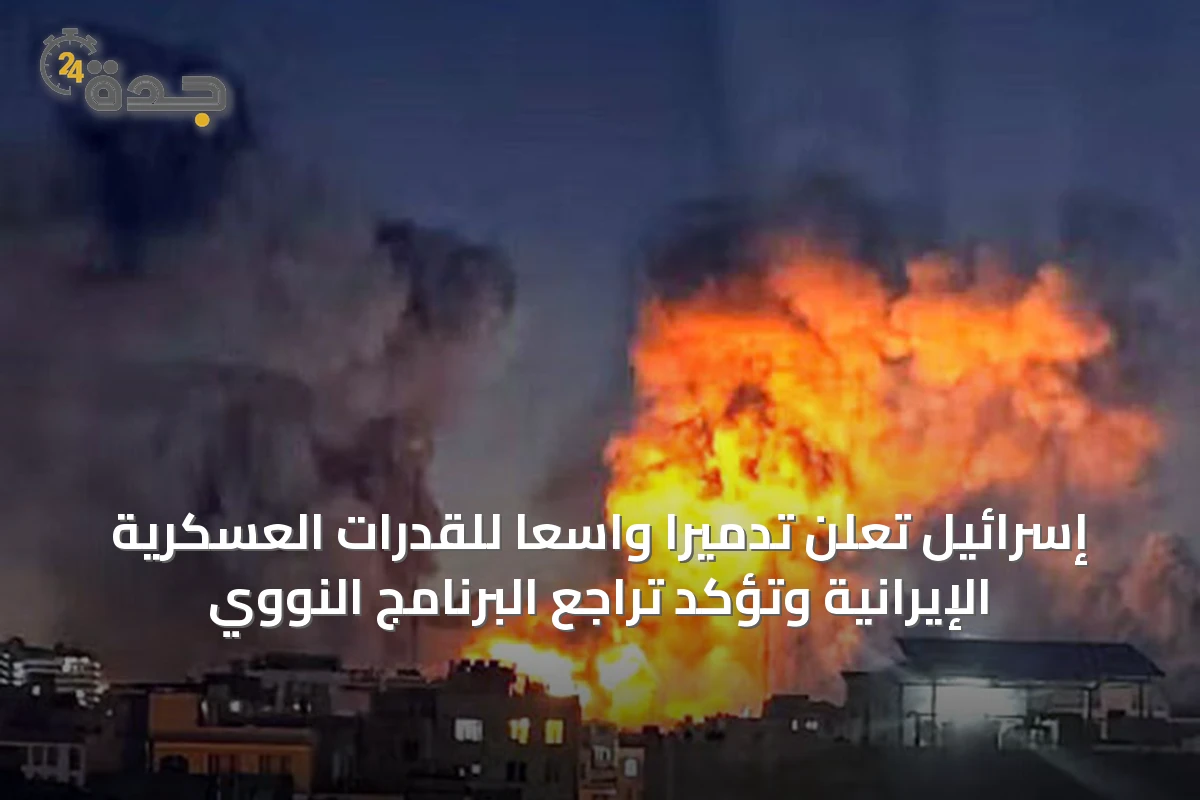
Israeli Chief of Staff Eyal Zamir confirmed last Wednesday that the strikes carried out by Israel on Iran resulted in the destruction of a large part of Tehran’s military infrastructure, noting that the Iranian nuclear program has been set back “by years” as a result of these attacks.
The strikes and their impact on Iranian capabilities
Zamir described Iranian leaders as “hunted,” explaining that the Israeli strikes inflicted severe damage on Iran’s military infrastructure, directly affecting Tehran’s ability to carry out military operations.
Economic conditions in Iran
The military leader pointed out that the Iranian economy is undergoing a period of decline and increasing pressure, emphasizing that Iranians “have not yet realized the scale of the disaster their leaders have led them into.”
Potential negotiations between Tehran and Washington
The Israeli statements came amid rising talk about the possibility of reaching political and security understandings between Tehran and Washington to end the ongoing military confrontation that has lasted for months, amid regional and international efforts seeking to contain tensions in the region.
American demands and stalled issues
The American official explained that Washington seeks to obtain explicit guarantees preventing Iran from violating any potential agreement, amid ongoing doubts about the nature of the Iranian nuclear program. These statements coincided with a meeting held by U.S. President Donald Trump with members of his government to discuss developments in the conflict with Iran and the available options to resolve the crisis.
Despite the ceasefire in effect since the beginning of last April, several contentious issues still hinder reaching a final agreement, most notably the future of the Iranian nuclear program, the economic sanctions file, the release of frozen Iranian assets, as well as issues related to regional influence and the Israeli war in Lebanon.
Iran
Iran, historically known as Persia, is a country in Western Asia with a rich cultural heritage spanning over 2,500 years. It was once the center of the mighty Achaemenid Empire, and later became a major hub of Islamic civilization, known for its art, architecture, and literature. Today, Iran is home to numerous UNESCO World Heritage sites, including the ancient ruins of Persepolis and the stunning mosques of Isfahan.
Tehran
Tehran is the capital and largest city of Iran, serving as the country’s political, economic, and cultural hub. Its history as a major city dates back to the 18th century, when it was chosen as the capital by the Qajar dynasty in 1796, replacing the ancient city of Isfahan. Today, Tehran is known for its modern architecture, bustling bazaars, and landmarks like the Azadi Tower and the Golestan Palace, reflecting both its rapid modernization and deep historical roots.
Washington
Washington, D.C., the capital of the United States, was established in 1790 as a compromise between northern and southern states. Designed by Pierre L’Enfant, the city is home to iconic landmarks like the White House, the Capitol, and the Lincoln Memorial. Its history is deeply tied to American democracy, serving as the seat of the federal government and a stage for major events such as Martin Luther King Jr.’s “I Have a Dream” speech.
Lebanon
Lebanon is a country in the Middle East with a rich history dating back thousands of years, home to ancient civilizations such as the Phoenicians, Romans, and Ottomans. Its cultural sites include the
Persepolis
Persepolis was the ceremonial capital of the Achaemenid Empire, founded by Darius I in the 6th century BCE. It served as a grand symbol of Persian power and wealth, featuring elaborate palaces and reliefs. The site was largely destroyed by Alexander the Great in 330 BCE and now stands as a UNESCO World Heritage site in Iran.
Isfahan
Isfahan, a historic city in central Iran, was once a major crossroads of trade and culture, reaching its golden age as the capital of the Safavid Empire in the 16th and 17th centuries. It is renowned for its stunning Islamic architecture, including the magnificent Naqsh-e Jahan Square, the Shah Mosque, and the Ali Qapu Palace. Today, the city remains a cultural treasure, celebrated for its Persian gardens, bridges, and bazaars that reflect its rich artistic heritage.
Azadi Tower
The Azadi Tower, located in Tehran, Iran, is a iconic monument built in 1971 to commemorate the 2,500th anniversary of the Persian Empire. Originally named the Shahyad Tower, it symbolizes modern Iran’s blend of ancient Persian and contemporary architecture, designed by architect Hossein Amanat. Following the 1979 Islamic Revolution, it was renamed Azadi, meaning “freedom,” and now serves as a cultural hub and national symbol.
Golestan Palace
Golestan Palace is a historic royal complex in Tehran, Iran, originally built during the Safavid era and later expanded by the Qajar dynasty in the 19th century. It served as the official residence and seat of power for Qajar kings, showcasing a blend of Persian and European architectural styles. The palace complex was inscribed as a UNESCO World Heritage Site in 2013, reflecting its cultural and historical significance.
White House
The White House is the official residence and workplace of the President of the United States, located in Washington, D.C. Construction began in 1792 under the supervision of President George Washington, and John Adams became the first president to live there in 1800. The building was burned by British troops during the War of 1812 but was rebuilt and expanded, becoming a symbol of American leadership and history.
Capitol
The Capitol, often referring to the United States Capitol in Washington, D.C., serves as the meeting place for the U.S. Congress and is a symbol of American democracy. Construction began in 1793, with President George Washington laying the cornerstone, and the building has since been expanded and rebuilt after being burned by British forces in the War of 1812. Over the centuries, it has hosted presidential inaugurations and pivotal legislative events, making it a central site in American political history.
Lincoln Memorial
The Lincoln Memorial in Washington, D.C., is a tribute to the 16th U.S. President, Abraham Lincoln, and was dedicated in 1922. Designed by architect Henry Bacon, its iconic marble structure features a large seated statue of Lincoln and inscriptions of his famous speeches, including the Gettysburg Address. The memorial has served as a powerful backdrop for historic events, most notably Martin Luther King Jr.’s “I Have a Dream” speech in 1963.