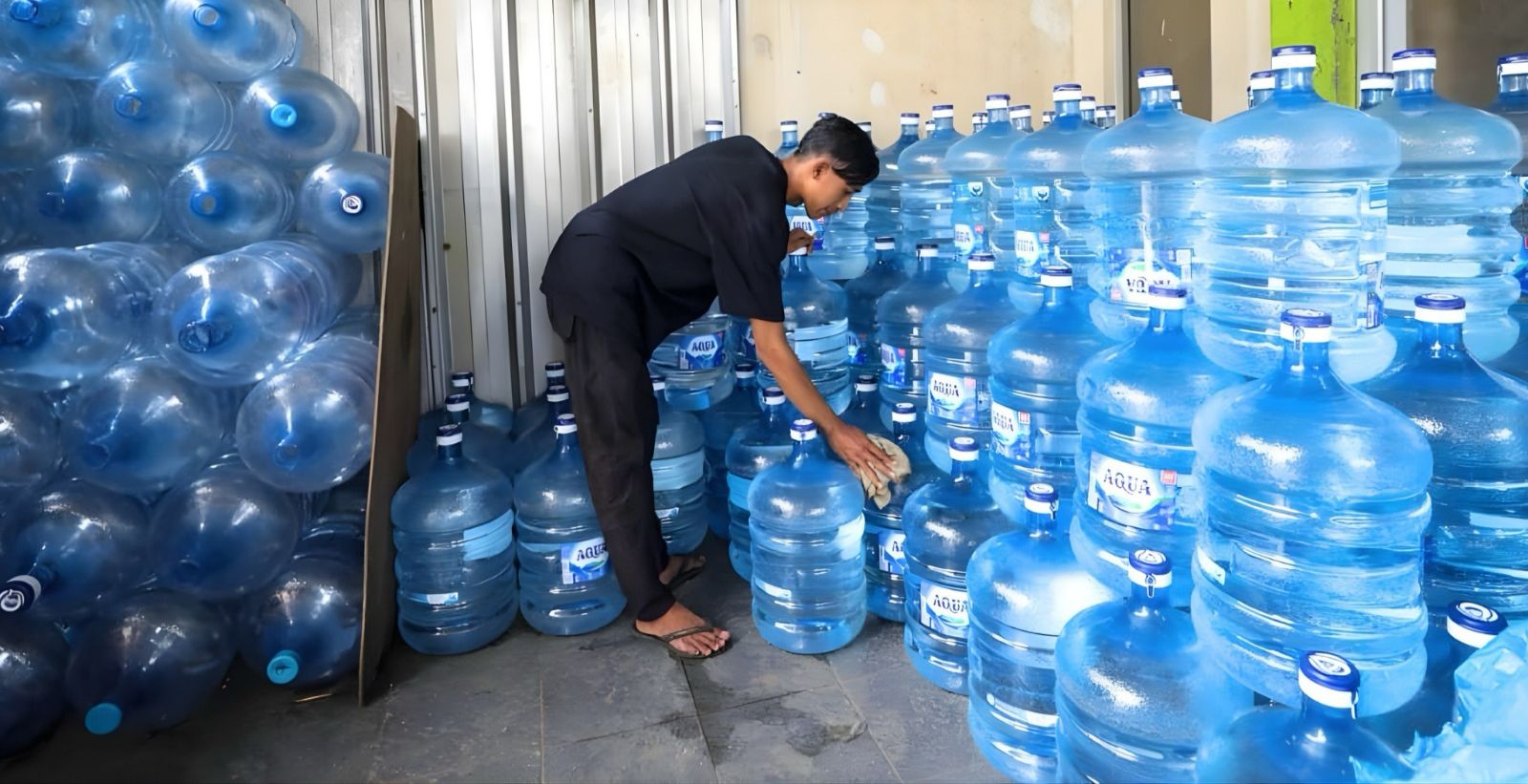
The government assures the public there is no need to worry about using reusable gallon containers, as packaged drinking water products are strictly monitored through national standards, periodic audits, and sanitation process oversight before reuse.
The Director of Beverage, Tobacco, and Refreshment Products Industry at the Ministry of Industry stated that packaged drinking water, including reusable gallons, is a product that must comply with mandatory Indonesian National Standards and is routinely monitored by the government.
“Packaged drinking water products are subject to mandatory SNI implementation and are monitored and tested for quality parameters through periodic surveillance audits to ensure consumer safety,” the director said.
According to them, this oversight is carried out in accordance with various applicable food safety regulations and quality standards, including provisions in Minister of Industry Regulation Number 62 of 2024.
The director explained that specifically for reusable gallons, each container returning to the factory must undergo physical inspection, washing, sanitation, and quality control processes before being refilled and redistributed to the public.
“Every reused gallon must go through a sanitation and quality control process. The industry also checks the physical condition and age of the gallon before reuse,” they stated.
They emphasized that gallons that no longer meet standards will not be redistributed. The packaged drinking water industry also has a rejection mechanism to withdraw containers deemed unfit for use.
“If the container condition is no longer suitable for distribution to consumers, it will not be reused and will be rejected,” they said.
In addition to government oversight, various academic studies also demonstrate the safety of reusable gallons produced by the official industry. Several studies from the Bandung Institute of Technology and the University of North Sumatra show that Bisphenol A levels in water from reusable gallons are at undetectable levels or far below the safe limits set by regulators.
The Food and Drug Supervisory Agency has previously stated that all food packaging circulating in Indonesia, including polycarbonate reusable gallons, remains safe for use as long as it meets the established BPA migration limits. The agency sets a maximum BPA migration limit of 0.6 ppm in accordance with applicable food safety standards.
The agency also stated that BPA exposure is not only related to one specific type of packaging, as the compound can be found in various everyday products, including the lining of food and beverage cans. Therefore, oversight is based on safe migration limits, not solely on the type of packaging material.
The Ministry of Industry also highlighted the importance of monitoring distribution outside official industry channels, especially the use of industry gallons by refill water depots that are outside the control of packaged drinking water producers.
According to the director, the use of branded packaged drinking water gallons by refill depots makes it more difficult for the industry to control the physical condition of gallons in the field.
“This causes the circulation of gallons in the community to become uncontrollable by the packaged drinking water industry, both in terms of physical condition and quality,” they stated.
Amid the spread of information raising public concerns about reusable gallons, the government emphasizes that packaged drinking water products produced by the official industry remain under strict supervision and must meet food safety standards before reaching consumers.
Oversight is carried out from packaging materials, production processes, sanitation, distribution, to periodic audits to ensure products remain safe for public consumption.

The Tourism and Culture Office urges tourism managers to pay attention to readiness ahead of the weekend.
This is because during the Idul Adha 1447 Hijriah holiday, tourist visits are predicted to increase significantly.
The Head of the Tourism and Culture Office of West Bandung Regency stated that ahead of this period, every tourism industry manager is provided with education and understanding regarding the implementation of the Sapta Pesona tourism concept.
“Tourism managers must always pay attention to aspects of cleanliness, comfort, and order as top priorities,” they said on Tuesday (26/5/2026).
They added that managers are also urged to check various supporting facilities and equipment to ensure visitor safety and comfort.
“For tourist attractions with risky or extreme rides