

The situation in the Middle East has also affected four tomato farmers in Shitara Town, Aichi Prefecture.
“I like eating them whole the most, but heating them also brings out the flavor. They are so rare that they are called ‘phantom tomatoes.’ If you find them, I hope you get them.”
The tomatoes being shipped are heart-shaped “Renaissance Tomatoes.” They are grown in very few areas nationwide and are called “phantom tomatoes.”




Shitara Town
Shitara Town is a scenic municipality located in the mountainous region of Aichi Prefecture, Japan. Historically, it developed as a key post town along the ancient Iida Kaido trade route, playing an important role in regional commerce and transportation. Today, it is known for its rich natural landscapes, including the picturesque Ontake River and traditional cultural events that preserve its historical heritage.
Aichi Prefecture
Aichi Prefecture, located in central Japan, is a historically and industrially significant region. It was the home of the legendary samurai Tokugawa Ieyasu, who unified Japan in the early 17th century, and features Nagoya Castle, a key symbol of his power. Today, Aichi is a major economic hub, known for the Toyota Motor Corporation, and blends its rich samurai heritage with modern innovation.
Toyone Village
Toyone Village is a scenic rural community located
Shitara Town
Shitara Town is a rural municipality located in the mountains of Aichi Prefecture, Japan, known for its rich natural landscapes and traditional culture. Historically, the area thrived as a post town along the ancient Iida Kaido trade route, and it later became part of the Mikawa Province during the feudal era. Today, Shitara is celebrated for its scenic beauty, including the Shitara Dam and the preservation of local crafts and festivals.
Aichi Prefecture
Aichi Prefecture, located in central Japan, is a historically and industrially significant region. It was historically the heartland of the powerful Oda and Tokugawa clans, with Nagoya Castle serving as a key feudal stronghold. Today, it is a major industrial hub, home to Toyota Motor Corporation, and boasts cultural sites like the Atsuta Shrine and the Nagoya City Art Museum.
Toyone Village
Toyone Village is a remote mountain settlement located in Aichi Prefecture, Japan, known for its stunning terraced rice fields and traditional thatched-roof farmhouses. Historically, the village thrived through agriculture and forestry, and it has preserved its rural landscape, which includes the scenic “Tanada” rice terraces that date back centuries. Today, Toyone is recognized as a “Japan’s Most Beautiful Village” and attracts visitors seeking to experience its unspoiled natural beauty and cultural heritage.
Nagoya Castle
Nagoya Castle is a historic Japanese fortress originally built in 1612 by the Tokugawa shogunate, serving as a key military and political center. It was famously topped with golden shachihoko (mythical tiger-fish) ornaments, but much of the castle was destroyed during World War II. Today, the reconstructed main keep and surrounding grounds are a popular tourist attraction, preserving the site’s samurai-era heritage.
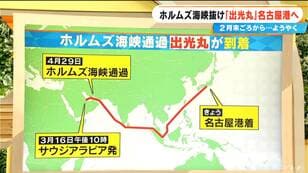
Strait of Hormuz
The Strait of Hormuz is a narrow, strategically vital waterway connecting the Persian Gulf to the Gulf of Oman and the Arabian Sea. Historically, it has been a crucial trade route for centuries, controlling the passage of oil and gas from the Middle East to global markets. Today, it remains a focal point of geopolitical tension, as about 20% of the world’s petroleum passes through its waters.
Nagoya Port
Nagoya Port is one of Japan’s largest and busiest ports, located in Ise Bay. Its modern development began in the late 19th century, and it played a crucial role in Japan’s industrial growth, particularly in the automotive and shipping industries. Today, it serves as a major hub for international trade and is also home to attractions like the Port of Nagoya Public Aquarium and the museum ship Fujii Maru.
Iida Kaido
The Iida Kaido was a historic highway in Japan during the Edo period, connecting the Nakasendo road at Shiojiri to the city of Iida in Nagano Prefecture. It served as a vital trade and travel route through the mountainous region, facilitating the transport of goods and the movement of people. Today, preserved sections of the road offer a glimpse into Japan’s feudal-era travel culture and scenic landscapes.
Ontake River
The Ontake River flows through the Kiso region of Nagano Prefecture, Japan, originating from the slopes of Mount Ontake, a sacred and active volcano. Historically, the river has been central to local life, providing water for agriculture and serving as a route for transporting timber, while the mountain itself has been a site of Shugendō religious practices for centuries. Today, it remains a key natural feature, supporting both the region’s ecosystem and cultural heritage.
Related news

Heavy rain closes sections of Tokai-Hokuriku Expressway in both directions between Mino IC and Shirakawa IC, and Shirakawa IC and Takasu IC.
Traffic Information
According to NEXCO Central Jap...

Enjoy a buffet at a manga café! All-you-can-eat 11 dishes in 80 minutes, plus unlimited drinks and soup! We investigate the “super cheap breakfast buffet” in the Tokai region!
Can you enjoy a buffet at a manga café? All-you-ca...

“Patients’ mothers request health ministry to continue insurance coverage for OTC-like drugs”
Mothers of patients with intractable diseases have...

Suspected of defrauding company of approximately 7 million yen through fictitious transactions; former purchasing manager of used car dealer “Good Speed” arrested on fraud charges; illegally obtained money allegedly used for hostess club entertainment.
A former section chief at a used car sales company...

A woman in her 30s met her “ideal man” on a dating app and received a marriage proposal after one month, but was shocked to discover he was married and had secretly filmed their intimate encounters.
Matching apps have now become established as place...