Why isn’t Prime Minister Modi buying cheaper oil from Russia and Iran?
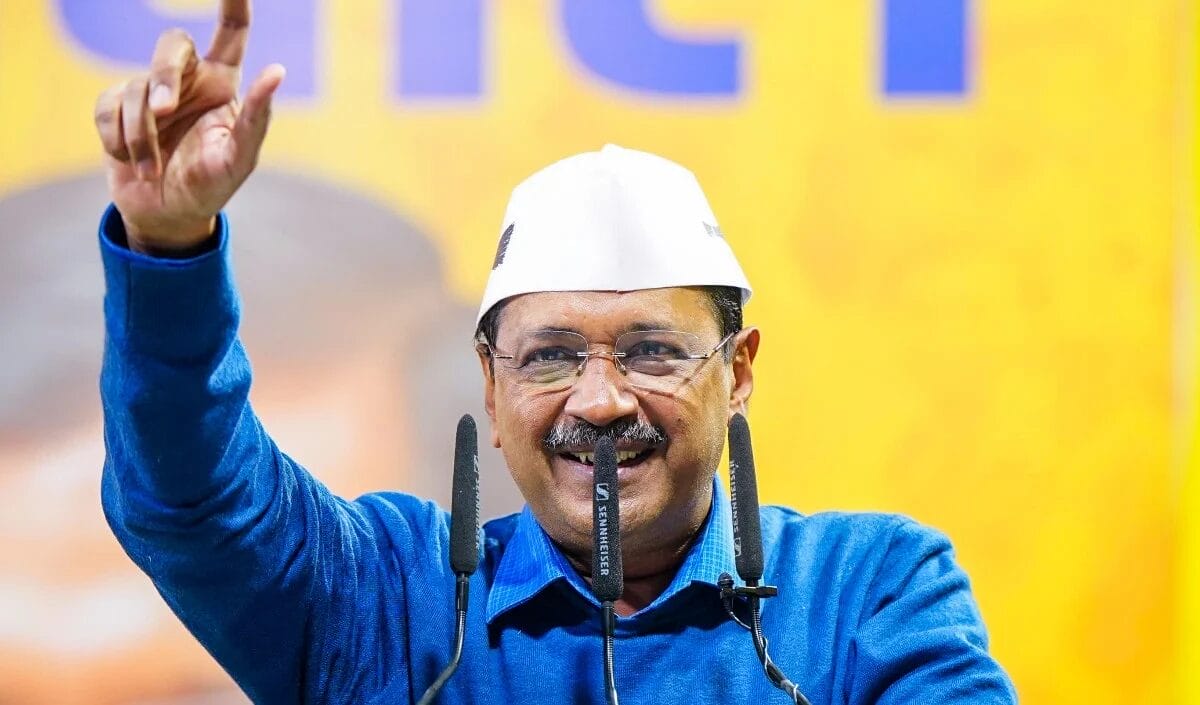
New Delhi, After petrol and diesel prices were raised for the fourth time in less than two weeks on Monday, Aam Aadmi Party (AAP) national convenor Arvind Kejriwal questioned Prime Minister Narendra Modi on why the central government is not purchasing fuel from Russia and Iran.
In a video message on social media platform X, Kejriwal said, “Oil prices have risen again. Russia and Iran are ready to provide us with cheap and sufficient oil and gas. Why isn’t Prime Minister Narendra Modi buying cheap oil from them?” The former Delhi chief minister stated that the country’s 1.4 billion people are suffering due to rising inflation. He added, “What are the Prime Minister’s constraints? 1.4 billion people are forced to endure hardships, yet we are not buying oil from Russia or Iran?”
Fuel prices increased by about 7.5 rupees since May 15
The AAP leader also urged ordinary citizens to send him their opinions on this issue. On Monday, petrol prices were hiked by 2.61 rupees per liter and diesel by 2.71 rupees per liter in the country. This is the fourth time in less than two weeks that prices have been raised. State-owned oil marketing companies are increasing retail prices in line with rising crude oil prices in the international market. With this latest increase, petrol and diesel prices have risen by a total of about 7.5 rupees per liter since May 15.
This has heightened concerns about inflationary pressures in the economy and rising transportation costs. Fuel prices have now reached their highest levels since May 2022. Previously, they had remained largely stable for over two years. However, a reduction of 2 rupees per liter was made before the general elections in March 2024. This increase comes at a time when global oil prices have fallen sharply, with Brent crude dropping more than five percent, amid initial hopes of a deal to end the US-Israel conflict against Iran.
New Delhi
New Delhi is the capital of India, officially inaugurated in 1931 as the new administrative center of British India, designed by British architects Edwin Lutyens and Herbert Baker. It replaced Calcutta as the seat of government and features wide boulevards and grand buildings like the Rashtrapati Bhavan and India Gate. Today, it serves as a vibrant hub of Indian politics, culture, and history, blending colonial-era architecture with modern urban life.
New Delhi
New Delhi is the capital of India, a planned city designed by British architect Edwin Lutyens and inaugurated in 1931 to replace Calcutta as the seat of the British Raj. It is home to iconic landmarks like India Gate and the Rashtrapati Bhavan, reflecting a blend of colonial and Indian architectural styles. Today, it serves as the political and cultural heart of India, hosting the central government and a vibrant mix of historical and modern life.
Russia
Russia is a vast country spanning Eastern Europe and northern Asia, with a complex history shaped by the rise of the Kievan Rus’, the Mongol invasion, and the expansion of the Tsardom of Russia under figures like Ivan the Terrible and Peter the Great. It became the Soviet Union in 1922, a major global superpower that dissolved in 1991, leading to the modern Russian Federation
New Delhi
New Delhi is the capital of India, officially inaugurated in 1931 as the administrative center of British India, designed by British architects Edwin Lutyens and Herbert Baker. It replaced Calcutta as the capital, symbolizing the British Empire’s vision of a grand imperial city. Today, it remains the seat of India’s government, blending historic colonial-era buildings with modern urban life.
Russia
Russia is the largest country in the world, spanning Eastern Europe and northern Asia, with a rich history that includes the rise of the Kievan Rus’, the Tsardom of Russia, the Soviet Union, and the modern Russian Federation. Its cultural heritage is deeply influenced by Orthodox Christianity, literature (e.g., Tolstoy, Dostoevsky), and iconic landmarks such as the Kremlin and Red Square in Moscow. Today, Russia is known for its vast landscapes, diverse ethnic groups, and significant global political and cultural influence.
Iran
Iran, historically known as Persia, is a country in Western Asia with a rich cultural heritage spanning over 2,500 years. It was the center of the ancient Persian Empire, which was one of the world’s most powerful and influential civilizations, and later became a major hub of Islamic art, science, and literature. Today, Iran is renowned for its stunning architectural sites, such as Persepolis and Isfahan’s Naqsh-e Jahan Square, as well as its deep traditions in poetry, carpet weaving, and cuisine.