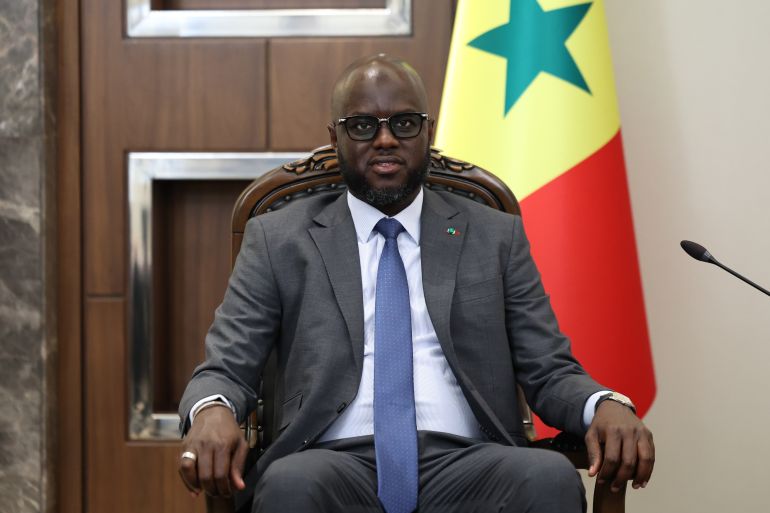
The President of the Senegalese National Assembly, Malick Ndiaye, announced his resignation days after the dismissal of the Prime Minister, amid an escalating political crisis in the country.
A statement from the media office of the resigning parliament speaker said that Ndiaye submitted his resignation on Sunday, following an urgent meeting of the bureau of the National Assembly, confirming that his decision came in the context of prioritizing the national interest in a delicate political situation.
Ndiaye stated in the announcement, “In moments of national hardship, responsibility requires placing wisdom and the supreme interest of the nation above all other considerations.”
Ndiaye, aged 43, is one of the most prominent allies of Sonko, and assumed the presidency of the parliament at the end of 2024 after the party “African Patriots for Work, Ethics, and Brotherhood in Senegal” won a sweeping majority of 135 seats in the legislative elections.
This resignation follows the decision of the President, on May 22, to dismiss Prime Minister Ousmane Sonko, a move that revealed escalating differences between the two men over the government’s direction and economic policies, despite their previously close alliance.
In a post on platform X, Ndiaye explained that his decision to resign came “out of a sense of responsibility and awareness of the requirements of the state.” The parliament bureau approved the resignation during an extraordinary meeting and simultaneously ratified Sonko’s return to parliamentary membership following his departure from the head of government.
Estimates from Senegalese media suggest that Ndiaye’s resignation may pave the way for the election of Sonko as President of the Parliament, given the dominance of the “PASTEF” party with 130 seats out of 165, with expectations that this path will be finalized during a session scheduled for May 26.
The position of President of the Parliament is the second highest in the power hierarchy in Senegal after the Presidency of the Republic.
President Faye had announced, late on Saturday night, the dismissal of Sonko and the dissolution of the government, through a presidential decree read by the Secretary General of the Government on state television.