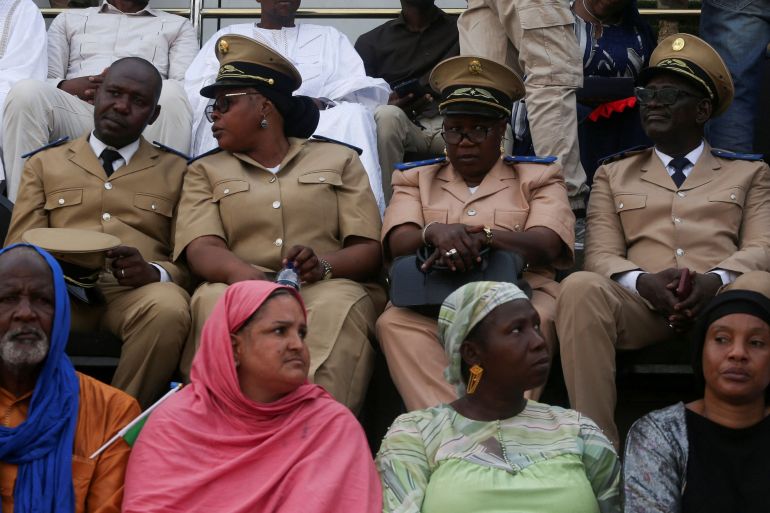
In the research paper “Self-Defense Militias in the Sahel: From Fighting Jihadists to Dismantling Society and the State,” researcher Mohammed Mahmoud Abu al-Ma’ali reveals how local militias that emerged in Sahelian African countries as “popular protection forces” have turned into one of the most dangerous factors in the disintegration of societies and states in the region. The paper, published by the Al Jazeera Center for Studies, does not view these groups merely as auxiliary armed formations for armies, but rather as an expression of the collapse of the state itself, its inability to monopolize violence, and the transformation of the war against jihadist groups into open ethnic and tribal conflicts.
The researcher argues that many of these militias started under the slogan of “protecting villages and populations” from attacks by armed groups, but ended up producing parallel violence, sometimes even more brutal, based on collective vengeance and ethnic cleansing, directly contributing to fueling jihadist groups instead of weakening them.
The Sahel: When the State Fails and Local Arms Rise
The study starts from the general environment that allowed these militias to emerge. Sahelian countries, especially Mali, Niger, and Burkina Faso, have experienced a rapid decline in state presence in peripheral and rural areas over the last two decades. Armies are weak, government administrations are nearly absent, borders are porous, while jihadist groups expand, exploiting poverty, marginalization, and ethnic divisions.
In this vacuum, “self-defense” militias emerged as a quick and low-cost solution for governments. Instead of sending exhausted armies to remote areas, local populations were armed and pushed to fight against jihadist groups. However, the problem, as the researcher explains, is that these formations were not built on national or legal foundations, but on tribal and ethnic affiliations, which quickly turned them into tools of collective revenge.
Therefore, Abu al-Ma’ali sees that the war in the Sahel has not remained a confrontation between a “state” and “jihadists,” but has turned into a complex network of overlapping wars: tribes against tribes, herders against farmers, and ethnic groups exchanging massacres under the banner of counter-terrorism.
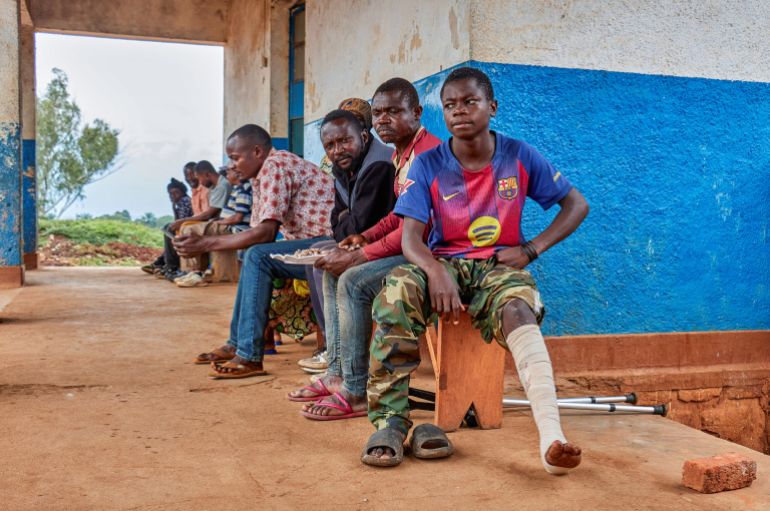
Mali: The Beginning That Turned into a Bloody Model
The researcher believes that Mali was the first arena to witness this transformation early on. In the 1990s, the Malian state supported the “Kondo Koy” militias from the Songhai ethnicity under the slogan of protecting the population from the Tuareg and Arab rebellion in the north of the country. But these groups soon adopted a sharp ethnic rhetoric and began carrying out attacks against Tuareg and Arab villages, considering them a “breeding ground for rebellion.”
Abu al-Ma’ali points out that this experience established an entire pattern of ethnic militias that later spread across the Sahel. After “Kondo Koy,” the more extreme and violent “Kondo Ezo” emerged, then the Tuareg tribes themselves entered the militia game by forming “Gatia,” supported by the Malian army, gradually turning the war into a conflict within the Tuareg community itself, between the Imghad, Ifoghas, and their allies.
What is striking in the study is that these groups, despite their different affiliations, share the same logic: each group views the other as a “human reservoir” for the enemy, not just a political or military opponent. Therefore, the village becomes a legitimate target, and civilians become part of the war, not outside it.
The Fulani: The Group That Paid the Highest Price
One of the things the study clarifies most is that the Fulani ethnic group was the most targeted collectively in recent Sahel conflicts. With the rising influence of groups like “Macina Liberation Front” and “Sahel Province,” many opponents of the Fulani began to view all their communities as a breeding ground for jihadists.
Here, the war turned into a vicious cycle: militias attack Fulani villages under the pretext of counter-terrorism, jihadist groups exploit the massacres to recruit more Fulani youth as “protection,” and then governments use this recruitment as a