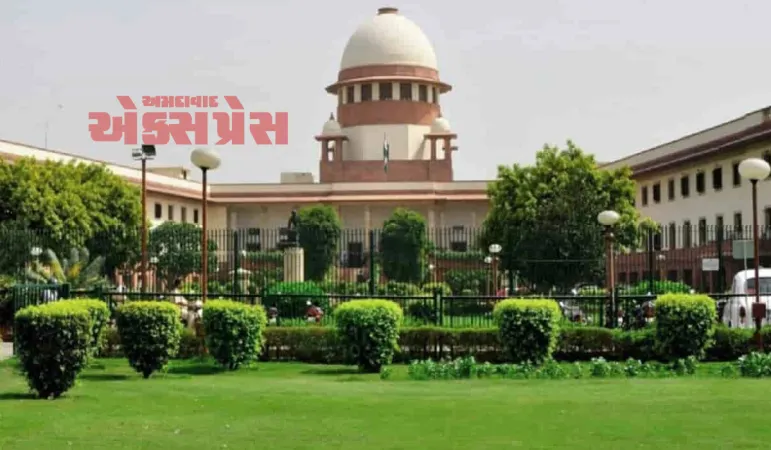
The Supreme Court has taken a strict stance regarding controversial content about the judiciary in the NCERT textbook for Class 8. Click for more details.
Supreme Court Takes Strict Stance on NCERT’s Controversial Content About the Judiciary
Upon hearing the name of the Supreme Court, people initially thought that academics caught in legal complications would never get any relief. But the apex court adopted a humanitarian approach and delivered a major and important verdict on a highly sensitive educational controversy.
On Saturday, May 23, 2026, a written assurance was announced by a bench of the Supreme Court from New Delhi regarding this matter. After hearing a suo motu case on a controversial chapter of a Class 8 textbook, the court has now indicated its willingness to withdraw harsh comments made against the scholars.
NCERT: Legal Review of Controversial Textbook Content
The matter is that three academics conceived an idea to prepare a new chapter for the Class 8 social science curriculum. They added a controversial sub-chapter titled “Corruption in the Indian Judiciary” to the book.
As soon as this came to light, a huge uproar erupted across the country, and the Ministry of Education had to immediately withdraw that chapter. Taking note of the seriousness of this educational material, the court initiated a suo motu investigation under its supervision.
According to reports, during the previous hearing, the court raised tough questions about the intentions of these scholars. At that time, the court commented that no educational institution would ever hire these people in the future.
According to sources, the bench of Chief Justice Surya Kant and Justice Joymalya Bagchi has now clarified that these comments were not directed personally against anyone.
This incident comes at a time when there is widespread debate across the country regarding the new education policy and the quality of the curriculum. Senior lawyers argued before the court that these authors had no malicious intent to defame the judiciary.
Currently, there is extensive discussion about this educational balance in reports from Gujarat news and the legal field. Experts in the education world are also startled by the court’s strict stance and legal turn.
Judiciary: Supreme Court Advises Balanced Approach in Educational Literature
After this relief-filled assurance, the major shadow over the professional careers of the three academics will now be lifted. Consequently, the apex court has decided to remove all those harsh words from its official order that were damaging their reputation.
Justice Bagchi observed that the textbook portrayed corruption as an inherent feature of the judiciary, which is completely wrong. According to reports, the court has strongly urged maintaining respect for the judicial system when preparing educational literature in the future.
The most interesting aspect is that the court has suggested including legal aid and the positive role of judges in textbooks. Some people say that presenting a negative image of the judiciary in children’s books would have a wrong impact on the country’s future generation.
While others believe that real situations and critical perspectives should also find a place in education. However, the Supreme Court has emphasized always maintaining a balanced and fact-based approach instead of negativity in education.
Surya Kant: Protecting Constitutional Framework and Educational Dignity
In the coming days, NCERT may form a strict internal panel for reviewing the content of its new textbooks. Additionally, updates indicate that new subjects will be added to introduce judicial services and legal awareness at the school level.
The Chief Justice will announce the official written order for this case in the coming week. Now, ordinary parents and teachers are waiting to see what positive changes will be made in the new books.
The Supreme Court has agreed to remove the harsh comments against the textbook authors and restore their professional dignity. This verdict will serve as a major guideline for the drafting of legal subjects in the educational field in the future. It remains to be seen what NCERT will do next to maintain the dignity of the judiciary in its curriculum.