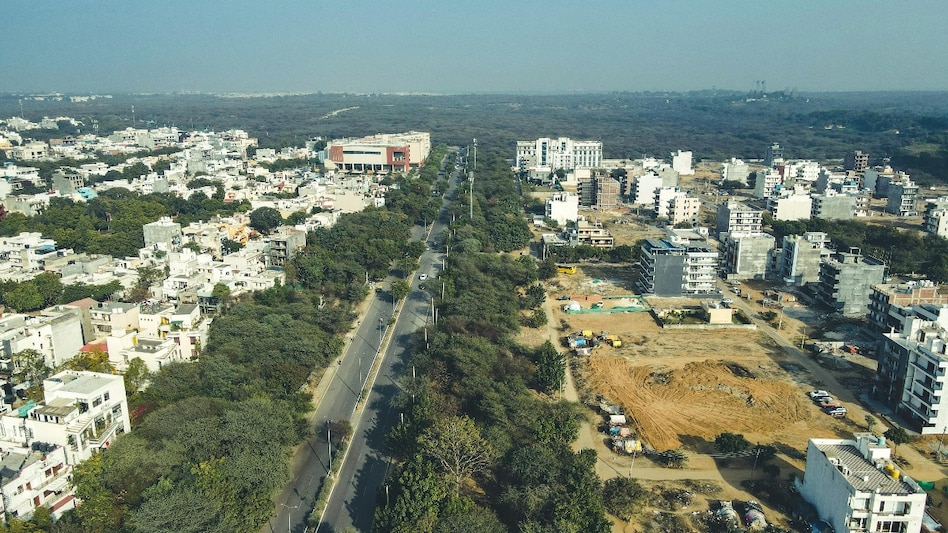
While housing prices in metropolises like Delhi and Mumbai are skyrocketing compared to people’s incomes, affordable homes are disappearing from the market due to developers’ profit margins.
Delhi
Delhi, the capital of India, is a historic city with a rich past dating back over 2,000 years, having served as the seat of power for several empires, including the Mughals and the British. It is home to iconic landmarks such as the Red Fort, Qutub Minar, and Humayun’s Tomb, which reflect its diverse cultural and architectural heritage. Today, Delhi is a vibrant metropolis that blends ancient traditions with modern urban life.
Mumbai
Mumbai, formerly known as Bombay, is a bustling port city on India’s west coast and the country’s financial and entertainment capital. Originally a collection of seven islands, it was ceded to the British as part of the dowry of Catherine of Braganza in 1661, and later developed into a major trading hub under British rule. Today, it is famous for landmarks like the Gateway of India and Chhatrapati Shivaji Terminus, as well as being the heart of the Bollywood film industry.
Red Fort
The Red Fort is a historic fortification in Delhi, India, built in the mid-17th century by the Mughal Emperor Shah Jahan as the palace of his new capital, Shahjahanabad. It served as the main residence of the Mughal emperors for nearly 200 years and is renowned for its massive red sandstone walls and intricate Mughal architecture. Today, a UNESCO World Heritage Site, it remains a powerful symbol of India’s independence, as the Prime Minister hoists the national flag here each year on Independence Day.
Qutub Minar
Qutub Minar is a towering minaret located in Delhi, India, standing at 73 meters tall. Construction began in 1193 under Qutb-ud-din Aibak, the first ruler of the Delhi Sultanate, and was completed by his successors, Iltutmish and Firoz Shah Tughlaq. A UNESCO World Heritage Site, it is a prime example of Indo-Islamic Afghan architecture and is part of the Qutb complex, which includes ancient ruins and the famous Iron Pillar.
Humayun’s Tomb
Humayun’s Tomb, located in Delhi, India, is a magnificent UNESCO World Heritage Site and a pioneering example of Mughal architecture. Built in the 1570s by the emperor’s widow, Empress Bega Begum, it was the first garden-tomb on the Indian subcontinent and served as a direct architectural inspiration for the Taj Mahal. The tomb complex is a symbol of the enduring legacy of the Mughal Empire, blending Persian and Indian styles.
Gateway of India
The Gateway of India is a historic arch-monument built in Mumbai in 1924, commemorating the visit of King George V and Queen Mary to India in 1911. Designed in the Indo-Saracenic style, it served as a ceremonial entrance for British viceroys and governors. Today, it stands as a major tourist attraction and a symbol of Mumbai’s colonial history and its role as a gateway to the city.
Chhatrapati Shivaji Terminus
Chhatrapati Shivaji Terminus, formerly known as Victoria Terminus, is a historic railway station in Mumbai, India, and a UNESCO World Heritage site. Designed by British architect Frederick William Stevens, it was built in 1887 to commemorate Queen Victoria’s Golden Jubilee, blending Victorian Gothic Revival architecture with traditional Indian motifs. Today, it remains a bustling hub for local and long-distance trains, symbolizing Mumbai’s colonial past and its vibrant present.