The Supreme Court denies Bato dela Rosa’s plea to halt ICC warrant.
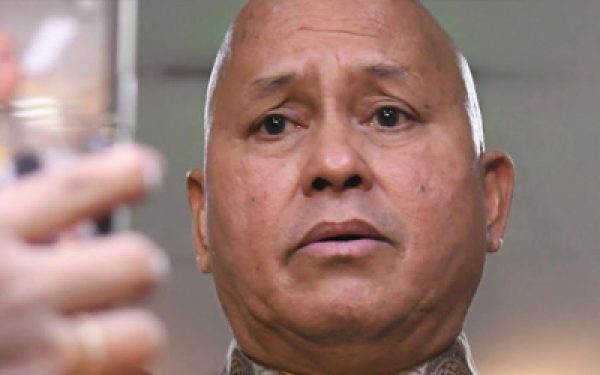
The Supreme Court denied the petition of Senator Ronald “Bato” dela Rosa for a temporary restraining order against the warrant of arrest issued by the International Criminal Court against him.
In a vote of 9-5-1, the Court dismissed Dela Rosa’s request to prevent the enforcement of the arrest warrant.
“The Court, in a vote of 9-5-1, denied the prayer for a temporary restraining order and/or writ of preliminary injunction filed by Senator Ronald ‘Bato’ M. Dela Rosa,” according to the Court press release issued on May 20, 2026.
The Court clarified that its decision only pertains to the request for interim relief.
“The main issues raised by the parties in their pleadings and motions are yet to be resolved in the main case,” it added.
Dela Rosa faces an ICC arrest warrant in connection with a case of crimes against humanity related to the war on drugs of the administration of former President Rodrigo “Digong” Duterte, in which thousands of Filipinos died.
Meanwhile, the presidential palace stated that the ICC arrest warrant against Dela Rosa is valid after the Court denied the issuance of the restraining order.
A palace press officer also supported the view of the Solicitor General’s office that the senator could be considered a fugitive.
When asked if the National Bureau of Investigation would now pursue Dela Rosa, the press officer said that the Department of Justice would decide on this as it involves operational matters.
Supreme Court
The Supreme Court is the highest judicial body in many countries, most notably in the United States, where it was established by Article III of the Constitution in 1789. It serves as the final arbiter of federal law, with the power of judicial review to strike down laws that violate the Constitution. The Court has played a pivotal role in shaping American history through landmark decisions on civil rights, federal power, and individual liberties.
International Criminal Court
The International Criminal Court is a permanent international tribunal located in The Hague, Netherlands, established to prosecute individuals for genocide, crimes against humanity, war crimes, and the crime of aggression. It was created by the Rome Statute, which entered into force on July 1, 2002, with the goal of ending impunity for the most serious international crimes. The ICC serves as a court of last resort, intervening only when national jurisdictions are unable or unwilling to prosecute such crimes.
Malacañang
Malacañang is the official residence and principal workplace of the President of the Philippines, located in Manila. Originally built in the 18th century as a summer house for a Spanish aristocrat, it was later seized by the Spanish government and eventually became the seat of executive power under American colonial rule. Today, it stands as a symbol of Philippine political history, having witnessed numerous administrations, revolutions, and pivotal moments in the nation’s development.
Office of the Solicitor General
The Office of the Solicitor General is a
Supreme Court
The Supreme Court is the highest federal court in the United States, established by Article III of the Constitution in 1789. It holds the power of judicial review, meaning it can declare laws unconstitutional, and its decisions shape American law and society. The Court first met in 1790, and its iconic neoclassical building in Washington, D.C., was completed in 1935.
International Criminal Court
The International Criminal Court (ICC) is a permanent international tribunal located in The Hague, Netherlands, established to prosecute individuals for genocide, crimes against humanity, war crimes, and the crime of aggression. It was created by the Rome Statute, which entered into force on July 1, 2002, marking a historic step in global efforts to end impunity for the most serious international crimes. Unlike the International Court of Justice, the ICC has jurisdiction over individuals rather than states and operates as a court of last resort, intervening only when national courts are unable or unwilling to prosecute.
Malacañang
Malacañang is the official residence and principal workplace of the President of the Philippines, located in Manila. Originally built in the 18th century as a summer house for a Spanish aristocrat, it became the seat of executive power during the Spanish colonial era and has since served as the symbol of Philippine governance through various historical periods, including American colonization and independence. Today, it remains a key site for political decision-making and national ceremonies.
Office of the Solicitor General
The Office of the Solicitor General is a key legal office within the U.S. Department of Justice, responsible for representing the federal government before the Supreme Court. Established in 1870, it determines which cases the government will appeal and presents the government’s legal arguments in high-stakes litigation. The office plays a critical role in shaping American law by influencing the Court’s interpretation of statutes and the Constitution.