
-
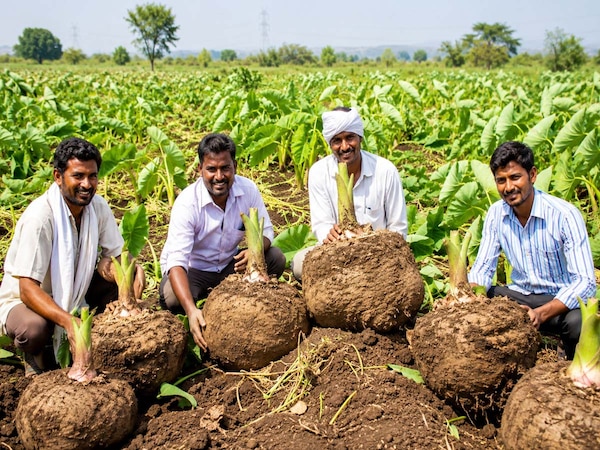
AI-generated photo
Which State Ranks First in Growing the Rare Vegetable Yam in India: You eat different kinds of vegetables every day. This not only changes your taste but is also very important for health. But have you eaten a rare vegetable called yam, also known as suran, ol, chaina, or elephant foot yam? It is a rare tuber vegetable.
Its scientific name is Amorphophallus paeoniifolius. It is considered a vegetable of the Araceae family. This vegetable is believed to have originated in Southeast Asia, but it has been cultivated in India since ancient times. This vegetable is grown in many states of the country, but there is one state that is called the ‘Yam Capital’. The most yam in the entire country is grown in this state, which is later sent to different parts of the country.
What is the yam vegetable like?
The yam tuber is large, rough, and brown, resembling an elephant’s foot. The pulp inside is white or light pink in color. This vegetable is rich in nutrition and medicinal properties. It contains plenty of dietary fiber, potassium, magnesium, zinc, vitamins A and C, and some protein. It is a low-fat vegetable, considered beneficial for weight control, managing diabetes, improving the digestive system, and heart health. In Ayurveda, it is regarded as a medicinal vegetable that reduces inflammation, purifies the blood, and boosts strength.
In India, yam vegetable is commonly grown in Andhra Pradesh, West Bengal, Kerala, Tamil Nadu, Gujarat, Maharashtra, Uttar Pradesh, and Jharkhand. In the country, its cultivation covers about 40,000-42,000 hectares, and the annual production of this vegetable is around 8-11 lakh tons.
This State Tops in Production
In terms of the highest yam production in the country, West Bengal ranks first. According to data for the year 2022-23, West Bengal produced a total of 2,08,095 tons. By doing so, it contributed 34.31% to the country’s total production (about 9.87 lakh tons). This crop is grown in 16,278 hectares of Bengal. This makes the state a leader in both area and production. After that, Kerala ranks second, and Tamil Nadu ranks third.
How is yam vegetable grown?
Yam is also grown in shady places, as an intercrop in banana or coconut plantations. It takes 6-8 months to prepare this crop. A yield of 30-100 tons per hectare can be obtained. The cost of growing it is low and the profit is high. Because of this, its cultivation is considered beneficial for farmers. However, the tubers contain calcium oxalate crystals, so care must be taken in cutting and cooking them.
Yam is not only used as a vegetable but also in many other forms. In Indian kitchens, yam is used to make spicy curry, chips, kofta, pickles, and vegetables. In North India, there is a tradition of making ‘tari wale suran’ on Diwali. It is a vegetarian food that tastes like ‘meat’. That is why it is very popular.
How much does this rare vegetable cost?
Speaking about the price of yam in Delhi-NCR, it is available in the retail market between 50 to 80 rupees per kilogram. However, organic or premium quality yam can cost much more. You can go to the vegetable market near you and buy this special dish.
West Bengal
West Bengal is a culturally rich state in eastern India, known for its capital Kolkata, which served as the capital of British India until 1911. Historically, it was a major center of the Bengal Renaissance and the Indian independence movement. The region is famous for its diverse heritage, including the SundWest Bengal
West Bengal is a culturally rich state in eastern India, known for its vibrant arts, literature, and the iconic city of Kolkata, which served as the capital of British India until 1911. Historically, it was a major center of the Bengal Renaissance and the Indian independence movement, and it was partitioned during India’s independence in 1947, leading to the creation of East Pakistan (now Bangladesh). Today, it is famous for its diverse heritage, including the Sundarbans mangrove forest and the celebration of Durga Puja.Kerala
Kerala, located on the southwestern coast of India, is known for its lush backwaters, diverse wildlife, and rich cultural heritage. Historically, it was a major center for the spice trade, attracting ancient traders from Greece, Rome, and China, and later European colonial powers like the Portuguese, Dutch, and British. Today, it is celebrated for its unique traditions, including Kathakali dance, Ayurvedic medicine, and high human development indicators.Tamil Nadu
Tamil Nadu is a state in southern India known for its rich cultural heritage, ancient Dravidian architecture, and vibrant traditions. Historically, it was home to the powerful Chola, Chera, and Pandya dynasties, which built magnificent temples like those in Thanjavur and Madurai. Today, it remains a hub for classical arts, such as Bharatanatyam dance and Tamil literature.Andhra Pradesh
Andhra Pradesh is a state in southeastern India known for its rich cultural heritage, including classical dance forms like Kuchipudi and ancient Buddhist sites. Historically, it was home to powerful dynasties such as the Satavahanas and Vijayanagara Empire, and the region played a key role in the development of Telugu language and literature. Today, it features notable landmarks like the Amaravati Stupa and the Tirumala Venkateswara Temple.Gujarat
Gujarat, located in western India, has a rich history dating back to the Indus Valley Civilization, with ancient port cities like Lothal highlighting its early maritime trade. It was a key region under the Mauryan and Gupta empires, and later flourished under the Solanki dynasty, known for its stunning stepwells and temples. Today, Gujarat is renowned for its vibrant culture, including the birthplace of Mahatma Gandhi, its colorful festivals, and the UNESCO World Heritage site of the Rani ki Vav stepwell.Maharashtra
Maharashtra is a state in western India known for its rich history and cultural heritage. It was home to the Maratha Empire under Chhatrapati Shivaji Maharaj in the 17th century and later became a key region under British rule, with Mumbai (formerly Bombay) serving as a major colonial and economic hub. Today, Maharashtra is famous for landmarks like the Ajanta and Ellora caves, and its vibrant festivals such as Ganesh Chaturthi.Uttar Pradesh
Uttar Pradesh is a culturally and historically rich state in northern India, often considered the heart of the Hindi belt. It is home to iconic landmarks such as the Taj Mahal in Agra, the holy city of Varanasi on the Ganges River, and the ancient city of Ayodhya, believed to be the birthplace of Lord Rama. Historically, the region was a center of power for major empires, including the Maurya, Gupta, and Mughal dynasties, and played a pivotal role in India’s struggle for independence.Jharkhand
Jharkhand, meaning “the land of forests,” is a state in eastern India known for its rich mineral resources and dense forests. It was carved out of the southern part of Bihar and officially became a separate state on November 15, 2000, marking a long-standing demand for regional identity and tribal rights. The region has a deep historical and cultural heritage, with many ancient tribal communities and sites like the prehistoric rock paintings at Isko.Related news
Scorching heat in the north and rain clouds in the south: what exactly is the El Niño effect?
The sky will scorch in the north, clouds will pour...
“WATCH: Clash between two communities near police station in Kolkata, attack on temple, arson, and vandalism of vehicles, heavy security deployed”
Kolkata News: The clash between two communities in...
I cannot remain silent: Justice files contempt case against Kejriwal.
In the excise policy case, a lower court had acqui...A cannula worth 7 rupees was charged at 210, and a sugar test machine costing 55 rupees was billed at 1650—how are hospitals running a ‘robbery’ in the name of treatment?
DNA Analysis Medical Loot: Today, we will expose t...
CPM worker murdered on way home after campaigning! Shock in Islampur.
Symbolic image. Bloodshed occurred in North Benga...