Fertilizer shortage may occur in the country in the coming days.
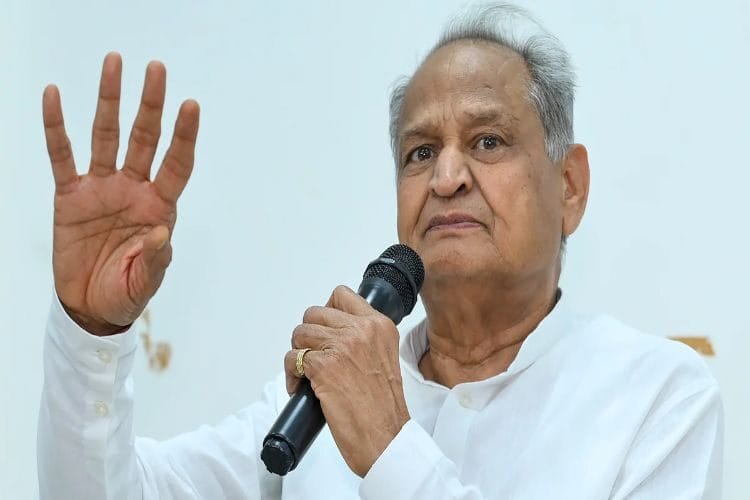
Jaipur, Former Rajasthan Chief Minister and senior Congress leader Ashok Gehlot warned of a potential shortage of urea and other fertilizers, urging the government to ensure adequate supply to farmers.
Gehlot said in a statement that both central and state governments should take steps to raise awareness among farmers on this issue. The senior Congress leader stated that the country could face a severe shortage of urea, DAP, and other fertilizers in the coming days, as India relies heavily on imports for supply and these imports are currently being affected.
Gehlot said, ‘‘Even when fertilizer supply was normal, farmers had to stand in long queues. In the event of a potential shortage, the situation could become worrying.’’ Gehlot said it is the government’s responsibility to provide fertilizers on time. He demanded that governments raise awareness among farmers and encourage cultivation of crops that require less fertilizer. The Congress leader said, ‘‘The more transparently the government works during this crisis and provides clear information instead of keeping people in confusion, the easier it will be for everyone to handle the situation.’’
Jaipur
Jaipur, the capital of Rajasthan, India, was founded in 1727 by Maharaja Sawai Jai Singh II. Known as the “Pink City” for its distinctive terracotta-colored buildings, it was one of India’s first planned cities, designed using principles of Vastu Shastra. The city is home to iconic landmarks like the Hawa Mahal and Amber Fort, reflecting its rich Rajput heritage and royal history.
Jaipur
Jaipur, the capital of Rajasthan, India, is known as the “Pink City” due to the distinctive terracotta color of its historic buildings. Founded in 1727 by Maharaja Sawai Jai Singh II, it was one of the first planned cities in India, designed according to Vastu Shastra principles. Key cultural sites include the Hawa Mahal, City Palace, and Jantar Mantar, reflecting the city’s rich Rajput heritage and architectural brilliance.
Hawa Mahal
Hawa Mahal, or the “Palace of Winds,” is a distinctive five-story palace in Jaipur, India, built in 1799 by Maharaja Sawai Pratap Singh. Designed with 953 small windows (jharokhas) to allow royal women to observe street festivals without being seen, it is a prime example of Rajput architecture blending Hindu and Islamic styles. Originally part of the larger City Palace complex, it served as a summer retreat and a symbolic crown of the Pink City.
Amber Fort
Amber Fort, located near Jaipur in Rajasthan, India, is a majestic hilltop fortress built by the Rajput ruler Raja Man Singh I in 1592. It served as the primary residence of the Kachwaha Rajput rulers until the capital moved to Jaipur in 1727, blending Hindu and Mughal architectural styles with intricate carvings, mirrored halls, and expansive courtyards. Today, it is a UNESCO World Heritage site and a popular tourist destination, renowned for its stunning views and the light-and-sound show that recounts its history.