The Bandung City Education Department together with the West Java Province BBPMP officially conducted verification and validation of the capacity of the Bandung City 2026 New Student Admission School. The activity ensures quotas and study groups align with field conditions and population density, while emphasizing transparency through online system integration on the site spmb.bandung.go.id.
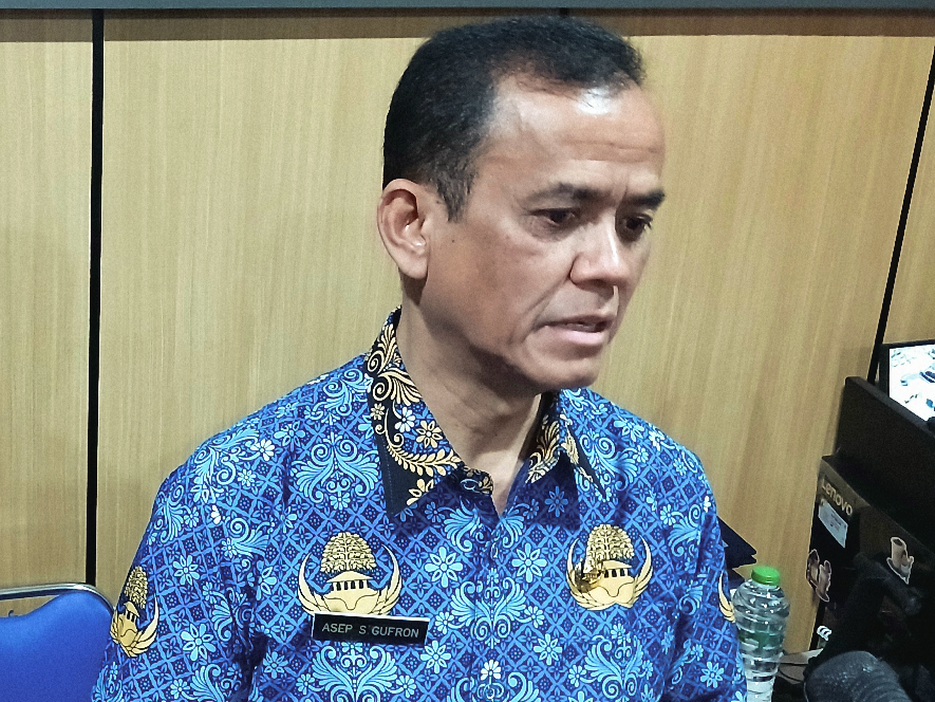
The Head of Bandung City Education Department, Asep Saeful Gufron, emphasized that this validation process aligns understanding of school capacity calculations and analyzes real conditions in the field.
“Our goal is to ensure every child in Bandung City gets access to education according to their rights, including students from underprivileged families,” said Asep, Wednesday (20/5/2026).
Asep explained that based on regulations Permendikdasmen No. 3 of 2025 and Kepmendikdasmen No. 14 of 2026, the quota for public elementary schools is projected to decrease from 23,217 students in 2025 to 22,824 students in 2026, with the number of study groups reducing from 857 to 788. Meanwhile, the junior high school level sees an increase in quota from 19,406 students to 19,914 students, with an addition of study groups from 583 to 597, adjusting to the growth of elementary school graduates.
The projected number of kindergarten graduates for 2025/2026 reaches 27,313 students. Of these, 7,082 students are in the lower decile category (income less than Rp2.5 million), which are prioritized for social assistance, 14,452 students are in the upper decile (middle to upper economy), and 5,779 students need further verification.
“Meanwhile, elementary school graduates reach 32,298 students with a similar pattern, emphasizing the need for affirmative strategies for underprivileged students,” he said.
According to him, in the mapping of students at risk of continuing education, kindergarten graduates from the lower decile are allocated 48 percent to public elementary schools (3,367 students) and 52 percent to private elementary schools (3,715 students). This is done so that all children still receive basic education without economic barriers and according to available school capacity.
Asep also revealed that for the junior high school level, the projected distribution of at-risk students from lower decile elementary school graduates shows 64 percent directed to public junior high schools (5,907 students) and 36 percent to private junior high schools (3,266 students). This step is taken to minimize the risk of dropout and ensure equal educational opportunities across all areas of Bandung City.
Furthermore, Asep said that the validation process for Bandung City 2026 SPMB emphasizes the importance of registration document validity. The public is urged to check the completeness of family cards, birth certificates, and other supporting documents before registering through the domicile, affirmative-achievement, or mutation pathway with a maximum quota of 5 percent.
“This online system makes it easier for parents to monitor the process transparently and objectively,” said Asep.
Asep added that through this verification step, quota adjustment, and mapping of at-risk students, the Bandung City Government affirms its commitment to providing fair, transparent, and sustainable education.
“This strategy serves as a reference for developing school capacity, adjusting quotas, and providing equal opportunities for all students in Bandung City,” said Asep.