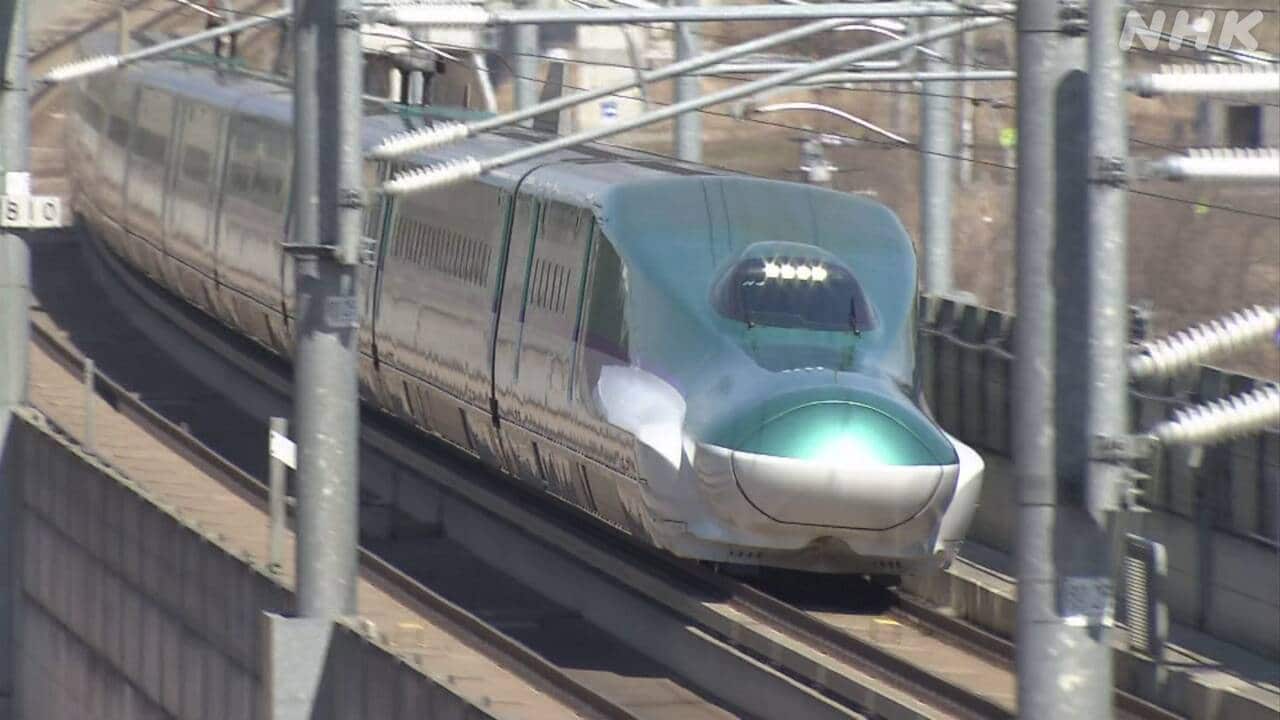
Regarding the bidding for the track laying work of the Hokkaido Shinkansen, the Fair Trade Commission conducted an on-site inspection on the 19th, suspecting that nine railway-related construction companies had repeatedly engaged in bid-rigging by coordinating in advance which company would win the contract. The ordering party, the railway and…
Hokkaido Shinkansen
The Hokkaido Shinkansen is a high-speed rail line in Japan that connects Tokyo to Shin-Hakodate-Hokuto in southern Hokkaido. Opened in March 2016, it was extended to Sapporo in 2031, significantly reducing travel time between the main island of Honshu and Hokkaido. The line represents a major engineering achievement, including the world’s longest undersea tunnel, the Seikan Tunnel, which links the two islands.
Hokkaido Shinkansen
The Hokkaido Shinkansen is a high-speed rail line connecting Tokyo to Hakodate in Hokkaido, Japan, with the first section opening in March 2016. It extended the existing Tohoku Shinkansen from Shin-Aomori through the Seikan Tunnel, the world’s longest undersea tunnel, to Shin-Hakodate-Hokuto. This marked the first time the shinkansen network reached Japan’s northernmost main island, significantly reducing travel time and boosting tourism and economic ties between Honshu and Hokkaido.
Seikan Tunnel
The Seikan Tunnel is a 53.85-kilometer railway tunnel in Japan, connecting the islands of Honshu and Hokkaido beneath the Tsugaru Strait. Construction began in 1971 and was completed in 1988, making it the longest undersea tunnel in the world until the Gotthard Base Tunnel opened. It was built to provide a safer and more reliable transportation link, especially during harsh weather conditions that disrupted ferry services.
Hokkaido Shinkansen
The Hokkaido Shinkansen is a high-speed rail line connecting Tokyo to Hakodate, with extensions to Sapporo currently under construction. It began operations in March 2016, marking the first Shinkansen service to Japan’s northernmost island, Hokkaido, after decades of planning and tunneling through the challenging Seikan Tunnel. This route significantly reduced travel time between Honshu and Hokkaido, enhancing tourism and economic links in the region.
Seikan Tunnel
The Seikan Tunnel is a 53.85-kilometer railway tunnel in Japan, connecting the islands of Honshu and Hokkaido beneath the Tsugaru Strait. Construction began in 1971 and took over 17 years to complete, with the tunnel opening to rail traffic in 1988. It remains the longest undersea tunnel in the world, built to improve transportation and reduce reliance on ferries in the region.
Tokyo
Tokyo, the capital of Japan, was originally a small fishing village called Edo before becoming the political center of the Tokugawa shogunate in the early 17th century. After the Meiji Restoration in 1868, it was renamed Tokyo (“Eastern Capital”) and rapidly modernized into a global hub of culture, technology, and commerce. Today, it is known for its blend of historic temples, futuristic skyscrapers, and vibrant neighborhoods like Shibuya and Shinjuku.
Shin-Hakodate-Hokuto
Shin-Hakodate-Hokuto is a major railway station in Hokkaido, Japan, that opened in 2016 as the southern terminus of the Hokkaido Shinkansen high-speed line. Its construction marked a significant milestone in connecting Hokkaido to Japan’s main island of Honshu via the Seikan Tunnel, replacing the former Hakodate Station as the primary bullet train stop in the region. The station serves as a key transportation hub for travelers exploring Hakodate and southern Hokkaido.
Sapporo
Sapporo is the capital city of Hokkaido, Japan’s northernmost island, known for its modern urban planning and natural beauty. Founded in 1868, it was developed as a colonial outpost and underwent rapid modernization, featuring a grid layout inspired by Western cities. The city is famous for the annual Sapporo Snow Festival and its rich cultural blend of Ainu heritage and Japanese traditions.
Tohoku Shinkansen
The Tohoku Shinkansen is a high-speed rail line in Japan connecting Tokyo with major cities in the Tohoku region, such as Sendai, Morioka, and Shin-Aomori. It began operations with the opening of the Tokyo to Omiya section in 1982 and has since been extended multiple times, reaching Shin-Aomori in 2010. The line has significantly reduced travel time, boosting tourism and economic ties across northern Japan.
Shin-Aomori
Shin-Aomori, also known as Shin-Aomori Station, is a major railway hub in Aomori City, Japan, that opened in 2010 to replace the historic Aomori Station as the northern terminus of the Tohoku Shinkansen high-speed line. Its construction significantly reduced travel time between Tokyo and Aomori, boosting tourism and economic ties to the region. The station’s modern design and integration with local transit systems reflect Aomori’s role as a gateway to northern Honshu and the nearby Hakkoda Mountains.
Tsugaru Strait
The Tsugaru Strait is a narrow sea passage between Japan’s Honshu and Hokkaido islands, connecting the Sea of Japan to the Pacific Ocean. Historically, it has been a crucial maritime route for trade and transportation, and it is famously known for the 1988 completion of the Seikan Tunnel, the world’s longest undersea tunnel, which now links the two islands via railway. The strait also holds cultural significance, as it is referenced in Japanese literature and song, notably in the ballad “Tsugaru Kaikyō.”