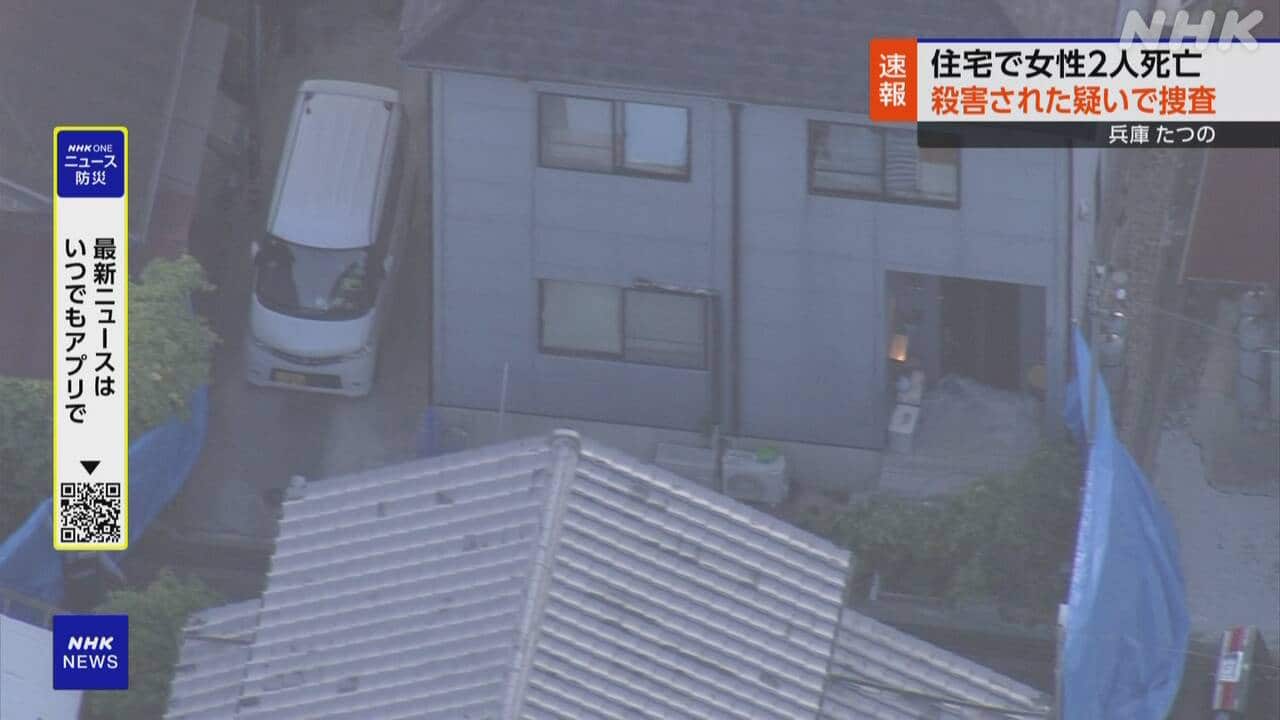
On the morning of the 19th, two women were found dead with blood loss in a residence in Tatsuno City, Hyogo Prefecture. They had wounds resembling stab marks, and no weapon has been found at the scene. Police suspect the two were murdered.
Read more
Tatsuno City
Tatsuno City, located in Hyogo Prefecture, Japan, is historically known as a castle town that flourished under the rule of the Honda clan during the Edo period. The city is famous for its well-preserved samurai residences and the scenic Tatsuno Castle ruins, which offer a glimpse into its feudal past. Today, Tatsuno is also recognized for its production of high-quality soy sauce, a tradition that dates back over 400 years.
Tatsuno Castle ruins
The ruins of Tatsuno Castle, located in Hyogo Prefecture, Japan, date back to the early Edo period, originally constructed in the early 17th century by the Honda clan. Though the castle was largely dismantled during the Meiji Restoration, its stone walls, moats, and a reconstructed gate remain, offering a glimpse into feudal Japan. Today, the site is a popular historical park, known for its serene atmosphere and seasonal cherry blossoms.
Tatsuno City
Tatsuno City, located in Hyōgo Prefecture, Japan, is a historic castle town that flourished during the Edo period under the rule of the Tatsuno Domain. Known as the “Castle Town of the West,” it is famous for its well-preserved samurai residences, white-walled storehouses, and scenic canals lined with weeping willows. The city also has a strong connection to soy sauce production, with a history dating back over 400 years, and is recognized for its traditional brewing culture.
Hyogo Prefecture
Hyogo Prefecture, located in the Kansai region of Japan, is historically significant as the home of Himeji Castle, a UNESCO World Heritage site and one of Japan’s finest surviving feudal castles. The prefecture’s capital, Kobe, was one of the first ports opened to foreign trade in the 19th century, fostering a blend of international and Japanese culture. Today, Hyogo is known for its scenic landscapes, including the Seto Inland Sea and the hot springs of Arima Onsen.
Tatsuno Castle ruins
The Tatsuno Castle ruins, located in Hyogo Prefecture, Japan, are the remains of a hilltop fortress originally built in the 15th century by the Akamatsu clan. The castle was later expanded and served as the seat of the Tatsuno Domain under the Honda clan during the Edo period. Today, the site is known for its well-preserved stone walls and scenic views, offering visitors a glimpse into Japan’s feudal history.
Honda clan
The Honda clan was a prominent Japanese samurai family that rose to power during the Sengoku and Edo periods. They are best known for their military service under Tokugawa Ieyasu, particularly Honda Tadakatsu, who was celebrated as one of the “Four Heavenly Kings” of the Tokugawa and a legendary warrior. The clan’s influence continued through the Edo period, with various branches serving as daimyo (feudal lords) across Japan.
Edo period
The Edo period, lasting from 1603 to 1868, was a time of peace and stability in Japan under the rule of the Tokugawa shogunate. During this era, the country was largely isolated from the outside world, allowing a unique culture to flourish, including kabuki theater, ukiyo-e art, and the development of Tokyo (then called Edo) as a major urban center. This period ended with the Meiji Restoration, which restored imperial rule and opened Japan to global influence.
samurai residences
Samurai residences were the traditional homes of Japan’s warrior class during the feudal Edo period (1603-1868). These structures, often featuring fortified gates, tatami-matted rooms, and gardens, reflected the samurai’s social status and military function. Today, preserved examples like those in Kakunodate or Kanazawa offer a glimpse into the daily life and hierarchical society of the samurai era.
Meiji Restoration
The Meiji Restoration was a transformative period in Japanese history from 1868 to 1912, during which the Tokugawa shogunate was overthrown and imperial rule was restored under Emperor Meiji. It marked Japan’s rapid modernization and industrialization, as the country adopted Western political, military, and technological systems while preserving its cultural identity. This era ended Japan’s feudal isolation and set the stage for its emergence as a global power.
Japan
Japan is an island nation in East Asia known for its rich cultural heritage and rapid modernization. Its history spans thousands of years, from ancient imperial dynasties and the samurai era to periods of isolation and eventual opening to the world in the 19th century. Today, Japan seamlessly blends traditional temples, tea ceremonies, and festivals with cutting-edge technology and pop culture.