Prosecutor who exposed abuse should not be forced out
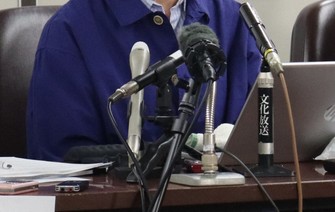
The prosecutor and victim of an alleged sexual assault by her superior speaks to reporters after submitting a written request for a harassment survey in the Osaka District Public Prosecutors Office, March 2, 2026, in Tokyo’s Chiyoda Ward.
It is unjust when someone who summons the courage to report abuse ends up having to leave the organization. Why did this happen in a prosecutors office in Japan, which should be standing with victims? That must be made clear.
A female prosecutor who reported being a victim of sexual violence by Kentaro Kitagawa, the former chief prosecutor of the Osaka District Public Prosecutors Office and her superior at the time, has submitted her resignation. She said she “can no longer endure” the organization’s dishonest response.
The woman had asked the justice minister and the prosecutor-general to set up an independent committee to investigate harassment within the prosecutors office, including her own case. But there appears to be no prospect that request will be accepted.
She also cited as a reason for resigning the fact that, even after she asked her superiors to provide a job environment where she could work with peace of mind and attached a written medical opinion, that was never realized.
What cannot be overlooked is her claim that she suffered secondary victimization. She says that although defamatory rumors about her spread inside the office, senior officials did nothing.
Sex crimes are sometimes called a “murder of the soul.” The woman was diagnosed with post-traumatic stress disorder (PTSD) and had to take leave from work. There is no choice but to say that those around her showed a disturbing lack of consideration for her condition.
The Osaka Nakanoshima National Government Building, which houses the Osaka District Public Prosecutors Office, is pictured in Osaka’s Fukushima Ward, Feb. 8, 2024.
The defendant was indicted on a charge of “quasi-rape” for allegedly sexually assaulting the woman after she became heavily intoxicated at a social gathering. At the first hearing he admitted to the charges, but has since shifted to claiming innocence, saying, “I believed there was consent.”
After the incident, the woman was given a written message from the defendant saying things including, “If this becomes public, the Osaka District Public Prosecutors Office will no longer be able to function as an organization.” Fearing that she might cause trouble for the office, she was long unable to come forward about what had happened to her.
After the first trial hearing, prosecutors added to the charges the claim that the defendant committed sexual violence by exploiting his position as the head of the district prosecutors office. It is a case built on the abuse of his influence over a subordinate.
The prosecutors office is expected to maintain strong internal unity so that the handling of cases does not vary from one prosecutor to another. Because its work involves criminal investigations, the organization tends to become closed off and can fall into self-righteousness. It is essential to bring in outside eyes and examine whether those characteristics and that institutional culture helped produce this harm.
Prosecutors hold a monopoly on criminal prosecution. The foundation of that power is public trust. Support for the woman is also spreading. The prosecutors office must face that reality with sincerity.
Osaka District Public Prosecutors Office
The Osaka District Public Prosecutors Office is a key judicial institution in Osaka, Japan, responsible for investigating and prosecuting criminal cases within its jurisdiction. Established under Japan’s modern legal framework following the Meiji Restoration, it operates as part of the nation’s hierarchical prosecution system, which dates back to the late 19th century. The office plays a vital role in upholding the rule of law in the Kansai region, handling both routine and high-profile cases.
Tokyo’s Chiyoda Ward
Tokyo’s Chiyoda Ward is the political and administrative heart of Japan, housing the Imperial Palace, the National Diet (parliament), and numerous government ministries. Historically, the area was the site of Edo Castle, the seat of the Tokugawa shogunate during the Edo period (1603–1868), which later became the Imperial Palace after the Meiji Restoration. Today, it blends centuries-old heritage with modern
Osaka District Public Prosecutors Office
The Osaka District Public Prosecutors Office is a key legal institution in Japan, responsible for investigating and prosecuting criminal cases within the Osaka region. Established in the late 19th century during Japan’s modernization era, it has played a central role in upholding the rule of law and administering justice in one of the country’s major metropolitan areas. The office continues to operate under Japan’s Ministry of Justice, handling a wide range of criminal matters from minor offenses to serious crimes.
Tokyo’s Chiyoda Ward
Tokyo’s Chiyoda Ward is the political and administrative heart of Japan, housing the Imperial Palace, the National Diet building, and the prime minister’s office. Historically, the area was the site of Edo Castle, the seat of the Tokugawa shogunate during the Edo period (1603–1868). Today, it blends centuries-old heritage with modern government functions, making it a symbol of Japan’s enduring history and governance.
Osaka Nakanoshima National Government Building
The Osaka Nakanoshima National Government Building is a notable government office complex located on Nakanoshima, a small island in central Osaka. Completed in the early 2000s, it houses various federal agencies and is recognized for its modern architectural design. The site reflects Osaka’s role as a major administrative and economic hub, though the island itself has a longer history as a cultural and commercial center since the Edo period.
Osaka’s Fukushima Ward
Osaka’s Fukushima Ward is a lively district located near the Umeda area, known for its blend of modern residential neighborhoods and historic shopping streets like the retro “Fukushima Hontori Shotengai.” Historically, the area flourished during the Edo period as a port town along the Kanzaki River, and it later became a key transportation hub with the development of the Fukushima Station. Today, it is famous for its vibrant food scene, particularly its concentration of high-quality okonomiyaki restaurants.
Imperial Palace
The Imperial Palace, located in the heart of Tokyo, Japan, is the primary residence of the Emperor of Japan. Originally built as the Edo Castle in the 15th century, it became the imperial residence after the Meiji Restoration in 1868, when the capital moved from Kyoto to Tokyo. Today, the palace’s inner grounds are open to the public only on select days, while the surrounding gardens and historic moats remain popular attractions.
National Diet
The National Diet is Japan’s bicameral legislature, located in Tokyo, and serves as the country’s highest organ of state power. Its history began with the Meiji Constitution in 1889, which established the Imperial Diet, and it was reorganized into its current form after World War II under the 1947 Constitution. The building itself, completed in 1936, is a notable example of early 20th-century architecture and remains a symbol of Japanese democracy.
Edo Castle
Edo Castle, located in present-day Tokyo, was the residence of the Tokugawa shoguns during the Edo period (1603–1868) and served as the political heart of Japan. Originally built in 1457, it was greatly expanded under Tokugawa Ieyasu after he established his shogunate there. Today, the castle grounds are part of the Imperial Palace, with only a few original structures, like the stone walls and moats, remaining.
Kansai region
The Kansai region, located in western Honshu, Japan, is a historic and cultural heartland that served as the nation’s political and cultural center for over a thousand years. It was home to ancient capitals like Nara and Kyoto, where Buddhism, traditional arts, and the imperial court flourished, and it also includes the bustling commercial hub of Osaka. Today, Kansai is renowned for its well-preserved temples, shrines, castles, and vibrant festivals, offering a deep glimpse into Japan’s heritage.