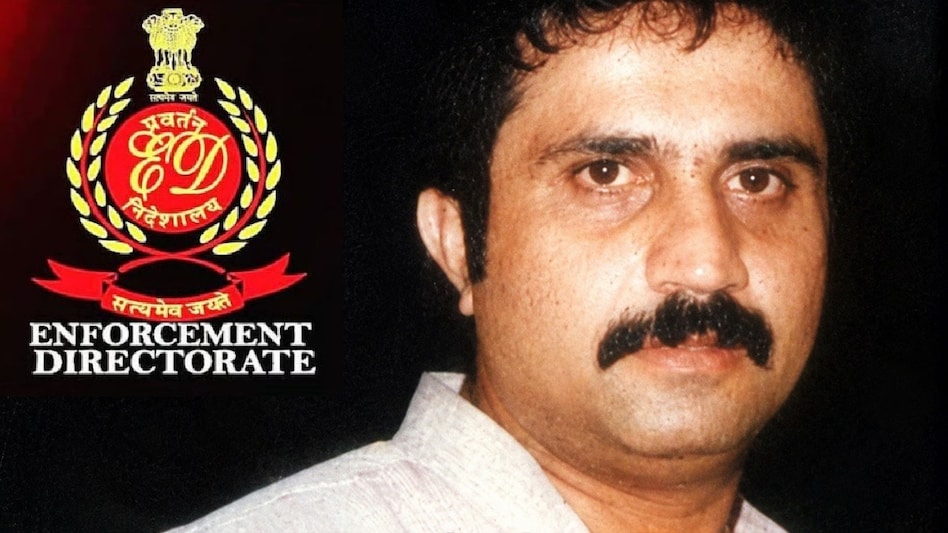
In Mumbai, the ED has attached assets worth around 700 crore rupees linked to underworld don Iqbal Mirchi and his family, located in India and Dubai. The action was taken under the Fugitive Economic Offenders Act and PMLA. Read the full story.
The Enforcement Directorate (ED) in Mumbai has taken major action against the late Iqbal Mirchi, who was linked to the underworld, and his family. The ED has temporarily attached assets worth approximately 700.27 crore rupees under the Fugitive Economic Offenders Act (FEOA) 2018. According to the agency, these assets were purchased with money obtained from money laundering and crime. This action is considered a major legal move against the Mirchi network.
Mumbai
Mumbai, formerly known as Bombay, is a major port city on India’s west coast and the capital of Maharashtra. Originally a collection of seven islands, it was ceded to the British East India Company in 1661 and grew into a vital trading hub. Today, it is India’s financial and entertainment capital, home to Bollywood and a diverse, bustling population.
India
India is a vast South Asian country known for its rich cultural heritage, ancient history, and diverse traditions. It was home to the Indus Valley Civilization, one of the world’s oldest urban cultures, and later saw the rise of major empires like the Maurya and Mughal dynasties, which shaped its art, architecture, and religion. Today, India is a vibrant democracy with iconic landmarks such as the Taj Mahal, reflecting its deep historical and spiritual legacy.
Dubai
Dubai is a major city and global hub in the United Arab Emirates, known for its futuristic architecture and luxury shopping. Originally a small fishing and pearling village, its modern transformation began in the 1960s with the discovery of oil, though today its economy relies heavily on tourism, real estate, and trade. Iconic landmarks like the Burj Khalifa and Palm Jumeirah reflect its rapid growth from a desert settlement into a cosmopolitan metropolis.
Mumbai
Mumbai, formerly known as Bombay, is India’s largest city and financial capital, located on the west coast. Originally a group of seven islands inhabited by fishing communities, it was ceded to the British in 1661 as part of a royal dowry and later developed into a major colonial port. Today, it is a vibrant cultural and economic hub, famous for landmarks like the Gateway of India and as the heart of the Bollywood film industry.
India
India is a vast and diverse country in South Asia with a rich history spanning over 5,000 years, home to ancient civilizations like the Indus Valley. It has been a crossroads of major religions—Hinduism, Buddhism, Jainism, and Sikhism—and was shaped by empires such as the Maurya, Gupta, Mughal, and British colonial rule. Today, India is the world’s most populous democracy, celebrated for its cultural heritage including the Taj Mahal, vibrant festivals, and varied cuisines.
Dubai
Dubai is a major city and emirate in the United Arab Emirates, known for its ultramodern architecture, luxury shopping, and vibrant nightlife. Historically a small fishing and pearl-diving village, it transformed rapidly after the discovery of oil in the 1960s, diversifying its economy into tourism, real estate, and finance. Today, it is home to iconic landmarks like the Burj Khalifa, the world’s tallest building, and the man-made Palm Jumeirah islands.
Bollywood
Bollywood is the informal name for the Hindi-language film industry based in Mumbai, India, and is one of the largest centers of film production in the world. Its history dates back to the early 20th century, with the release of India’s first feature film, *Raja Harishchandra* (1913), and it grew into a global cultural phenomenon known for its vibrant musicals, dramatic storylines, and iconic stars. Today, Bollywood produces hundreds of films annually, blending traditional Indian themes with modern influences to entertain audiences worldwide.
Taj Mahal
The Taj Mahal is an iconic white marble mausoleum located in Agra, India, built between 1632 and 1653 by Mughal emperor Shah Jahan in memory of his beloved wife, Mumtaz Mahal. It is widely considered a masterpiece of Mughal architecture, blending Islamic, Persian, and Indian styles, and was designated a UNESCO World Heritage Site in 1983. Today, it stands as a symbol of eternal love and attracts millions of visitors from around the world.
Burj Khalifa
The Burj Khalifa in Dubai, United Arab Emirates, is the world’s tallest building, standing at 828 meters (2,717 feet). Completed in 2010 after five years of construction, it was designed by Adrian Smith of Skidmore, Owings & Merrill and named in honor of the President of the UAE, Khalifa bin Zayed Al Nahyan. The skyscraper features residential, commercial, and hotel spaces, and its observation decks attract millions of visitors annually.
Palm Jumeirah
The Palm Jumeirah is a man-made archipelago in Dubai, United Arab Emirates, shaped like a palm tree and constructed in the early 2000s using land reclamation. It was developed by Nakheel Properties as a luxury residential, commercial, and tourist destination, featuring upscale hotels, villas, and beaches. The project, completed in 2006, is one of the world’s largest artificial islands and a symbol of Dubai’s rapid modernization and ambition.
Indus Valley Civilization
The Indus Valley Civilization was one of the world’s earliest urban cultures, flourishing from around 3300 to 1300 BCE in what is now Pakistan and northwest India. It is renowned for its advanced city planning, including sophisticated drainage systems, grid-like streets, and impressive public baths like the Great Bath of Mohenjo-Daro. Though its script remains undeciphered, the civilization’s decline likely resulted from climate change and shifting river patterns, leaving a lasting legacy in South Asian heritage.