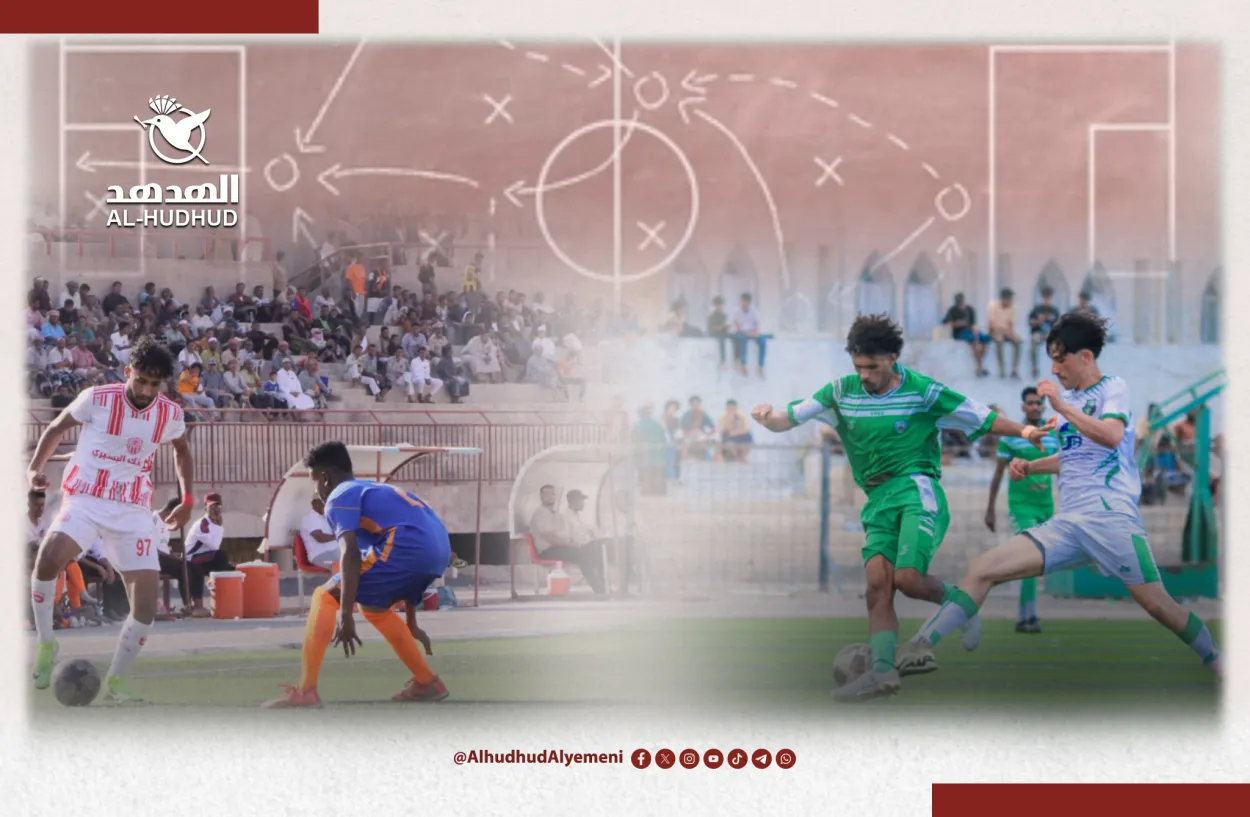
The curtain has fallen on the third round of the Yemeni Premier League, with various early indicators emerging this season, not only in results but also in the new balance of power within the competition itself.
After just three rounds, some traditional certainties in Yemeni football are already shaking early, with the rise of clubs not among the initial favorites, contrasted by shaky starts from some teams accustomed to competing.
The recorded numbers so far are not just passing results; they provide clear evidence that the traditional power map in Yemeni football is witnessing notable shifts, especially with the strong presence of Hadhramaut clubs, which have imposed themselves early at the top of the scene.
Perfect Hadhrami Start
The results of the third round showed that the top teams, particularly the Hadhrami duo of Shabab Hadhramaut and Al-Mukalla, already possess the ability to compete for the league title, after maintaining their perfect start and achieving a full nine points each, alongside Al-Uruba.
A deep reading of these numbers reveals that Hadhramaut clubs are not leading by chance; they are presenting the most convincing indicators so far in terms of stability and technical balance within the tournament.
Al-Mukalla, newly promoted to the top flight, appears to be the standout story of the season so far. The team not only leads but also boasts the strongest attack in the league with six goals in three matches, an average of two goals per game, figures rarely achieved by a promoted team at the start of a season in a league typically characterized by caution and low scoring.
More importantly, the team has conceded only one goal, meaning its success does not rely solely on attacking momentum but on a clear balance between defense and attack.
This likely reflects a state of technical and mental stability within the club, as promoted teams in Yemen often enter the tournament with a survival mindset or to avoid heavy losses, while Al-Mukalla plays with the confidence of a team wanting to quickly establish itself among the elite.
Hassan Basfar’s presence at the top of the scorers’ list with three goals also confirms that the team possesses a decisive attacking element capable of converting advantage into results. Furthermore, the team’s leadership by veteran coach Anwar Ashour, a native of the governorate, gives it additional stability, especially given his long experience as a former player for several prominent Yemeni clubs, most notably Shabab Ibb.
On the other side of the city, Shabab Hadhramaut presents a completely different model of leadership. The team has scored only five goals, fewer than Al-Mukalla, but holds the most important defensive record so far, having finished three full rounds without conceding any goal.
In long league tournaments, these indicators are often more important than temporary attacking strength, because defensive stability reflects a more mature and disciplined collective system.
Shabab Hadhramaut appears to be a team that knows how to manage matches with minimal risk, imposing its rhythm quietly without needing open play or major attacking gambles. Additionally, Haider Aslam’s presence alongside Hassan Basfar at the top of the scorers’ list with three goals each reflects the impact Hadhramaut club attackers are having this season.
Al-Uruba Harvests with Veteran Experience
It is also striking that Hadhramaut teams not only compete in results but also impose their presence even in statistics. Al-Mukalla and Shabab Hadhramaut have the best goal difference in the league (+5), an important indication of their ability to decide matches without significant struggle, unlike some teams that achieve narrow wins or appear defensively shaky.
In contrast, Al-Uruba appears as the most experienced and calm team among the leaders, having also achieved a full nine points, but doing so in a completely different way from Al-Mukalla and Shabab Hadhramaut.
Al-Uruba does not have the strongest attack or the best defense, but it possesses one of the most important secrets of long league tournaments: the ability to fight until the last moments and decide difficult matches, a trait that has often made the difference in its favor in the first two matches.
So far, the team appears more mature in handling match details, knowing how to maintain its balance even in periods when it is not performing at its best, giving it a crucial advantage in a</p