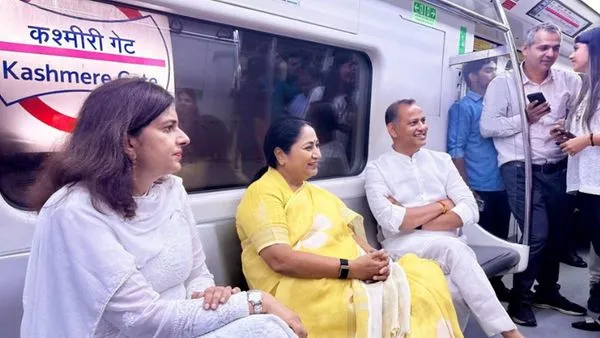
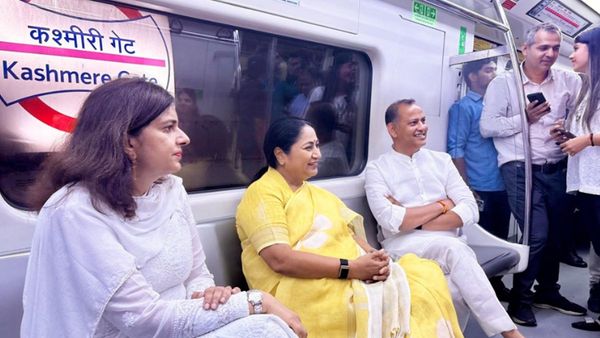
Metro Monday CM Rekha Gupta: The government has launched a new initiative to tackle Delhi’s traffic and pollution problems. On Monday, Chief Minister Rekha Gupta inaugurated the ‘Metro Monday’ campaign by traveling via the metro herself to reach her office at the Delhi Secretariat. Cabinet ministers Pravesh Verma and Indraj Singh were also seen with the Chief Minister on the metro.
After exiting the metro station, the three leaders traveled to the secretariat by electric bus. The government views this initiative not just as a symbolic campaign, but as an effort to change the transport culture in Delhi.
What does the government aim to change with ‘Metro Monday’? (Metro Monday Campaign Explained)
CM Rekha Gupta stated that if people adopt public transport more instead of private vehicles, the capital could see several major benefits. According to her, this will reduce traffic jams, save fuel, and also help in reducing pollution.
The CM appealed to Delhi residents to make the metro, buses, and other public transport a part of their daily lives. She linked this to the “Mera Bharat, Mera Yogdan” campaign, explaining that it is not just an initiative to change the mode of travel, but an effort to improve the city’s future.
Ministers and officials also arrived by metro
The impact of this government campaign was visible on the very first day. Several ministers, officials, and government employees came to their offices via the metro on Monday. The government hopes that in the coming times, this will not remain just a one-day campaign but will gradually become a habit for people throughout the week.
Considering the increasing number of passengers, the Delhi Metro Rail Corporation (DMRC) has also stepped up its preparations. On May 17, DMRC increased the number of additional train trips from 6 to 24. Additionally, security arrangements at metro stations have been strengthened to ensure passengers face no inconvenience during office hours.
What are the government’s key focus areas?
Through this campaign, the government aims to work on several major goals:
- Reducing the number of private vehicles
- Decreasing petrol and diesel consumption
- Reducing air pollution in Delhi
- Making public transport more popular
Chief Minister Rekha Gupta said that seeing a large number of people traveling by metro is encouraging. According to her, if this initiative succeeds, it could have a significant impact on both Delhi’s roads and its environment.