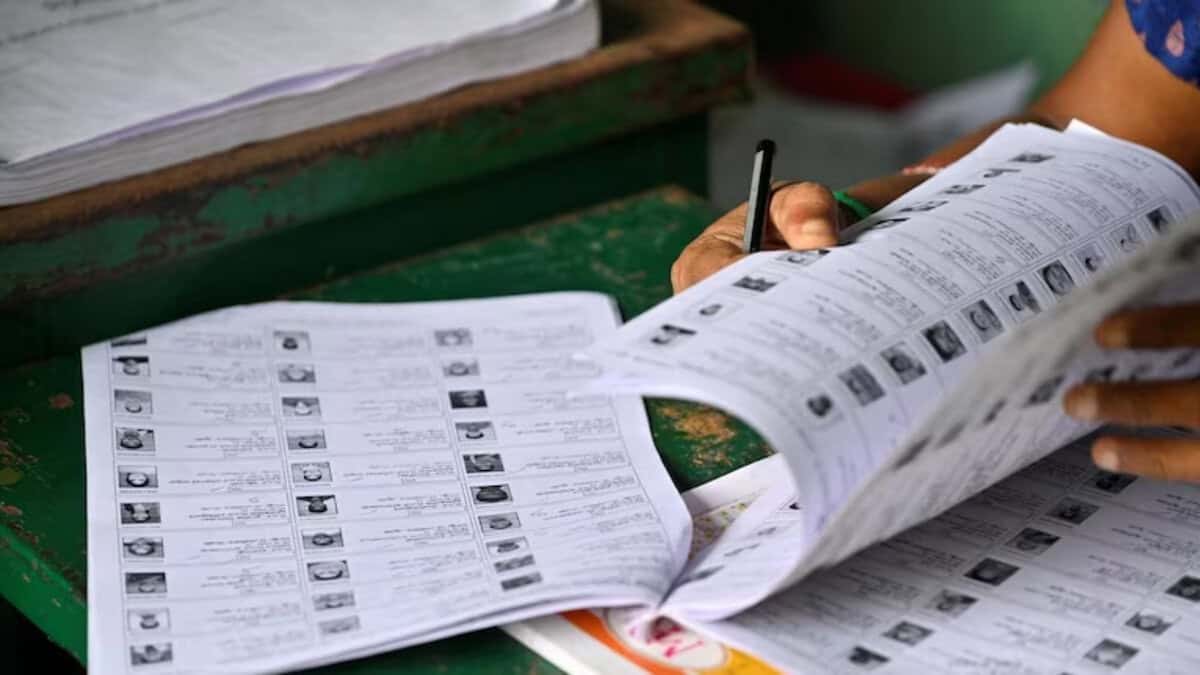
Hyderabad: Mapping is crucial for the Special Intensive Revision (SIR) of electoral rolls, which begins next month in Hyderabad and other districts of Telangana. Individuals who find their relatives’ details in the 2002 list will not need to submit any documents. However, anomaly cases may receive notices.
During the mapping process, many Booth Level Officers (BLOs) saw the ‘view anomaly’ option under the voters. These voters are likely to become ‘logical discrepancy’ cases in later stages of the revision process.
SIR family mapping in Hyderabad
As house-to-house visits by BLOs in Telangana are set to begin on June 25, mapping of voters in the current electoral rolls with the 2002 SIR list has intensified.
Those who successfully find their names in both the current electoral roll and the 2002 SIR list will be mapped. However, those who are not in the earlier SIR list need to link themselves to one of the following relatives.
Those who successfully find their or their relatives’ names in the 2002 SIR list do not need to submit any documents.
Otherwise, voters have to submit any one of the following ECI-listed documents.
Even after successful SIR mapping in Telangana districts, including Hyderabad, and other states, voters whose names appear under anomalies can receive notices.
According to the AIMIM president and Hyderabad MP Asaduddin Owaisi, these cases will in future turn into logical discrepancies.
In phase II of SIR, which recently concluded in 12 states and Union Territories (UTs), the following voters were listed under logical discrepancies.
- In case of mapping with parents:
- In case of mapping with maternal/paternal grandparents:
- More than six persons mapped with a single person listed in the 2002 SIR list.
In all of the above-listed discrepancies, voters are most likely to receive notices. However, in such cases, voters just need to prove the relationship with the elector in the 2002 SIR list.
According to the Uttar Pradesh Chief Electoral Officer (CEO) Navdeep Rinwa, to reply to logical discrepancy notices, voters can submit any documents, not necessarily from ECI-listed documents, to prove the relationship.
Those who are mapped with parents may be asked to provide any document of theirs mentioning both their name and their father’s/mother’s name.
In case of mapping with maternal grandparents, the electors may be asked to provide any document of theirs mentioning both their name and their mother. Apart from that, such electors need to provide their mother’s document mentioning her name and her father’s/mother’s names.
In case of mapping with paternal grandparents, the electors may be asked to provide any document of theirs mentioning both their name and their father. Apart from that, such electors need to provide their father’s document mentioning his name and his father’s/mother’s names.
Since citizens in Hyderabad and other districts of Telangana can be asked to prove their relationship with the voters in the last SIR through documents in case of the above logical discrepancies, family mapping needs to be done carefully and only with the allowed relatives.
SIR dates in Telangana
On Saturday, May 16, the Telangana Chief Electoral Officer C Sudharshan Reddy said the SIR of electoral rolls would be conducted in the state from June 15.
The house-to-house verification would be taken up from June 25 to July 24.
During the verification process, as many as 35,000 Booth Level Officers (BLOs) would be deployed across the state. The BLOs would visit residences and hand over the enumeration forms. They would later collect the filled-out forms.
Following are the important dates of SIR:
| Preparation, Training & Printing | House to House visits by BLOs |