Kirishima takes sole lead in Summer sumo tournament as Kotozakura suffers fifth loss.
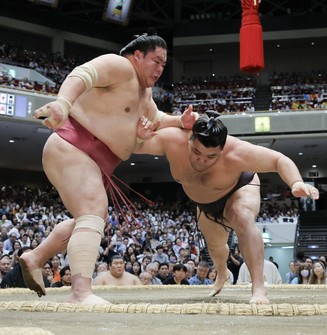
Ozeki Kirishima, right, defeats Daieisho on the seventh day of the Summer Grand Sumo Tournament at Ryogoku Kokugikan in Tokyo on May 16, 2026.
Re-promoted ozeki Kirishima secured his seventh straight win to remain undefeated at the Summer Grand Sumo Tournament on Saturday, while ozeki Kotozakura continued his poor start with a fifth loss.
Spring tournament champion Kirishima stayed sharp on the raised ring at Tokyo’s Ryogoku Kokugikan as the ozeki handled strong charges from Daieisho before forcing the No. 4 maegashira backward and out.
Kotozakura suffered his third consecutive defeat at the hands of Oho. The No. 3 maegashira gained ground from the opening clash and while Kotozakura grabbed a right overarm belt hold, he left himself little room to maneuver and was pushed out.
Komusubi Wakatakakage stayed one win behind by easily pushing out Ichiyamamoto after the former Emperor’s Cup winner met little resistance from the No. 2 maegashira.
No. 13 maegashira Kotoeiho pulled down top-tier makuuchi division debutant and No. 16 maegashira Wakanosho, while No. 15 maegashira Tobizaru beat No. 12 maegashira Shishi with an overarm throw to also continue their strong starts.
New sekiwake Kotoshoho had his left hand pulled by Hiradoumi but used his body to tackle the No. 3 maegashira and won by frontal push down.
Also making his debut at the third highest rank this month, Atamifuji used his huge frame to full advantage in a one-sided push-out win against No. 5 maegashira Wakamotoharu.
Ryogoku Kokugikan
Ryogoku Kokugikan is a famous sumo wrestling arena located in the Ryogoku district of Tokyo, Japan. Originally built in 1909, the current structure opened in 1985 and serves as the primary venue for professional sumo tournaments, hosting three of the six annual Grand Sumo tournaments. The arena also holds cultural significance as a symbol of sumo’s deep-rooted traditions and history, attracting both local fans and international visitors.
Emperor’s Cup
The Emperor’s Cup is a prestigious annual knockout football competition in Japan, formally known as the All Japan Football Championship. First held in 1921, it is one of the country’s oldest football tournaments, with the winner earning the honor of receiving the cup from the Emperor of Japan. The tournament features teams from across the nation, including both professional J.League clubs and amateur sides, highlighting its deep-rooted tradition in Japanese sports culture.
Ryogoku Kokugikan
Ryogoku Kokugikan is a famous sumo wrestling arena located in Tokyo, Japan, originally built in 1909 and reconstructed in its current form in 1985. It serves as the primary venue for professional sumo tournaments, hosting three of the six annual grand tournaments, and also features a museum dedicated to sumo history. The site is deeply tied to Japanese culture, reflecting the centuries-old tradition of sumo as both a sport and a ritual.
Emperor’s Cup
The Emperor’s Cup is a prestigious Japanese football (soccer) tournament, officially known as the Emperor’s Cup JFA All-Japan Championship. First held in 1921, it is the oldest national football competition in Japan
Ryogoku Kokugikan
Ryogoku Kokugikan is a famous sumo wrestling arena located in the Ryogoku district of Tokyo, Japan. Originally built in 1909 and rebuilt in its current modern form in 1985, it serves as the primary venue for professional sumo tournaments, hosting three of the six annual Grand Sumo tournaments. The site also features a sumo museum and is deeply tied to the history and tradition of Japan’s national sport.
Emperor’s Cup
The Emperor’s Cup is Japan’s premier national soccer tournament, officially known as the Emperor’s Cup JFA All-Japan Soccer Championship. First held in 1921, it is one of the oldest football competitions in Asia, and its name honors the Emperor of Japan, who traditionally presents the trophy to the winning team. The tournament is open to both professional and amateur clubs from across the country, making it a unique and prestigious event in Japanese sports culture.