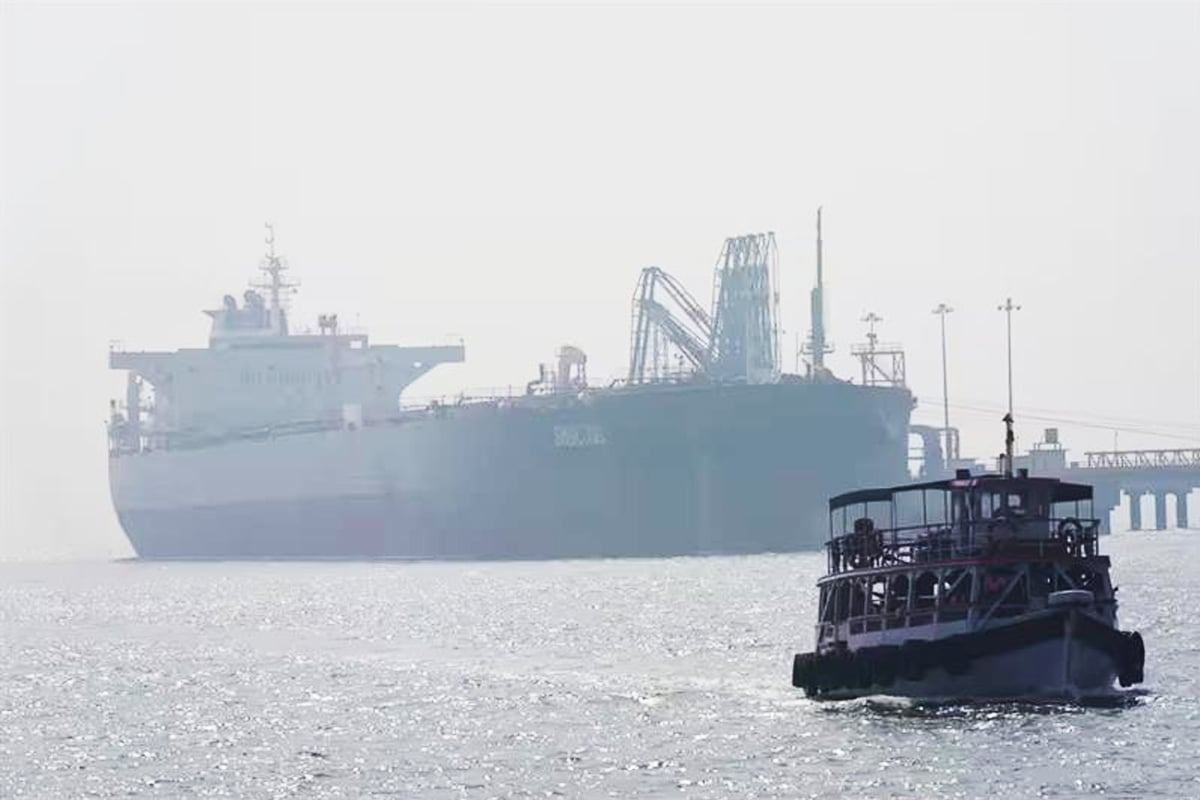
Hormuz is blocked. Amid the growing global fuel crisis, new war drums have sounded in the Middle East. In this extreme situation, good news arrived for India. A ship carrying fuel gas, flying the flag of the Marshall Islands, crossed Hormuz and docked at Gujarat’s Deendayal Port. This ship carries 20,000 tons of fuel gas. Needless to say, this fuel gas brings great relief to India amidst the critical situation.

Due to the war in West Asia, the blockade at Hormuz has been ongoing for over 75 days. It has become virtually impossible for any ship to enter or exit this waterway without being noticed by Iran and the United States. In this scenario, on May 13, the fuel gas-laden ship crossed the Strait of Hormuz. The Indian Oil Corporation (IOC) acquired the ship from Qatar’s Ras Laffan Terminal. 21 foreign sailors safely navigated the ship, evading the US blockade and Iranian surveillance. It contains 20,000 tons of LPG.

Last Wednesday, while crossing Hormuz, the ship turned off its radar system and Automatic Identification System (AIS) transponders. As a result, the ship went unnoticed.

It is learned that last Wednesday, while crossing Hormuz, the ship turned off its radar system and Automatic Identification System (AIS) transponders. Consequently, the ship escaped detection. According to official sources, the entire operation was coordinated by four central ministries to ensure success and protect the ship from gunfire. An additional secretary from the Ministry of Ports, Shipping and Waterways stated, “It was through seamless coordination between the Directorate General of Shipping, the Ministry of External Affairs, the Ministry of Defence, and the Ministry of Petroleum and Natural Gas that the ship safely reached its destination.”

Notably, since the beginning of March, overcoming all maritime obstacles, 13 ships have so far arrived in India. It is also learned that right behind this ship is another LPG tanker flying the Vietnamese flag, the NV Sunshine, carrying 46,427 tons of fuel and heading towards New Mangalore Port.

Hormuz

Hormuz is a historically significant island and port city in the Persian Gulf, located off the coast of Iran. It was a major trading hub from the 13th to the 17th centuries, serving as a key link in the spice and silk routes between Asia, Africa, and Europe, and was famously visited by Marco Polo. The island later fell under Portuguese control in the early 1500s before being reclaimed by Persian forces, and today it is known for its colorful landscapes and cultural heritage.

Strait of Hormuz

The Strait of Hormuz is a narrow, strategically vital waterway connecting the Persian Gulf to the Gulf of Oman and the Arabian Sea. Historically, it has been a crucial chokepoint for global oil shipments, with about one-fifth of the world’s petroleum passing through it. Its geopolitical importance has led to numerous conflicts and tensions, particularly involving Iran, which controls the northern coast, and the United Arab Emirates and Oman to the south.

Gujarat

Gujarat, located in western India, is a state rich in history and culture, known as the birthplace of Mahatma Gandhi and the site of the ancient Indus Valley civilization city of Dholavira. Its history includes periods of rule by the Maurya, Gupta, and Solanki dynasties, as well as significant influence from maritime trade with Africa and the Middle East. Today, Gujarat is famous for its vibrant festivals, intricate handicrafts, and the majestic Somnath

Hormuz

Hormuz is a historically significant island in the Persian Gulf, located off the southern coast of Iran. It was a major hub of maritime trade and commerce from the 13th to the 16th centuries, particularly under the control of the Portuguese Empire, who built a fortress there in 1515. Today, the island is known for its colorful landscapes, including red soil and salt caves, as well as its cultural heritage.

Strait of Hormuz

The Strait of Hormuz is a narrow, strategically vital waterway connecting the Persian Gulf to the Gulf of Oman, serving as a crucial passage for about one-fifth of the world’s oil supply. Historically, it has been a contested area for centuries due to its importance in global trade and energy security, with its name derived from the ancient port city of Hormuz. Today, it remains a focal point of geopolitical tensions, particularly between Iran and other regional powers.

Gujarat

Gujarat, located in western India, is known for its rich history as the birthplace of Mahatma Gandhi and its ancient Indus Valley Civilization sites like Dholavira. The region was a major center for trade and commerce under various dynasties, including the Solanki and Mughal empires, and later became a key part of India’s independence movement. Today, it is celebrated for its vibrant culture, including the Navratri festival, intricate handicrafts, and architectural marvels like the Sun Temple at Modhera.

Deendayal Port

Deendayal Port, formerly known as Kandla Port, is a major seaport located in the Kutch district of Gujarat, India. Constructed after the partition of India in 1947 to compensate for the loss of the Karachi port, it was renamed in 2017 in honor of Indian politician Deendayal Upadhyaya. Today, it serves as a key hub for trade, handling a significant volume of cargo, especially grain, salt, and petroleum products.

Ras Laffan Terminal

Ras Laffan Terminal is a major liquefied natural gas (LNG) facility located in Qatar, situated on the northeastern coast of the country. Developed in the 1990s and officially inaugurated in 1997, it was established to process and export Qatar’s vast natural gas reserves from the North Field, the world’s largest non-associated gas field. The terminal has since become a cornerstone of Qatar’s economy, making the nation one of the leading global exporters of LNG.

New Mangalore Port

New Mangalore Port, located in Panambur, Karnataka, is a major deep-water port on the Arabian Sea. It was officially inaugurated in 1974 to handle the region’s growing trade, particularly in iron ore, petroleum products, and agricultural goods. The port has since become a vital economic gateway for southwestern India, supporting both cargo and passenger services.

Marshall Islands

The Marshall Islands are a Pacific island nation consisting of over 1,200 islands and atolls, known for their rich Micronesian culture and history. The islands were first settled by Austronesian peoples around 2,000 years ago, later claimed by Spain, and then sold to Germany before becoming a Japanese mandate after World War I. During and after World War II, the islands were heavily impacted by U.S. nuclear testing, particularly at Bikini and Enewetak atolls, and eventually gained independence in 1986 through a Compact of Free Association with the United States.

Vietnam

Vietnam is a Southeast Asian country with a rich history shaped by Chinese rule, French colonization, and the Vietnam War, which ended in 1975. Its culture blends indigenous traditions with influences from Confucianism, Buddhism, and French colonialism, seen in its cuisine, architecture, and festivals. Today, Vietnam is known for its stunning landscapes, bustling cities like Hanoi and Ho Chi Minh City, and resilient, welcoming people.