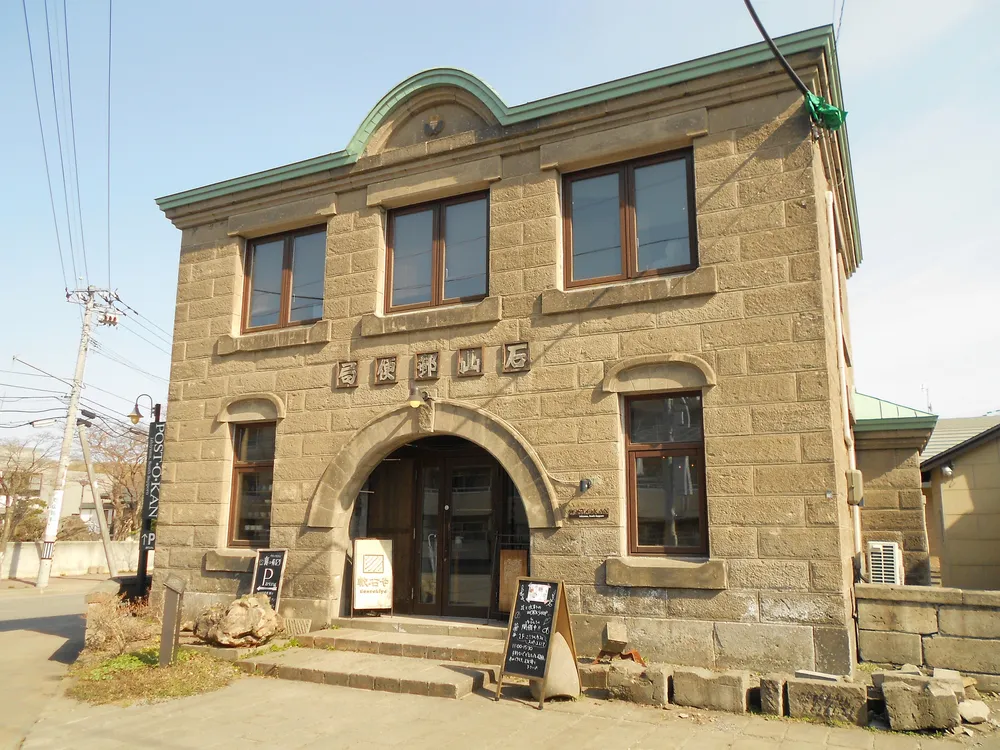
Preserved through relocation, it has become a gathering place again as a café and event venue
Built in 1940 using Sapporo soft stone, the large arch at the entrance is eye-catching. The stone arch is a classic element of Western architecture, but this large arch also has a modern feel. …
Sapporo soft stone
Sapporo soft stone, also known as Sapporo tuff, is a light, porous volcanic rock quarried in the Sapporo region of Hokkaido, Japan. It has been used since the late 19th century for building and sculpture, notably in the construction of the Sapporo Clock Tower and other Meiji-era structures, due to its ease of carving and warm, earthy tones. Today, it remains a symbol of local craftsmanship and is featured in many architectural landmarks and traditional stone carvings.
Ishiyama Post Office
The Ishiyama Post Office in Japan is historically significant as the site where the renowned haiku poet Matsuo Bashō began his famous journey to the northern provinces, which he chronicled in his masterpiece *The Narrow Road to the Deep North*. Originally established in the early Edo period, the post office served as a key relay station along the Nakasendo road. Today, it stands as a cultural landmark, commemorating Bashō’s departure and the enduring legacy of Japanese literary history.
Sapporo Clock Tower
The Sapporo Clock Tower, officially known as the former Sapporo Agricultural College Drill Hall, is a historic wooden building constructed in 1878. It was built to serve as a military drill hall and lecture venue for the Sapporo Agricultural College, which was founded by American educator William S. Clark. Today, it stands as one of Sapporo’s most iconic landmarks, housing a museum that showcases the city’s early development and the college’s history.