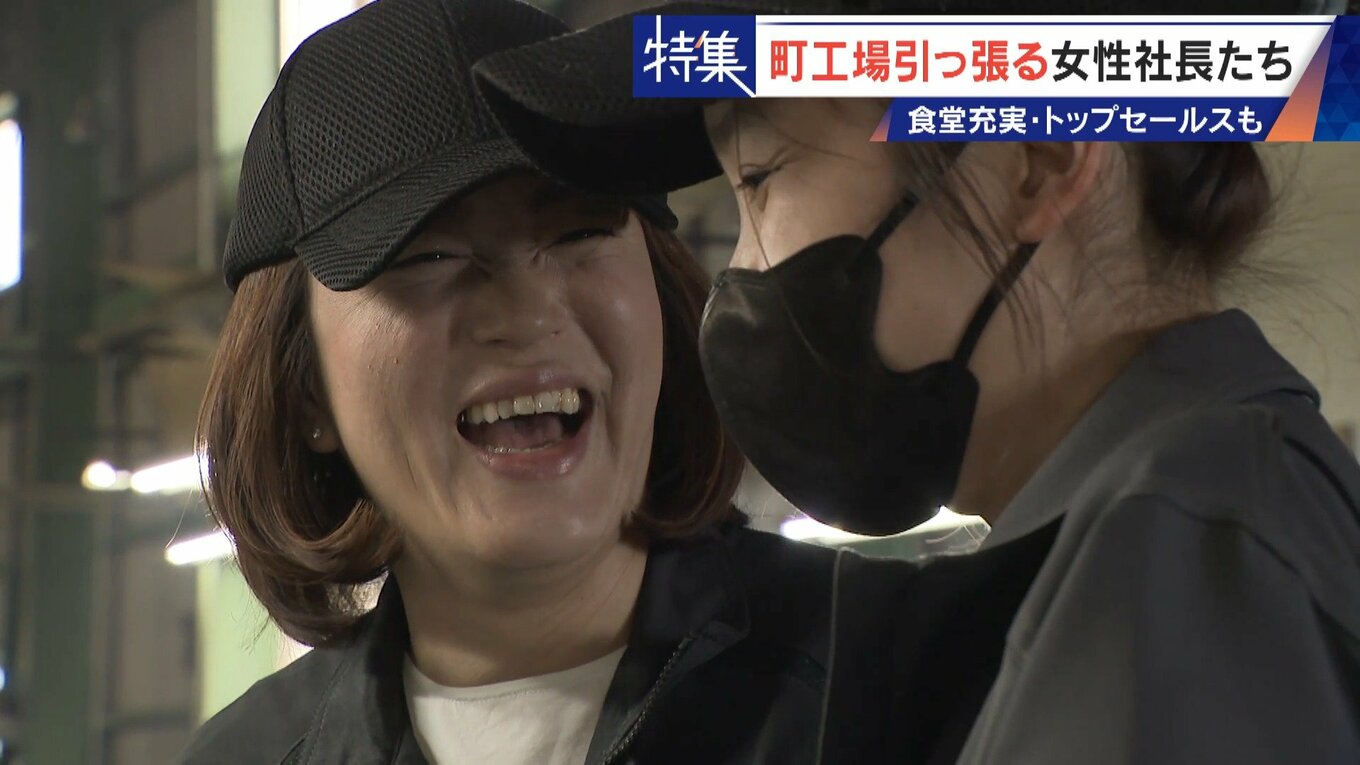
Female presidents are leading small factories, which are often seen as male-dominated. Japan’s manufacturing industry has overwhelmingly fewer women compared to other sectors. We investigated the secrets of how they manage these businesses.
At a factory in Aisai City, Aichi Prefecture. Amid rows of machinery, a woman walks around calling out to workers. She is President Kaori Mizutani, 48.
Originally a full-time housewife, she took over as president under special circumstances.
“Part of the business my former husband ran was going to close, so I took over that part and started running it,” said Kaori Mizutani, President of Asahi Kogyo.
Aisai City
Aisai City is located in Aichi Prefecture, Japan, and was officially established in 2005 through the merger of several towns, including Saori, Saya, and Hachikai. The area has a rich agricultural history, traditionally known for producing high-quality rice and flowers, and features remnants of old post towns along the historic Minoji Road. Today, Aisai blends its rural heritage with modern development, offering visitors a glimpse into traditional Japanese farming culture and local festivals.
Aichi Prefecture
Aichi Prefecture, located in central Japan, is a region rich in history and culture, best known as the home of Nagoya, the birthplace of the samurai warlord Tokugawa Ieyasu. Its historical significance is highlighted by sites like Nagoya Castle and the Atsuta Shrine, while it also played a key role in Japan’s industrialization. Today, Aichi blends its heritage with modern innovation, hosting major industries like Toyota’s automotive manufacturing.
Asahi Kogyo
Asahi Kogyo is a Japanese company originally founded in the early 20th century, best known for its production of high-quality industrial materials and consumer goods, including the iconic Asahi Pentax cameras. The company played a significant role in Japan’s post-war industrial growth, particularly in the fields of optics and precision manufacturing. Today, Asahi Kogyo is recognized for its contributions to photography and optical technology, with its Pentax brand remaining a notable name among camera enthusiasts.
Aisai City
Aisai City is a municipality located in Aichi Prefecture, Japan, formed in 2005 through the merger of several towns, including Saori, Saya, and Hachikai. The area has a rich history tied to traditional industries like textile manufacturing and agriculture, particularly known for producing high-quality lotus roots. Today, Aisai combines its historical heritage with modern development, offering cultural sites such as the remains of Kiyosu Castle and seasonal festivals that celebrate its local traditions.
Aichi Prefecture
Aichi Prefecture, located in central Japan, is a historically and industrially significant region. It was the home of Tokugawa Ieyasu, the founder of the Tokugawa shogunate, and features Nagoya Castle, a key site from the feudal era. Today, Aichi is a major industrial hub, best known as the headquarters of Toyota Motor Corporation.
Asahi Kogyo
Asahi Kogyo, also known as Asahi Industries, is a Japanese company originally established in 1918, which later became a key part of the Asahi Group. It is historically significant for its involvement in manufacturing and industrial development, including the production of optical products and military equipment during World War II. Today, the name is most famously associated with the Asahi Group’s diverse business interests, such as beer and beverages, reflecting its evolution from wartime industry to a major consumer goods corporation.
Minoji Road
Minoji Road was a historic highway in Japan that connected Ise Jingū (the Grand Shrine of Ise) with the Tōkaidō road during the Edo period. It served as an important pilgrimage route for travelers visiting the shrine, passing through what is now Mie and Aichi prefectures. Today, remnants of the road and its post towns offer a glimpse into Japan’s feudal-era travel and religious culture.
Nagoya Castle
Nagoya Castle, originally built in 1612 by the Tokugawa shogunate, was a key stronghold in central Japan. It was renowned for its golden shachihoko (dolphin-like) roof ornaments. Although largely destroyed in World War II, the main keep was reconstructed in 1959 and remains a popular historical landmark.
Atsuta Shrine
Atsuta Shrine is one of Japan’s most important Shinto shrines, located in Nagoya. It is historically renowned for housing the sacred sword Kusanagi-no-Tsurugi, one of the three Imperial Regalia of Japan. The shrine’s origins date back to the early 1st century, and it has been a central site of worship and imperial reverence for nearly two millennia.
Tokugawa Ieyasu
Tokugawa Ieyasu was the founder and first shōgun of the Tokugawa shogunate, which ruled Japan from 1603 to 1868. He unified the country after a long period of civil war, establishing a stable feudal government based in Edo (modern-day Tokyo). His legacy includes a long era of peace, isolationist policies, and the consolidation of the samurai class’s social structure.
Toyota
Toyota is a city in Aichi Prefecture, Japan, best known as the birthplace of the Toyota Motor Corporation, which was founded in 1937 by Kiichiro Toyoda. The area was originally a rural region called Koromo, but it rapidly industrialized after the company established its headquarters and factories there, leading to the city’s renaming to Toyota in 1959. Today, the city features the Toyota Kaikan Museum, offering insights into the company’s history and automotive innovation, while still preserving some traditional Japanese culture.