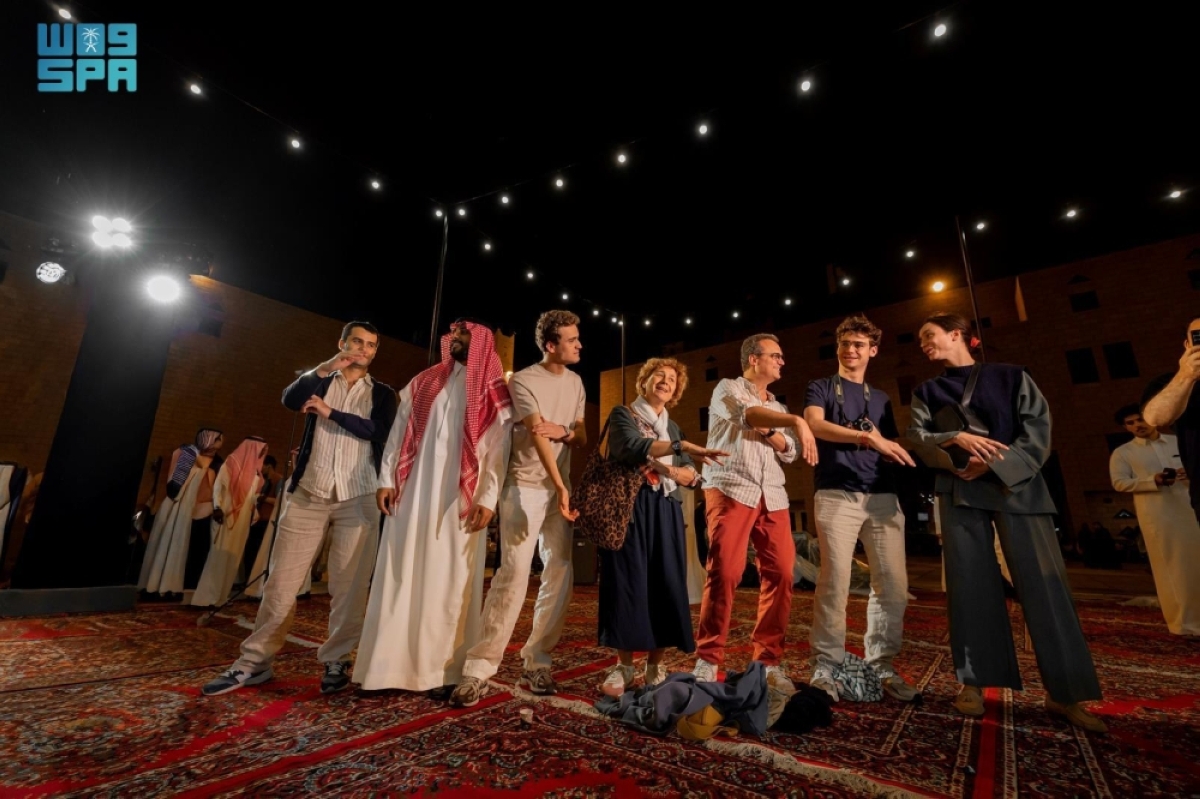
The Theater and Performing Arts Commission concluded the “Al-Samer and Al-Muhawara” event, held at the Justice Square in the Al-Hukm Palace area of Riyadh, in partnership with the Literature, Publishing, and Translation Commission, from March 22 to May 15, 2026. The event saw a large audience and notable engagement with traditional and poetic performing arts in the Kingdom.
The event created a cultural space that combined poetry and group performances, featuring over 60 performers of Al-Samer art, 30 poets in Al-Muhawara art, and 35 chanters. This scene embodied the presence of traditional Saudi arts, presenting them in a style close to the audience within a distinctive heritage atmosphere. The event offered visitors the opportunity to directly experience traditional performing arts through interactive evenings that lasted for weeks, helping to enhance the presence of cultural heritage in a modern way that meets the aspirations of various segments of society.
Al-Hukm Palace
Al-Hukm Palace, located in the heart of Riyadh, Saudi Arabia, is a historic royal residence that served as the seat of government for the Al Saud family. Originally built in the 19th century, it was the center of political and administrative power in the region, witnessing key decisions during the unification of Saudi Arabia. Today, it stands as a cultural landmark, reflecting traditional Najdi architecture and the nation’s heritage.
Justice Square
Justice Square, often found in cities worldwide, typically serves as a central public space symbolizing law and governance. Its history frequently involves the location of courthouses, government buildings, or sites of significant legal and political events, reflecting a community’s commitment to justice. The name itself underscores the square’s role as a gathering place for civic discourse and the administration of law.
Riyadh
Riyadh is the capital and largest city of Saudi Arabia, located in the heart of the Arabian Peninsula. Originally a small walled town known for its date palms and wells, it rose to prominence in the 18th century as the stronghold of the Al Saud family and later became the center of the unified Kingdom of Saudi Arabia in 1932. Today, it is a modern metropolis that blends its historical roots, such as the Masmak Fortress and the old Diriyah district, with rapid urban development and skyscrapers.
Al-Samer and Al-Muhawara event
The Al-Samer and Al-Muhawara event is a traditional cultural performance from the Arabian Peninsula, particularly associated with Saudi Arabia and neighboring regions. Al-Samer is a poetic and musical form of folk dance, often performed at celebrations, where men recite verses while swaying in rhythmic motion, accompanied by drums and clapping. Al-Muhawara, on the other hand, involves a call-and-response style of poetic exchange, showcasing verbal wit and heritage that dates back centuries, reflecting the region’s Bedouin oral traditions.
Justice Square
Justice Square, often found in various cities worldwide, typically serves as a central public space symbolizing law and governance. Its history often ties to courthouses or government buildings, with some squares dating back centuries as sites for public trials, executions, or civic gatherings. Today, it remains a focal point for legal institutions, protests, and community events, reflecting the evolving relationship between justice and the public.
Al-Hukm Palace
Al-Hukm Palace, located in the historic Al-Turaif district of Diriyah, Saudi Arabia, served as the seat of government for the Al Saud family and the center of the First Saudi State in the 18th and early 19th centuries. Built in the traditional Najdi architectural style, it was the residence of the ruling imams and housed administrative functions, including courts and treasury. The palace is now a key part of the UNESCO World Heritage site of Diriyah, restored to preserve its historical significance as a symbol of early Saudi statehood.
Riyadh
Riyadh is the capital and largest city of Saudi Arabia, serving as the country’s political, financial, and administrative hub. Its history dates back to the 18th century as a small desert settlement, but it became a major center after the unification of Saudi Arabia in 1932 and the discovery of oil, which fueled rapid modernization. Today, Riyadh blends its traditional heritage—seen in landmarks like the Masmak Fortress—with futuristic skyscrapers and ambitious development projects.
Masmak Fortress
Masmak Fortress is a historic clay and mudbrick fort located in the center of Riyadh, Saudi Arabia. Built around 1865, it played a pivotal role in the unification of Saudi Arabia when King Abdulaziz Al Saud recaptured the fortress in 1902, marking the beginning of the modern Saudi state. Today, it serves as a museum showcasing artifacts and exhibits on the nation’s history and heritage.
Diriyah district
Diriyah district, located on the outskirts of Riyadh, Saudi Arabia, is the historic birthplace of the first Saudi state and a UNESCO World Heritage site. Founded in the 15th century, it served as the political and cultural center of the region until its decline in the early 19th century. Today, the area is undergoing extensive restoration to preserve its mud-brick architecture and heritage, attracting visitors as a cultural and tourism destination.