-
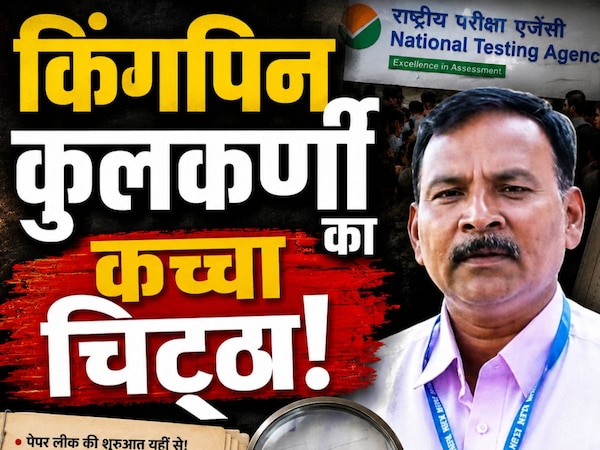
The CBI has obtained a 10-day remand for PV Kulkarni and Manisha Waghmare in the NEET UG 2026 paper leak case. The CBI produced both individuals before the Rouse Avenue Court on Saturday and sought a 14-day remand. Special CBI Judge Ajay Gupta, in his order, cited the arguments presented by the CBI, the case diary, and the remand papers, revealing the full picture of the conspiracy behind the NEET UG 2026 paper leak.
Where the Leak Began
The CBI informed the court that the accused, PV Kulkarni and Manisha Waghmare, are the most crucial figures in this entire network. The NEET 2026 paper leak started with them, and it was through them that the paper first reached the market. According to the case diary presented by the CBI, Prahlad Kulkarni was part of the paper-setting system associated with the NTA. The agency stated that he had access to confidential exam-related materials. It is alleged that using this access, he colluded with Manisha Waghmare and others to pass the question paper outside.
Large Sums of Money Collected, Evidence Destroyed
The CBI told the court that Kulkarni not only leaked the paper but also took hefty sums of money in exchange for providing questions and answers to select students. The investigating agency claims this money was later deposited into bank accounts. Furthermore, after the exam was over, Kulkarni destroyed handwritten materials to eliminate evidence.
The Paper Was Out by April 27!
According to the CBI, Manisha Waghmare was a key link in this network. The agency claims that as early as April 27, 2026, several days before the exam, she had passed the question paper and its answers to some of the accused, including the accused Dhananjay.
Manisha was in contact with other accused individuals and a government employee linked to the NTA. According to the investigating agency, the paper first emerged from the network of Kulkarni and Manisha, after which it was gradually passed on to various people.
How the Leak Network Spread
According to the CBI investigation, the accused Dhananjay Lokhande received the paper from Manisha Waghmare. The question paper then reached Shubham Khairnar, and from there, it was spread to other accused individuals, including Yash Yadav, Mangilal Khatik, Vikas Biwal, and Dinesh Biwal.
An investigation by the Rajasthan SOG revealed that several questions that appeared in the actual exam on May 3 had already been leaked and circulated. It is alleged that these accused individuals leaked and circulated the questions. The agency claims the entire operation was carried out for money.
CBI Claims More Big Names Will Emerge
In court, the CBI stated that this is not the work of just a few individuals but an organized syndicate. According to the agency, Kulkarni and Manisha have not yet disclosed the names of all those involved in this network. The CBI informed the court that many digital pieces of evidence, financial transactions, and other links are yet to be examined. The accused need to be taken to other parts of the country for questioning, hence the need for their remand.
During the hearing, PV Kulkarni’s lawyer opposed the request for a 14-day remand. The lawyer argued that Kulkarni had a contract with the NTA to create the paper. The NTA has many people set papers and takes questions from them, but no one knows which person’s paper or which questions the NTA will include in the actual exam. Selecting the questions is solely the NTA’s job.
The lawyer further argued that no one from the NTA has been arrested yet, so Kulkarni’s arrest has no justification. He also stated that the CBI has no solid evidence against Manisha and that she was in the illegal custody of the Pune Police for 24 hours before her arrest. The lawyer contended that the agency already has
Rouse Avenue Court
Rouse Avenue Court, officially known as the Rouse Avenue District Court Complex, is a prominent judicial building located in central Delhi, India. It was established to handle a range of legal cases, including those related to criminal, civil, and special matters, and has gained significant attention for hosting high-profile proceedings involving politicians and public figures. The court complex is situated near the historic Rouse Avenue, an area named after a British colonial official, and continues to be a key venue for the Indian judiciary.NTA
NTA stands for the National Training Authority, which may refer to different organizations depending on the context. In India, the NTA (National Testing Agency) was established in 2017 as an autonomous body to conduct entrance examinations for higher education institutions, streamlining the admission process. Its history reflects a move toward centralized, computer-based testing to ensure fairness and efficiency.