Advancing deep into the Earth and climbing the heights of technology, China has achieved major breakthroughs in three key areas: ultra-deep shale gas, efficient hydrogen storage, and strategic mineral exploration.
China’s Shale Gas Reaches Ultra-Deep Layers
On the 13th, the Dongfeng Shale Gas Field in Ziyang, Sichuan, operated by Sinopec, passed expert review by the Ministry of Natural Resources, with proven geological reserves of 235.687 billion cubic meters. This marks the birth of an ultra-deep, hundred-billion-cubic-meter shale gas field, advancing shale gas exploration and development into the new ultra-deep realm of over 4,500 meters, achieving a leap from deep to ultra-deep shale gas in China.
The discovered gas reservoir belongs to the Cambrian Qiongzhusi Formation shale series, formed 540 million years ago, making it the oldest shale formation globally to achieve commercial-scale discovery. This area not only features thick, difficult-to-drill strata but also faces extreme underground conditions of high temperature and high pressure, posing immense engineering challenges, with its exploration and development recognized as a world-class problem.
Chinese Research Team Solves Hydrogen Storage Challenge
According to the Dalian Institute of Chemical Physics, Chinese Academy of Sciences, a research team led by Professor Chen Ping has recently developed a gas-solid hydride prototype battery using hydrogen and metal as electrodes (referred to as a “gas-solid battery”). Through a “hydrogen-electricity co-storage” model, it provides a prototype validation for efficient hydrogen storage at room temperature and pressure. The results were published on May 13 in the international academic journal Joule.
This research breakthrough eliminates the need for extreme conditions such as high pressure or deep cooling required by traditional hydrogen storage, offering a new technical pathway to solve the hydrogen storage challenge that has plagued hydrogen energy utilization for over half a century. It is expected to promote the implementation of new hydrogen storage technologies and support the high-quality development of the hydrogen energy industry.
New Strategic Mineral Findings Unveiled
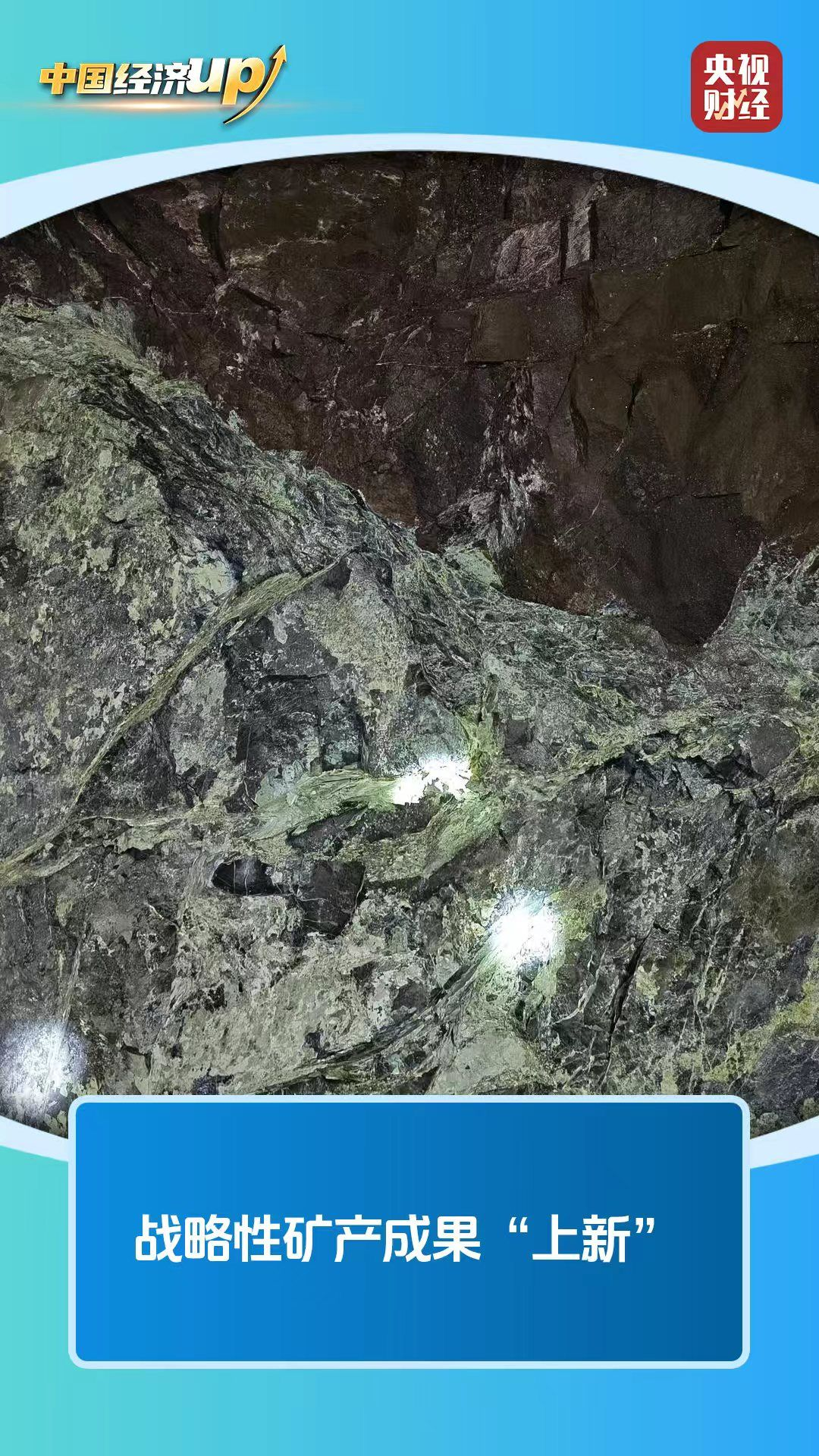
The Ministry of Natural Resources released the latest findings in strategic mineral exploration on the 13th. The Luobusha mining area in Tibet added 738,300 tons of chromite resources, achieving a breakthrough in deep and edge exploration of the mine, providing significant support for meeting China’s “14th Five-Year Plan” mineral resource targets. The exploration team also discovered the world’s fourth new type of chromite deposit for the first time in the Dongqiao area of Tibet, adding 1.1463 million tons of associated chromite ore, expanding the thinking and space for chromite exploration in China.
China is one of the world’s largest consumers of chromite, yet chromite is an extremely scarce mineral in the country, with exploration being highly challenging. These factors make it a very important strategic mineral resource for China.
Every breakthrough
strengthens the foundation of China’s energy security.
With a richer resource base and stronger momentum,
China’s economic “energy engine”
is unleashing even more powerful driving force.