-
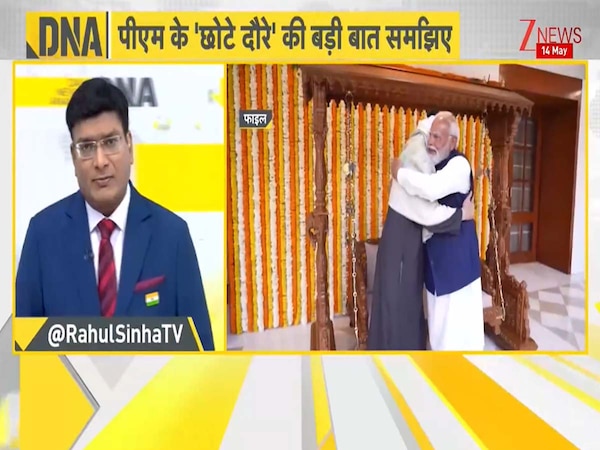
India Solutions to Deal with Petrol Crisis: On one side, India has Russia’s guarantee, and on the other, the support of oil-rich UAE. The key point is that Prime Minister Narendra Modi is heading to UAE on Friday morning. PM Modi’s five-nation tour begins on Friday, with the first stop being the UAE. According to the Ministry of External Affairs, PM Modi will stay only 3 to 4 hours during his eighth visit to the UAE. However, this short trip will involve discussions on several important issues. During his meeting with UAE President Sheikh Mohamed bin Zayed Al Nahyan in Abu Dhabi, the focus will be on energy cooperation, along with bilateral relations and regional matters.
PM Modi’s visit during a turbulent period
This visit by the Prime Minister is taking place at a time when the world is going through a phase of war. The Middle East, in particular, is facing the most turmoil. Due to the blockade of the Strait of Hormuz, oil and gas supplies have been halted to most countries around the world. In such an environment, ensuring energy security is a huge necessity.
During PM Modi’s UAE visit, two important agreements related to oil and gas are expected. One of these agreements concerns LPG supply, while the other is related to strategic petroleum reserves. It is believed that the proposed agreements aim to ensure long-term oil and gas supply for India.
After these agreements, the UAE will become one of India’s most reliable energy partners. Before understanding the significance of these agreements, you should know why the UAE is so important to India in terms of oil and gas.
UAE is a reliable LNG supplier to India
In terms of LPG, the UAE is already India’s largest supplier. India purchases 40% of its LPG needs from the UAE. In crude oil, the UAE is also one of India’s key suppliers. After Russia, Iraq, and Saudi Arabia, India buys the most oil from the UAE. Approximately 11% of India’s total crude oil imports come from the UAE.
In LNG, the UAE is also a reliable supplier to India. After Qatar, India buys the most LNG from the UAE. The UAE’s share in India’s total LNG imports is around 15%. Meanwhile, for the UAE, India is one of the largest markets for oil and gas.
India alone purchases about 50% of the UAE’s total LNG exports. The UAE sends 55% of its total LPG exports to India alone. When it comes to crude oil, India is the fourth largest market for the UAE. The UAE sells about 10% of its exports to India.
India-UAE friendship stands the test of this measure
This means the friendship is beneficial for both countries. While the UAE has found a large market like India, for India, the UAE is a reliable supplier. Gandhi ji once said: True friendship between two countries occurs when both respect each other’s interests, and its foundation is mutual trust.
The India-UAE friendship meets this measure. Their friendship is not just based on trade transactions. Rather, this friendship is built on trust, respect for each other, and understanding of each other’s sentiments. Ten days ago, when Iran carried out a drone attack on Fujairah in the UAE, India strongly condemned it.
The PM made it clear that targeting civilians and infrastructure is unacceptable. He also said that India stands firmly with the UAE. In other words, instead of hesitating in friendship, India made its stance clear. We did not care about Iran, nor did we ignore Iran. We simply called wrong as wrong.
4 million Indians live in the UAE
The result of this heartfelt friendship is that in January, when the UAE President visited India, PM Modi himself went to the airport to welcome him. Both leaders sat in a car and left the airport together. India and the UAE also share similar views on Pakistan. Just as India has taken a tough stance against Pakistan’s terrorism, the UAE has taken strong diplomatic and economic steps against Pakistan. In recent days, the UAE has not only suddenly demanded repayment of its loans
Abu Dhabi
Abu Dhabi is the capital of the United Arab Emirates, located on an island in the Persian Gulf. Historically a modest fishing and pearling community, it transformed dramatically after the discovery of oil in the 1950s, becoming a global hub for commerce, culture, and tourism. Today, it is known for its modern architecture, such as the Sheikh Zayed Grand Mosque, and its commitment to preserving Emirati heritage.Strait of Hormuz
The Strait of Hormuz is a narrow, strategically vital waterway connecting the Persian Gulf to the Gulf of Oman and the Arabian Sea. Historically, it has been a crucial chokepoint for global oil shipments, with about 20% of the world’s petroleum passing through it. Its geopolitical importance has led to numerous conflicts and tensions, particularly between Iran and other regional powers, dating back to ancient trade routes and continuing through modern-day disputes.