Bandung –
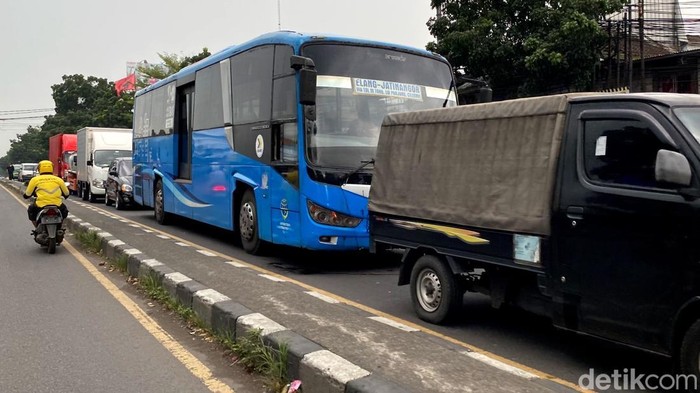
A mass transit system called Bus Rapid Transit (BRT) is now being prepared in the Greater Bandung area. This project is initiated to reduce the traffic congestion that has long occurred in the Bandung Basin region.
According to its study, the Greater Bandung BRT will have 18 routes crossing Bandung City, Cimahi, West Bandung Regency, Bandung Regency, and Sumedang. This project will be supported by stops at 256 points, with 232 of them located in Bandung City.
So, where will the Greater Bandung BRT routes pass? Here are the details:
BRT 01: Cibiru – Kalapa
BRT 02: Lembang – Taman Tegallega
BRT 03: Leuwipanjang – Dipatiukur-Dago
BRT 04: Elang – Riau
BRT 05: Ciroyom – Pajajaran – Antapani
BRT 06: Dago – Leuwipanjang – Cibaduyut
BRT 07: Padalarang – Alun-alun Bandung
BRT 08: Cicaheum – Cimahi
BRT 09: Ledeng – Antapani
BRT 10: Cicaheum – Kebon Kalapa
BRT 11: Tegalluar – Stasiun Hall
BRT 12: Soreang – Tegallega
BRT 13: Jatinangor – Cibeureum
BRT 14: Majalaya – Baleendah – Leuwipanjang
BRT 15: Banjaran – Baleendah – Bandung Electronic Center
BRT 16: Sarijadi – Antapani
BRT 17: Cicaheum – Sarijadi
BRT 18: Jatinangor – Dipatiukur (Via toll road)
Initially, the Greater Bandung BRT would have a Tegalluar – Majalaya route (via Sapan). However, it was later decided to remove that route, and it is planned to be converted into a feeder route.
Currently, the Greater Bandung BRT project is entering the stage of building stops for its corridors. In fact, 8 on-corridor stops have been surveyed by the Ministry of Transportation and the Bandung City Transportation Agency.
Those eight on-corridor stops are planned to be built on central roads in Bandung City. These include at Stasiun Hall, Dalem Kaum, Simpang Pasirkoja, Kepatihan, Alun-alun Bandung, Dulatip, Bundaran Cibeureum, and Banceuy Center.
“So it seems almost simultaneous, the socialization carried out with the off-corridor stops that were previously done. Now the on-corridor stops are starting again because looking at the timeline, it can indeed begin,” said the Head of Bandung City Transportation Agency some time ago.
The Head said that the construction of on-corridor stops will proceed gradually. If the locations have been surveyed, the construction process will be carried out soon.
“They have been surveyed, there is a consultant, the timeline is clear, the tender winner, the project is clear. It’s just that before working on it, socialization is done first as part of planning and preparation, so that it is built by the end of this year,” he said.
Meanwhile, for the on-corridor lanes, the Head said that overall it reaches 21 kilometers stretching across Greater Bandung. Specifically in Bandung City, these include Jalan Asia Afrika, Sudirman, Otista, Dewi Sartika, and other roads.
“But for now, the construction of the on-corridor lanes has not been carried out. So only the operator stops and the newly started on-corridor stops are underway. The lane width will likely be 2.5 or 3 meters, I haven’t memorized it,” he concluded.
Alun-alun Bandung
Alun-alun Bandung is the central square of Bandung, Indonesia, located in front of the iconic Bandung City Hall. Historically, it served as a gathering place during the Dutch colonial era and was redesigned in the 2010s to become a vibrant public park. Today, it is a popular spot for locals and tourists, featuring a large field, fountains, and a giant Indonesian flagpole.
Stasiun Hall
Stasiun Hall is a historic building in Jakarta, Indonesia, originally constructed in the early 20th century as a meeting and event space within the complex of the city’s main railway station, Stasiun Kota. It was built during the Dutch colonial era and served as a social hub for travelers and locals, reflecting the architectural style of that period. Today, it stands as a preserved cultural site, often used for exhibitions and events, highlighting Jakarta’s colonial heritage and railway history.
Dalem Kaum
Dalem Kaum is a historic palace complex in the city of Cirebon, West Java, Indonesia, originally built in the 15th century as the residence of the royal family of the Kasepuhan Sultanate. It served as the administrative and cultural center of the sultanate, blending Javanese, Islamic, and Chinese architectural influences in its design and ornamentation. Today, it remains a significant cultural heritage site, preserving royal artifacts and offering insight into Cirebon’s history.
Simpang Pasirkoja
Simpang Pasirkoja is a major intersection and historical area in Bandung, Indonesia, known for its iconic overpass and vibrant street activity. Its name derives from the Pasirkoja area, which was once a key location during the Dutch colonial era, serving as a gateway to the city. Today, it remains a bustling transportation hub, reflecting Bandung’s growth and the blend of its colonial past with modern urban life.
Kepatihan
Kepatihan is a historic government complex in Surakarta, Indonesia, that once served as the administrative center of the Mangkunegaran Palace. It was originally the residence and office of the Patih (prime minister) and played a key role in the palace’s bureaucracy during the 18th and 19th centuries. Today, the site is a cultural heritage area, preserving traditional Javanese architecture and offering insight into the region’s royal history.
Dulatip
Dulatip is a historical site in Xinjiang, China, known for its ancient Buddhist cave temples and murals dating back to the 5th–8th centuries. It served as a key cultural and religious center along the Silk Road, blending Indian, Persian, and Chinese artistic influences. The site reflects the region’s rich history of cross-cultural exchange before the decline of Buddhism in the area.
Bundaran Cibeureum
Bundaran Cibeureum is a prominent roundabout located in Cimahi, West Java, Indonesia, known for its distinctive monument featuring a large pineapple sculpture. The site’s name derives from the nearby Cibeureum River and has become a key landmark and bustling transportation hub connecting major roads in the city. Historically, the area developed as part of Cimahi’s urban expansion in the early 20th century, serving as a central point for local commerce and community activities.
Banceuy Center
Banceuy Center is a historical and cultural site in Bandung, Indonesia, best known as the former Banceuy Prison where Indonesia’s first president, Sukarno, was imprisoned by Dutch colonial authorities in the early 1930s. Today, the site has been transformed into a modern creative and commercial center, blending its historical significance with contemporary art, retail, and dining spaces. It serves as a popular destination for both locals and tourists to learn about Indonesia’s struggle for independence while enjoying urban culture.