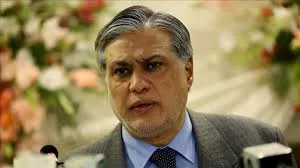
Islamabad, Pakistan’s Deputy Prime Minister Ishaq Dar said on Saturday that Pakistan is cooperating in the Iran-US talks and will continue its efforts to establish an atmosphere of peace and stability in the region.
However, uncertainty remains regarding the second round of talks. According to a statement issued by the Foreign Office (FO), Deputy Prime Minister and Foreign Minister Dar held a meeting at the Ministry of Foreign Affairs to review the latest developments in the region. He reiterated that Pakistan is cooperating in the Iran-US talks to establish an atmosphere of peace and stability in the region and will continue its efforts in this regard.
Dar also emphasized that only official statements issued by official sources represent Pakistan’s official policy stance on the Iran-US mediation process. He said, ‘Statements, whether quoted in print media or on social media, from unidentified Pakistani officials or sources do not reflect Pakistan’s official position.’ Dar also advised print and electronic media to avoid speculative reporting and focus only on official statements.
Meanwhile, Dar also spoke with Turkey’s Foreign Minister Hakan Fidan and shared the latest information regarding Pakistan’s diplomatic efforts. According to the Foreign Office, ‘He emphasized that sustained engagement through dialogue and diplomacy is the only viable way to promote peace and stability in the region.’ Additionally, Dar spoke with Egypt’s Foreign Minister Badr Abdelatty late Friday night, and both leaders discussed the diplomatic efforts being facilitated by Pakistan and stressed the importance of dialogue and diplomacy.
US delegation departs for Pakistan, suspense over talks
Iran’s Foreign Minister Abbas Araghchi arrived here late Friday night and held meetings with Pakistani leadership on Saturday. Earlier in the day, Iranian Foreign Ministry spokesperson Baghai said in a social media post that there is no plan to hold a ‘meeting’ between Iran and the US.
White House Press Secretary Karoline Leavitt said that US Special Envoy for West Asia Affairs Steve Witkoff and President Donald Trump’s advisor Jared Kushner will depart for Pakistan on Saturday to ‘engage in direct talks’ with representatives of the Iranian delegation. There has been no official statement regarding whether direct talks between the US and Iran will take place during this visit.
Pakistan
Pakistan, officially the Islamic Republic of Pakistan, is a South Asian country with a rich history that includes the ancient Indus Valley Civilization, one of the world’s earliest urban cultures. It was created in 1947 as a homeland for Muslims in the Indian subcontinent following the partition of British India. Today, Pakistan is known for its diverse cultural heritage, including sites like Mohenjo-Daro, the Badshahi Mosque, and the mountainous landscapes of the north.
Iran
Iran, historically known as Persia, is a country in West Asia with a rich cultural heritage spanning over 2,500 years. It was once the heart of the ancient Achaemenid Empire, and later became a major center of Islamic art, science, and literature after the 7th century. Today, Iran is known for its stunning architectural sites like Persepolis and the mosques of Isfahan, as well as its deep traditions in poetry, philosophy, and Persian carpets.
United States
The United States is a federal republic of 50 states, founded in 1776 after declaring independence from Great Britain. Its history includes westward expansion, the Civil War over slavery, and its rise as a global economic and military power in the 20th century. Today, it is known for its diverse culture, democratic institutions, and influential role in world affairs.
<div class="my-4 p-4 rounded-lg shadow-md bg-blue-50 border-l-4 border-blue-400
Mohenjo-Daro
Mohenjo-Daro, located in modern-day Pakistan, was one of the largest settlements of the ancient Indus Valley Civilization, flourishing around 2500 BCE. Known for its advanced urban planning, including a sophisticated drainage system and grid-like streets, the site was a major cultural and economic hub before being abandoned around 1900 BCE. Rediscovered in the 1920s, it remains a key archaeological site for understanding early urban life in South Asia.
Badshahi Mosque
The Badshahi Mosque, located in Lahore, Pakistan, is one of the largest and most iconic mosques from the Mughal era, built in 1673 by Emperor Aurangzeb. Constructed from red sandstone and marble, it can accommodate over 100,000 worshippers and features a grand courtyard, four towering minarets, and intricate floral frescoes. Despite periods of use as a military garrison under Sikh rule, it remains a major religious and tourist site, symbolizing Mughal architectural grandeur.
Persepolis
Persepolis was the ceremonial capital of the Achaemenid Empire, founded by Darius I in the 6th century BCE. It served as a grand symbol of Persian power and culture, featuring impressive palaces and reliefs, until it was sacked and burned by Alexander the Great in 330 BCE. Today, its ruins in Iran are a UNESCO World Heritage site, offering a glimpse into the ancient civilization’s architectural and artistic achievements.
Isfahan
Isfahan, a historic city in central Iran, was once a major crossroads of trade and culture, flourishing as the capital of the Safavid Empire in the 16th and 17th centuries. Under Shah Abbas I, the city was transformed into a masterpiece of Islamic architecture, most famously exemplified by the grand Naqsh-e Jahan Square, its mosques, and palaces. Today, it remains a vibrant cultural hub, celebrated for its stunning Persian-Islamic art, intricate bridges, and rich history.