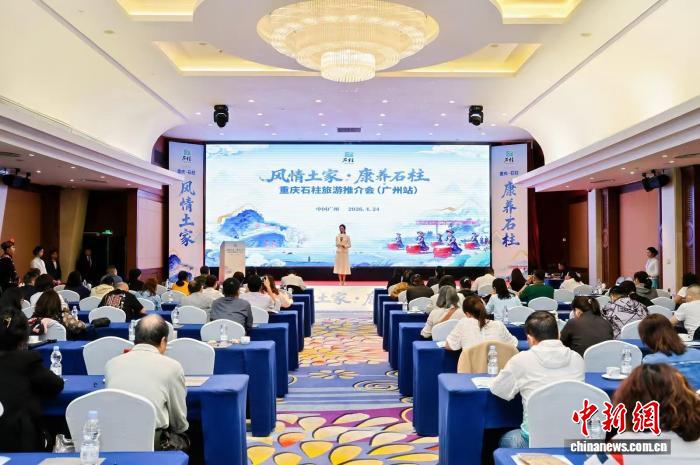
The “Fengqing Tujia · Health and Wellness Shizhu” tourism promotion event (Guangzhou station) was held on April 24, aiming to enhance the visibility and influence of cultural tourism resources in Shizhu Tujia Autonomous County within the Guangdong-Hong Kong-Macao Greater Bay Area, and to further deepen tourism exchanges and cooperation between Chongqing and Guangdong.
Scene from the promotion event.
Shizhu is located in eastern Chongqing, on the southern bank of the Yangtze River, and at the heart of the Three Gorges Reservoir area. It is the only ethnic minority autonomous county in the reservoir region. The area boasts a long cultural heritage, stunning scenery, and outstanding transportation advantages, closely connecting with neighboring provinces such as Sichuan, Shaanxi, Hubei, and Hunan.
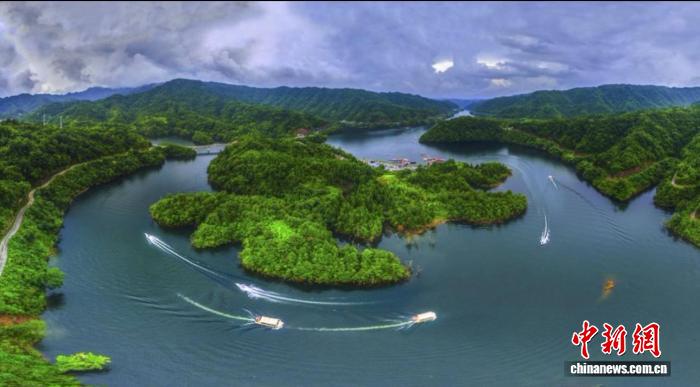
In recent years, Shizhu has adhered to a development path of “comprehensive health and green rise,” closely following the “Fengqing Tujia · Health and Wellness Shizhu” positioning. Relying on its excellent ecological environment and rich Tujia culture, the county has comprehensively promoted the quality and efficiency of cultural tourism and health industries, fostering vigorous growth.
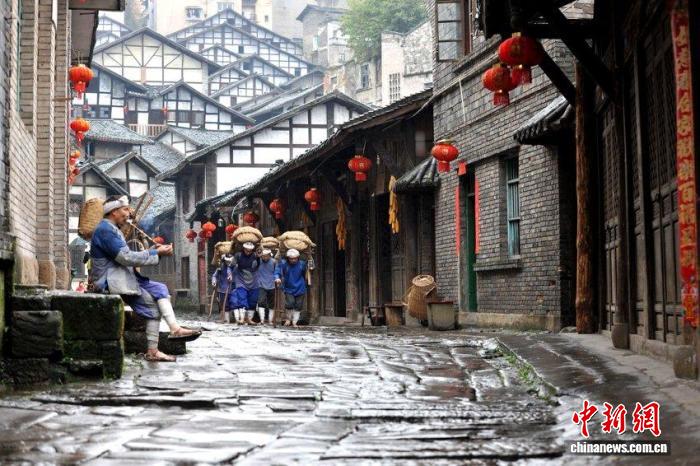
The promotion event fully showcased Shizhu’s abundant natural landscapes and unique cultural customs. Among the highlights, Qianye Grassland is known as “Chongqing’s Most Beautiful Grassland” and “Camping Paradise,” integrating ten thousand acres of stone forests, firethorn bushes, forests, and grasslands. Xituo Ancient Town features Yunti Street, known as “the first street along the Yangtze River,” and is one of the first famous historical and cultural towns in China. Dafeng Fort has a forest coverage rate of over 95% and extremely high levels of negative oxygen ions, making it a “natural oxygen bar.” Guanghan Palace is the core scenic area of the Qiyao Mountain National Geopark, famous for its karst cave wonders and immersive experiences based on the Chang’e legend.
Additionally, Shizhu boasts rich cultural heritage, including the national intangible cultural heritage “Shizhu Tujia Luo’er Tune” and the world classic folk song “The Sun Comes Out Joyfully,” as well as specialty foods like water shield, Tujia cured meat, and du ba. The county has launched a year-round tourism product featuring “spring flower viewing, summer escape, autumn leaf viewing, and winter skiing.”
At the promotion event, a strategic cooperation agreement was signed between Chongqing Shizhu Agricultural Tourism Integrated Development Group and Guangzhou Guangzhilv International Travel Service under Lingnan Holdings. The travel agency has optimized the “Chongqing Wulong + Shizhu” product route, introducing the “Huayu Xianzong” activity along the route, incorporating elements such as flower viewing at Qianye Grassland, intangible cultural heritage performances at Xituo Ancient Town, a double grassland experience, and hot spring hotels, which have been widely welcomed by tourists.
The tourism cooperation foundation between Guangdong and Chongqing is deep, and Shizhu’s rich and distinctive tourism resources, especially its unique health and summer escape resources and ethnic culture, are highly attractive to the Guangdong market.
Qianye Grassland
Qianye Grassland
Xituo Ancient Town
Dafeng Fort
Guanghan Palace
Qiyao Mountain National Geopark
Shizhu Tujia Luo’er Tune
The Sun Comes Out Joyfully
Three Gorges Reservoir area
Related news
First Immediate Tax Refund for Departure from Sichuan-Chongqing Region Processed.
Using open innovation to respond to global trade changes—implementing Xi Jinping’s economic thought to advance the construction of a trade powerhouse with new strides.
Emergency drill for reservoir dam safety uses robot dogs and underwater robots.
Chongqing-Taiwan Industrial Collaboration Event Held in Chongqing, Expanding Cross-Strait Exchange and Cooperation in Multiple Fields