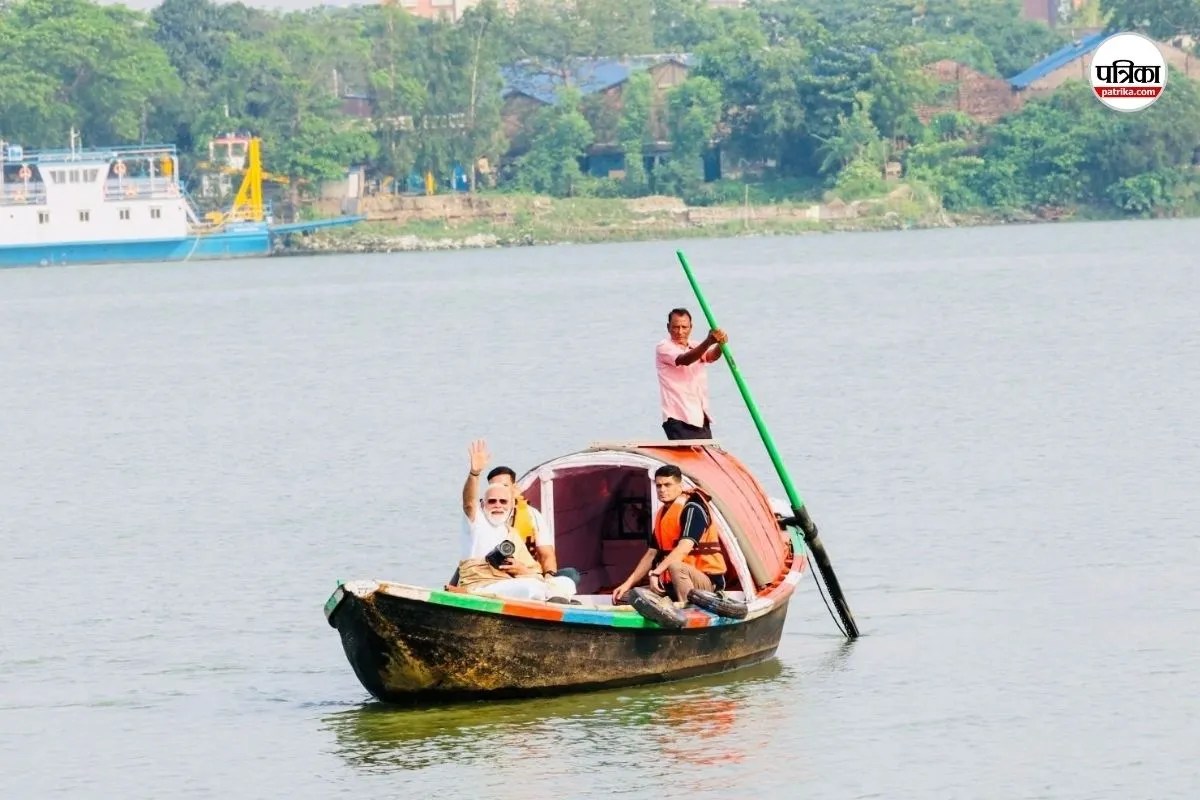
Hooghly Ghat Modi Visit: After the first phase of voting on 152 seats concluded in West Bengal on Thursday, Prime Minister Narendra Modi arrived at the Ganges riverbank on Friday. During this time, he spoke with boatmen and promised development after the BJP forms a government in the state. PM Modi also took photographs. Meanwhile, during the PM’s visit, the boatman who provided a boat on rent also shared his reaction.

During PM Modi’s visit to Hooghly Ghat, a boat was rented from Mohammad Iftikhar Ahmed. Boat owner Ahmed said that this morning, a person working here asked me for seven boats. So I asked him if they were for VIPs. He said there was nothing special. A little later, we docked our boats here. Just five minutes before Prime Minister Modi arrived, they informed us about it. After a morning walk, Prime Minister Narendra Modi came to the ghat and boarded our boat. The Prime Minister told us that we should all live together harmoniously.

image

Meanwhile, during the Hooghly River trip, he admired the Howrah Bridge while on the boat ride. The PM recalled the time spent on the bridge during a road show from Howrah to Kolkata in the second phase of campaigning for the West Bengal assembly elections. He wrote that last evening, he was on the Howrah Bridge during a long road show from Howrah to Kolkata, and this morning, he saw it from the Hooghly River!

During this, he expressed gratitude to Mother Ganges. PM Modi shared his thoughts on the importance of the Ganges River, saying it flows in the soul of Bengal. He also reiterated his commitment to the development of West Bengal amid the election atmosphere.

The Prime Minister shared pictures of his boat ride on the social media platform X and tried his hand at photography. Glimpses of Vidyasagar Setu and Howrah Bridge were also visible.

Voting for the first phase took place on April 23. Now, voting for the second phase will occur on April 29. The counting of votes will take place on May 4. Meanwhile, record-breaking voting took place in the first phase in the state, with over 92 percent voter turnout.

image

Hooghly Ghat

Hooghly Ghat is a historic riverbank landing point along the Hooghly River in West Bengal, India, known for its association with colonial-era trade and travel. During the British Raj, it served as a key port for shipping goods and passengers, including those traveling between Kolkata and other parts of Bengal. Today, it remains a bustling site with ferry services and remnants of its past as a vital commercial and cultural hub.

Ganges riverbank

The Ganges riverbank, particularly in cities like Varanasi, is one of the most sacred sites in Hinduism, where pilgrims bathe in the holy waters to cleanse their sins and perform funeral rites. For thousands of years, the ghats (steps leading to the river) have served as centers for religious ceremonies, meditation, and cremation, reflecting a continuous spiritual tradition. The river itself is personified as the goddess Ganga, and the banks are lined with ancient temples and bustling markets, embodying the timeless cultural and religious heart of India.

Hooghly River

The Hooghly

Hooghly Ghat

Hooghly Ghat is a historic riverbank site on the Hooghly River in West Bengal, India, known for its colonial-era architecture and cultural significance. It served as a key trading and transit point during the British East India Company’s rule, connecting Calcutta (now Kolkata) with inland regions. The ghat also features remnants of old warehouses and a memorial to the Dutch, reflecting its role in the region’s maritime and mercantile history.

Ganges riverbank

The Ganges riverbank, known as the ghats, is a sacred and historic site in India where religious rituals, cremations, and daily prayers have been performed for millennia. The river itself is revered in Hinduism as a goddess, and the banks are lined with ancient temples and steps that have witnessed the rise and fall of empires, including the Mauryan and Gupta periods. Today, it remains a vibrant center of spiritual life, drawing millions of pilgrims and tourists to cities like Varanasi and Haridwar.

Hooghly River

The Hooghly River, a distributary of the Ganges in West Bengal, India, has been a vital waterway for centuries, serving as a major trade route during the colonial era and facilitating the rise of Kolkata as a commercial hub. Historically, it was a key site for European settlements, including the Portuguese, Dutch, French, and British, who established trading posts along its banks. Today, the river remains culturally and economically significant, with landmarks like the iconic Howrah Bridge spanning its waters.

Howrah Bridge

Howrah Bridge, officially renamed Rabindra Setu, is a iconic cantilever bridge spanning the Hooghly River in Kolkata, India. Completed in 1943, it was built to replace a pontoon bridge and is notable for being one of the longest cantilever bridges in the world, constructed without any nuts or bolts. As a vital transportation link and a symbol of Kolkata, it carries over 100,000 vehicles and countless pedestrians daily.

Vidyasagar Setu

Vidyasagar Setu, also known as the Second Hooghly Bridge, is a major cable-stayed bridge in Kolkata, India, spanning the Hooghly River. Completed in 1992, it was named after the 19th-century social reformer and educator Ishwar Chandra Vidyasagar. The bridge was built to ease traffic congestion on the older Rabindra Setu and stands as a modern engineering landmark, significantly improving connectivity between Kolkata and its western suburbs.